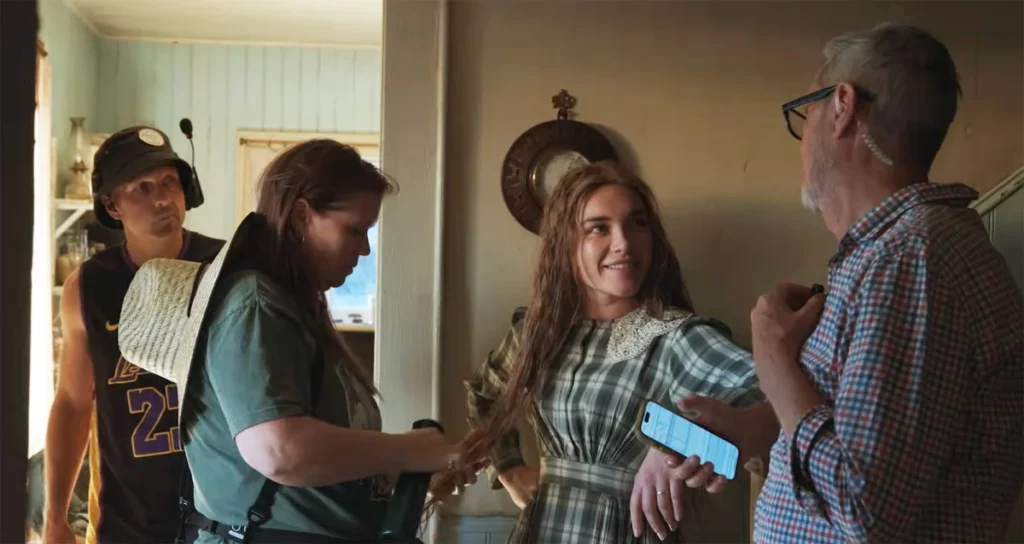

Netflix has officially debuted its highly anticipated, prestige limited series adaptation of John Steinbeck’s 1952 literary masterpiece, East of Eden. To mark the global streaming launch, the platform released an extensive behind-the-scenes featurette titled "How Zoe Kazan Reimagined a Steinbeck Classic," offering audiences a comprehensive look at the scale, ambition, and creative philosophy driving the seven-part television event.
Led by creator, writer, and co-showrunner Zoe Kazan—recognized for her acclaimed screenwriting work on Ruby Sparks and Wildlife—the series approaches Steinbeck’s sprawling multigenerational narrative with a renewed focus on its complex psychological underpinnings. Co-showrun by Jeb Stuart, the production brings a contemporary cinematic lens to Salinas Valley, California, exploring themes of generational trauma, free will, and the eternal philosophical battle between good and evil.

The project features a stellar ensemble cast, anchored by Florence Pugh in the definitive role of Cathy Ames, the novel’s iconic and enigmatic antihero. Pugh stars alongside Christopher Abbott as Adam Trask and Mike Faist as Charles Trask. The expansive supporting cast includes Hoon Lee, Tracy Letts, Ciarán Hinds, Martha Plimpton, Joseph Zada, and Joe Anders. Directed in part by acclaimed filmmakers Garth Davis and Laure de Clermont-Tonnerre, the series promises high production values, sweeping landscape cinematography, and intricate character studies designed to resonate with modern audiences while honoring the foundational text.
Main Facts of the Production and Release
The seven-episode limited series represents one of Netflix’s most significant prestige literary adaptations to date. Developed over several years, the project is a collaborative production between Fifth Season and Anonymous Content. The creative team features an extensive roster of executive producers, including Florence Pugh, Antoine Douiahy, Zack Hayden, the late Steve Golin, David Levine, Jill Arthur, Laure de Clermont-Tonnerre, Garth Davis, Jeb Stuart, and Zoe Kazan.
The narrative centers primarily on the interconnected lives of the Trask family against the backdrop of a rapidly modernizing American society at the turn of the 20th century. Central to the plot is Cathy Ames, whose elusive motivations and profound estrangement from conventional morality serve as the catalyst for the tragedy and triumph experienced across generations of the Trask lineage. Through intimate character framing and sweeping historical scope, the adaptation explores how ancestral choices shape contemporary realities, posing Steinbeck’s enduring question regarding human agency: ultimately, you are what you choose.

Chronology and Development History
The journey to bring this new iteration of East of Eden to the screen spans multiple decades of Hollywood history, punctuated most famously by Elia Kazan’s 1955 feature film adaptation, which famously launched James Dean into superstardom. While the 1955 film focused primarily on the final third of Steinbeck’s dense novel—concentrating on the sibling rivalry between Aron and Cal Trask—this modern television format allows creators to unpack the entirety of the multigenerational saga.
Development on the Netflix series gathered serious momentum when Zoe Kazan championed the project, drawing a direct personal and artistic connection to the material. Production commenced following years of meticulous script development by Kazan and Jeb Stuart. Filming utilized authentic landscape locations to capture the sweeping, epic scale of the Salinas Valley, mirroring the descriptions found in Steinbeck’s original manuscript. Post-production and marketing efforts culminated in late September 2026 with the release of the official teaser, a full trailer, and finally the comprehensive behind-the-scenes featurette that debuted alongside the series premiere.
Behind-the-Scenes Insights and Creative Vision
In the newly released "How Zoe Kazan Reimagined a Steinbeck Classic" featurette, the series creator elaborates on the daunting responsibility of adapting a pillar of American literature. "They are huge—we have landscape, they’re epic, the story is complex," Kazan remarks in the promotional footage, emphasizing the logistical and artistic hurdles of capturing Steinbeck’s vision. Rather than shying away from the daunting scope of the source material, the creative team adopted an immersive approach. As Kazan describes, "You just get on the horse and you tackle it head on, you just decide to dive in."

A central focus of the featurette is Florence Pugh’s interpretation of Cathy Ames. Traditionally viewed as a purely villainous figure in literary criticism, Pugh and Kazan sought to peel back the layers of the character to understand the psychological forces driving her actions. In the series, Cathy poses a haunting rhetorical question regarding her desire to disappear: "Because the world is so full of evil." This re-examination shifts the narrative focus, inviting viewers to contemplate how societal pressures, trauma, and individual autonomy collide.
Directors Garth Davis and Laure de Clermont-Tonnerre brought distinct visual styles to their respective episodes, ensuring that the historical drama maintains cinematic rigor throughout its seven-hour runtime. The production design meticulously reconstructs early 20th-century California, balancing intimate, claustrophobic character dramas with grand vistas that reflect the moral weight of the characters’ decisions.
Broader Impact and Industry Implications
The release of East of Eden arrives at a time when streaming platforms are increasingly investing in high-end, limited-run literary adaptations that offer definitive, closed-ended narratives. By securing top-tier feature film talent—both in front of and behind the camera—Netflix continues to bridge the gap between traditional cinematic prestige and episodic television.

Industry analysts note that casting Florence Pugh in a complex antihero role signals a growing appetite for morally ambiguous protagonists in prestige television. Furthermore, Zoe Kazan’s dual role as creator and co-showrunner highlights the ongoing industry trend of empowering writer-driven visions for major literary properties, rather than relying on homogenized, committee-led showrunning structures.
As viewers dive into the seven-episode arc, the series is expected to spark renewed cultural interest in John Steinbeck’s bibliography, driving sales of the 1952 novel much like previous high-profile literary adaptations have done for their source materials. By tackling the darker dimensions of the American dream with emotional authenticity and visual grandeur, Netflix’s East of Eden stands poised to become a defining television event of the autumn streaming season.