
The luxury real estate landscape of Lower Manhattan is defined by a specific paradox: the abundance of massive, high-ceilinged industrial shells that often lack the intimate, historical soul required for a primary residence. This challenge was the starting point for a comprehensive restoration of a 6,750-square-foot townhouse in Tribeca, led by renowned designer Nate Berkus and his firm, Nate Berkus Associates. The property, despite its prime location and impressive 15-foot ceilings, initially presented a disconnect between its storied exterior and a previous renovation that Berkus described as failing to meet the quality of construction commensurate with the building’s history.

Located in one of New York City’s most sought-after zip codes, the mid-19th-century red-brick structure serves as a microcosm of the neighborhood’s evolution. Over the decades, the building has functioned as a warehouse, a tenement, a hotel, a restaurant, and a diner. For the current owners—a creative couple with an international perspective—the goal was not merely to update the space but to reintroduce a sense of period-appropriate craftsmanship that felt like a natural extension of the building’s industrial and romantic facade.
The Architectural Vision and Material Strategy
Upon touring the property with the clients, Berkus identified that the existing "redo" lacked the depth necessary for a long-term family home. To rectify this, he collaborated with architect Danielle Albert to overhaul the interior envelope. The design strategy focused on a palette of "timeless" materials: oak, marble, brass, bronze, steel, and stone. By avoiding contemporary "time stamps," the team aimed to create an interior that honored the industrial heritage of Tribeca while providing modern conveniences.

The renovation involved a meticulous application of traditionally inspired millwork, including dentil moldings and wood-paneled walls. This architectural "vernacular" provided a sturdy, classic backdrop for a diverse collection of furnishings sourced from global auction houses, galleries, and even digital marketplaces like Etsy and 1stDibs. This approach, often referred to in the industry as "layered minimalism," allows for a home to feel curated over generations rather than decorated in a single moment.
A Chronological Tour of Discovery: From Entry to Roof Terrace
Berkus’s design philosophy for the project was rooted in the concept of "reintroducing a sense of discovery." In many modern open-plan renovations, the entirety of a space is visible from the moment one enters. Berkus sought to reverse this by creating portals, hidden zones, and visual draws that pull residents through the six-story home.

The Entry and Grand Living Spaces
The entry hall sets the historical tone with a pair of century-old French pine doors fitted with antique mirror glass. Above a monolithic travertine center table from Le Lampade hangs an oversized mid-20th-century domed pendant. This scale is necessary to ground the cavernous 15-foot ceilings. In the living room, Berkus juxtaposes a 1959 Yves Klein work in his signature blue with an early-19th-century Swedish Gustavian cabinet that retains its original, weathered paint. The furniture selection includes 1960s Stilnovo floor lamps and a custom Estudio Furnishings sofa upholstered in Holland & Sherry fabric, creating a dialogue between mid-century modernism and classical European antiques.
The Culinary and Entertaining Hub
The kitchen is a study in what Berkus calls "fabulous but functional" design. The centerpiece is the use of Prunella marble, characterized by its dramatic eggplant, gray, and burgundy veining. This is paired with custom white-oak cabinetry painted in Benjamin Moore’s Smokey Taupe, a color choice intended to soften the industrial scale of the room. A Lacanche range and mid-century Italian lighting reinforce the blend of old-world utility and high-end aesthetics. For entertaining, a mirror-clad bar is hidden behind discreet doors, featuring an articulating Arredoluce wall light from 1950.

The Work-from-Home Evolution
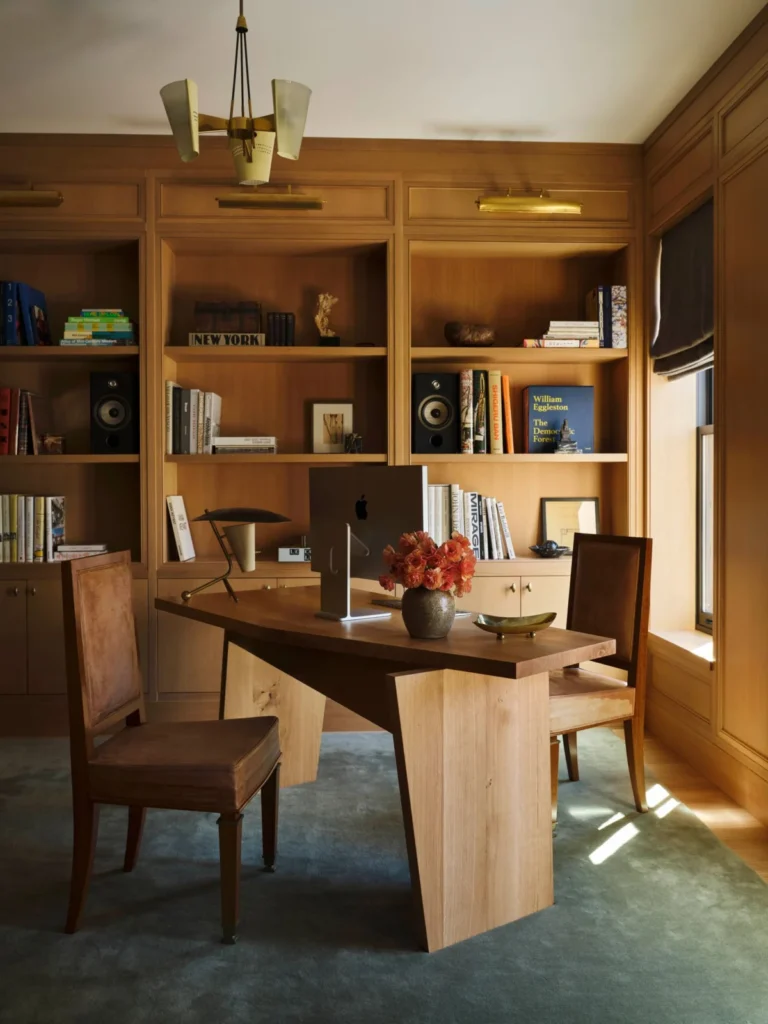
The fourth floor is dedicated to professional life, housing two distinct offices. The husband’s office features warm honey-hued oak paneling and a custom Nazara Lazaro Crooked desk. The wife’s office, connected via glass doors, allows for a shared environment that preserves individual privacy. Her space is defined by Élitis wallpaper and a 1930s table lamp attributed to Pietro Chiesa. This layout reflects the post-pandemic shift in luxury residential design, where the "home office" has evolved from a secondary consideration into a primary architectural focal point.
Designing for the Next Generation
A significant portion of the home was reserved for the couple’s two young children. Berkus intentionally broke from the home’s otherwise neutral palette on this floor, introducing pattern and vibrant color. Notably, the children’s rooms include high-quality vintage pieces, such as a 1750 Swedish Gustavian dresser. Berkus posits that incorporating museum-quality antiques into children’s spaces encourages a lifelong appreciation for craftsmanship and sustainability.

In the children’s bathroom, the design team utilized animal-adorned Pierre Frey wallpaper, a choice that was reportedly debated until the final hours of the design process. This was paired with Maison Sciolari sconces from the 1970s and a custom vanity topped with honed Imperial Danby marble, ensuring that even the most whimsical rooms maintain a standard of luxury consistent with the rest of the residence.
The Primary Suite and Outdoor Sanctuaries
The sixth floor serves as a private sanctuary for the homeowners. The layout was reconfigured to streamline the flow between the bedroom, bath, and dressing areas. The sleeping area features a floating bed with integrated cabinetry, while the bathroom was expanded by reclaiming space from former dressing rooms. The primary bath is a masterclass in texture, featuring encaustic cement tiles from Clé in a checkerboard pattern and a Water Monopoly soaking tub custom-painted in Farrow & Ball’s Calke Green.

The renovation concludes on the roof terrace, where Berkus collaborated with RKLA Studio to create a "secret garden." The 650-square-foot space is divided into outdoor "rooms," including a dining area under a custom pergola and a lounging zone featuring Soho Home furniture. An antique stone fountain serves as the terrace’s focal point, providing a tranquil acoustic barrier against the ambient noise of the city below.
Real Estate and Design Context: The Tribeca Factor
The success of this project highlights broader trends in the New York City luxury market. Tribeca remains one of the most expensive neighborhoods in the world, with median sales prices often exceeding $4 million. However, buyers in this segment are increasingly moving away from "white-box" developments in favor of historic lofts and townhouses that offer architectural character.

According to market data from the first half of 2024, there has been a 12% increase in demand for "turn-key" renovated historic properties in Lower Manhattan. High-net-worth individuals are willing to pay a premium for homes that have already undergone the rigorous and often bureaucratic process of landmark-compliant restoration. Berkus’s work on this property adds significant value not just through aesthetic appeal, but through the high-grade replacement of the home’s "bones"—its millwork, plumbing, and electrical systems—all of which were integrated into the historical design.
Broader Implications for Interior Design
The Tribeca project underscores the enduring relevance of Nate Berkus’s "forever timeless" approach. In an era of fast-moving design trends driven by social media, this project advocates for a slower, more researched methodology. By sourcing materials and objects that span three centuries, Berkus creates an environment that is resistant to becoming dated.

The project also illustrates the importance of the designer-client relationship in high-stakes renovations. The owners’ willingness to invest in architectural salvage and custom-burnished metal finishes—such as the custom bronze dining table by Costantini Design—indicates a shift toward "stealth wealth" or "quiet luxury." This design movement prioritizes the tactile quality of materials and the provenance of objects over overt branding or flashy, contemporary fixtures.
As urban centers continue to densify, the adaptive reuse of industrial buildings into high-functioning family homes remains a critical architectural challenge. The Berkus-led transformation of this Tribeca landmark serves as a definitive template for how to honor a building’s "million lives" while preparing it for its next century as a private residence. Through a combination of historical reverence, material integrity, and a keen eye for global sourcing, the project successfully elevates a once-mismatched structure into a cohesive, soul-filled home.