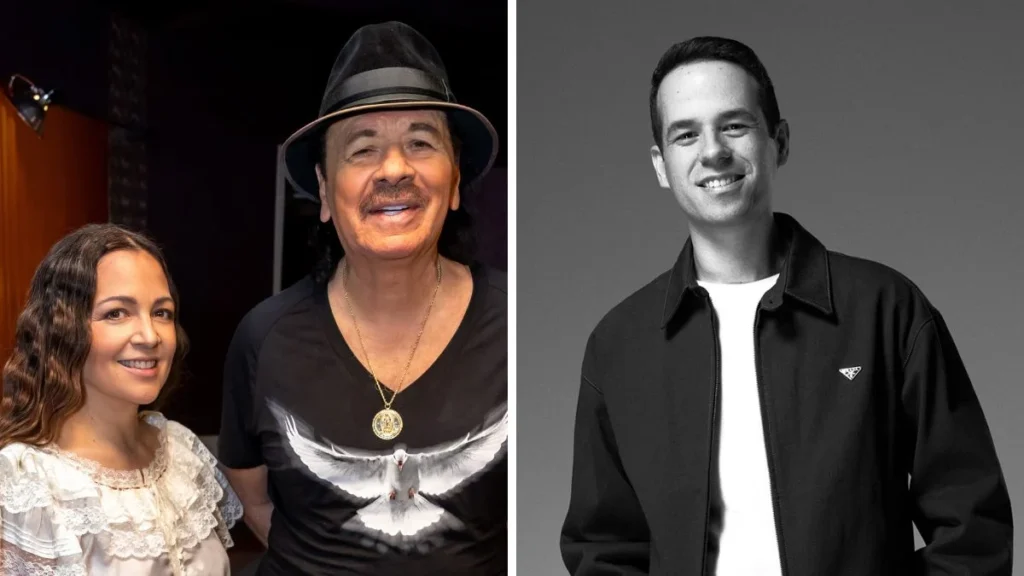

The intersection of music and social commentary has long served as a catalyst for cultural discourse, and the latest collaboration between legendary guitarist Carlos Santana, acclaimed singer-songwriter Natalia Lafourcade, and powerhouse producer Edgar Barrera marks a poignant continuation of that tradition. Released on October 29, 2026, the track titled “Hermano” functions as both a musical fusion of tradition and innovation and a direct challenge to the rising tide of anti-immigrant sentiment and systemic violence in the United States and beyond.
A Fusion of Heritage and Protest
“Hermano” is anchored in the rhythmic traditions of son jarocho, a folk music style indigenous to the Mexican state of Veracruz. By weaving these ancestral sounds with the unmistakable, searing electric guitar leads that have defined Santana’s career since his breakthrough performance at Woodstock in 1969, the track bridges generations of Latin American artistic expression.
The song’s inception dates back to 2024, when Santana and Barrera began conceptualizing the aesthetic and thematic direction for the guitarist’s upcoming studio project. Their dialogues frequently returned to the increasingly hostile socio-political climate regarding immigration policy. For Santana, who faced significant racial prejudice early in his career—including dismissive comments regarding his ability to perform rock music in English—the project was a necessary articulation of the "street-level" realities that music has historically been tasked to address.
The Creative Genesis of the Anthem
The collaborative process behind the track was deliberate. Barrera, who enters the 2026 Latin Grammy Awards with a staggering 10 nominations, served as the bridge between the two artists. Lafourcade, known for her introspective and deeply rooted songwriting, was identified as the ideal collaborator to capture the emotional weight of the project.
According to accounts from the production sessions in Miami, the song originated from a place of profound melancholy. Lafourcade has described the initial draft as a ballad focused on the fragmentation of human bonds. The central inquiry of the song—a rhetorical challenge regarding why one brother would choose to inflict violence upon another—is designed to strip away political abstraction and return the focus to individual humanity.
By the time the composition reached Santana, it had evolved from a somber lament into a broader message of solidarity. Santana’s contribution was the final, elevating element, infusing the composition with the signature urgency that has characterized his activist-musician persona for over five decades.
Historical Context and Demographic Realities
The release of “Hermano” occurs against a backdrop of intensifying debate surrounding immigration in the United States. According to data from the Migration Policy Institute, the discourse surrounding border security and the treatment of undocumented individuals has reached a fever pitch in the mid-2020s, with various legislative efforts aimed at increasing detention and deportation protocols.
The song also functions as a thematic companion to Santana’s earlier 2026 collaboration with Becky G, titled “Mi Gran Amor.” That track, which is currently nominated for Song of the Year at the 2026 Latin Grammys, explicitly challenged restrictive immigration policies, signaling a concerted effort by these artists to utilize their commercial platforms to influence public opinion.
The Responsibility of the Artist
In interviews following the release, the collaborators emphasized that their work is not intended merely for entertainment but as a tool for societal reflection. For Barrera, the role of a songwriter has become synonymous with a broader social responsibility. As a father to a young daughter, Barrera has noted that his creative process is now filtered through the lens of the world he is helping to shape for the next generation.
He posits that the most effective songs are those that provide a voice to the voiceless, particularly those impacted by state-led enforcement agencies. By targeting the narrative of the "Latino brother" caught in the machinery of institutions like ICE, the artists hope to foster a level of empathy that transcends political polarization.
Lafourcade draws inspiration from the late Mercedes Sosa, the iconic Argentine folk singer whose work often served as an anthem for social justice movements in Latin America. Reflecting on her own career, particularly the success of her seminal track “Hasta la Raíz,” which has been widely adopted by migrant communities as a symbol of cultural identity, Lafourcade maintains a philosophy of "incubation." She views her compositions not as personal property, but as public assets that gain meaning through the lived experiences of those who listen to them.
Analysis: Music as a Catalyst for Discourse
Sociologists of music have long observed that protest songs in the Latin American tradition often serve to consolidate community identity during periods of exclusion. “Hermano” adheres to this structure by employing a "humble" lyrical approach—focusing on the simplicity of life and the inherent betrayal of violence—to make complex political issues accessible.
The decision to pair established icons like Santana with contemporary hitmakers like Barrera and Lafourcade ensures the message reaches a cross-generational audience. While the song addresses specific concerns regarding discrimination, its broader impact may lie in its ability to provoke "conversation, reflection, and debate," as noted by the artists.
Broader Implications for the Industry
The success of “Hermano” and the accompanying critical reception indicate a shift in the Latin music industry toward more explicit socio-political engagement. With the 2026 Latin Grammys looming, the industry is closely watching how these politically charged compositions fare against more traditional commercial fare.
If “Hermano” gains traction in the charts, it may signal a trend where artists with significant platforms are increasingly expected to leverage their influence to address humanitarian crises. The collaborative nature of the track—involving a legendary figure of the 1960s, a mid-career powerhouse, and a modern producer—serves as a template for future industry efforts to bridge generational divides in the service of social activism.
Ultimately, the goal of the song, as articulated by the artists, is to mitigate the climate of fear that pervades current discussions on migration. Whether the song can move the needle in a tangible, legislative sense remains to be seen; however, as a cultural artifact, it represents a significant, unified stance from some of the most influential figures in modern music, serving as a reminder that the duty of the artist is not only to reflect the world as it is, but to envision a more equitable future.