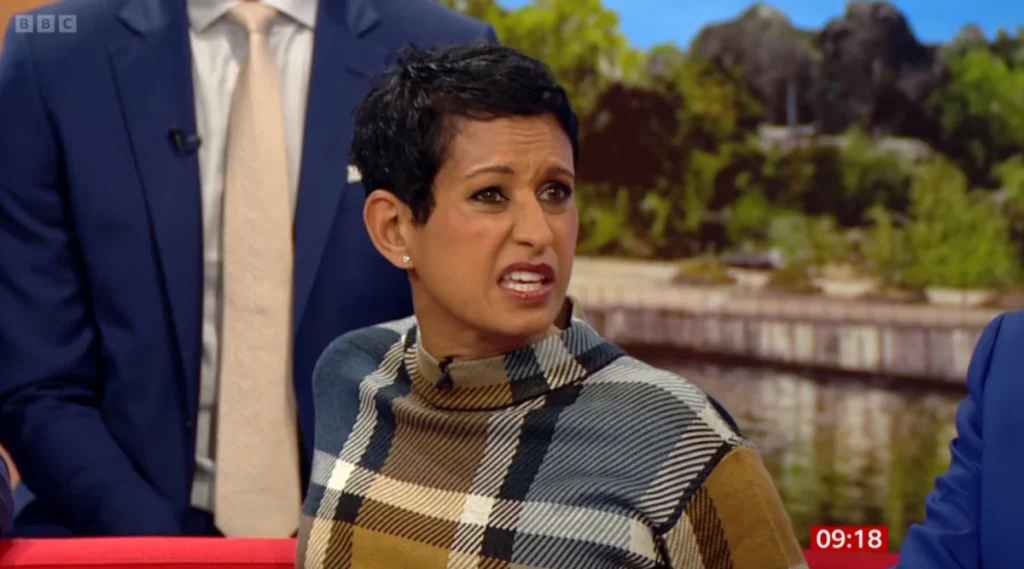

Naga Munchetty, a prominent presenter on BBC Breakfast, has seen a notable increase in her annual earnings, with her salary now falling within the £360,000 to £364,999 bracket. This represents an uplift from her previous remuneration band of £355,000 to £359,999 in the preceding year, placing her among the highest-paid female talents within the British Broadcasting Corporation. The disclosure comes as part of the BBC’s ongoing commitment to transparency regarding the salaries of its top on-air personnel and senior staff, a mandate introduced to ensure accountability for public funds derived from the licence fee.
BBC’s Transparency Mandate and Top Earners
The BBC is legally obligated to publish the salaries of its on-air talent and senior executives who earn more than £178,000 annually from licence fee funding. This policy, initiated in 2017 following public and governmental pressure, aims to provide greater accountability to licence fee payers and address concerns over pay disparities, particularly the historical gender pay gap within the organisation. Munchetty’s salary figures are part of this annual disclosure, which consistently generates public interest and debate about the value and remuneration of public service broadcasters.
Within the landscape of the BBC’s top earners, Munchetty stands as one of four women prominently featured on the list. She joins a distinguished group that includes the BBC political editor Laura Kuenssberg, veteran journalist Fiona Bruce, and news anchor Sophie Raworth. Laura Kuenssberg, with earnings between £405,000 and £409,999, remains the corporation’s highest-paid female presenter. These figures highlight the significant investment the BBC makes in its leading journalistic and presenting talent, reflecting their considerable responsibilities, public profile, and the demands of live broadcasting. The transparency initiative, while intended to foster trust, has also frequently ignited discussions about executive and talent pay in relation to the average UK income, and the perceived fairness of remuneration within a publicly funded institution.
Navigating Commercial Ventures
Beyond her core BBC remuneration, Munchetty has also reportedly augmented her income through commercial engagements. For the fiscal year 2024 to 2025, she is understood to have earned up to £56,000 from external activities. These commercial ventures typically include giving speeches, hosting corporate question and answer sessions, and presenting awards at various corporate events. Such activities are carefully monitored and recorded by the BBC, which publishes a quarterly register detailing the external pay packets of its top staff. This practice allows high-profile BBC figures to leverage their public recognition for additional income, provided these activities do not conflict with their BBC roles or the corporation’s editorial guidelines. It also offers another layer of transparency, demonstrating the multifaceted income streams available to leading media personalities. While common across the industry, the extent and nature of these commercial earnings for BBC talent often draw public scrutiny, particularly given the public service remit of their primary employer.

Allegations of Workplace Misconduct
Naga Munchetty’s increased salary disclosure arrives amidst a period marked by considerable public and internal scrutiny concerning her professional conduct. Last year, she faced accusations of being "hard" and "bullying" towards colleagues, with multiple sources detailing alleged incidents over a three-year span. These allegations, which surfaced in the media, cast a shadow over her professional image and raised questions about workplace culture within the BBC.
One specific incident reportedly occurred in 2022, where Munchetty allegedly used a crude term for a sex act and questioned a colleague about engaging in it. While the precise comment was not fully disclosed, an anonymous source described it as "crass, inappropriate and wildly unprofessional," asserting that the colleague felt "embarrassed." Such an allegation, if substantiated, would represent a significant breach of professional conduct standards expected within any workplace, particularly one under public scrutiny like the BBC. Workplace policies typically strictly prohibit language and behaviour that could be deemed offensive, harassing, or creating a hostile environment.
Further compounding the allegations, Munchetty was also accused of bullying a younger staff member last year. Reports suggested she allegedly accused the individual of theft without presenting any evidence. An insider quoted in The Sun described the experience as "humiliating," noting that "There was no evidence, no apology. The woman left not long after, completely demoralised." Accusations of false accusation and bullying can have severe repercussions on team morale, individual well-being, and the overall professional reputation of those involved. They also underscore the critical importance of fair and thorough investigative processes within organisations to address such grievances effectively and maintain a respectful working environment.
The Internal Investigation: A Closer Look
Following these serious allegations, reports indicated that the BBC initiated an internal probe. During the investigation, it was claimed that "watchdogs" were assigned to monitor Munchetty’s conduct in the studios. Despite the ongoing inquiry, she was permitted to remain on-air, a decision that can be contentious but often reflects an organisation’s policy to presume innocence until proven guilty, or to avoid prejudicing an investigation. The presence of production members specifically tasked with monitoring her suggests a heightened level of internal oversight and a recognition of the seriousness of the claims.
However, the outcome of this internal investigation has not been publicly revealed. The lack of public disclosure regarding the findings or any subsequent actions taken by the BBC has left questions unanswered and potentially fuelled speculation. At the time the allegations became public, The Standard reportedly contacted Munchetty’s representative for comment, though the article does not detail any response received. The BBC’s approach to such internal matters often involves a balance between transparency to the public and maintaining confidentiality for the individuals involved, particularly regarding sensitive HR issues. This balance, however, can be difficult to strike when dealing with high-profile personalities whose conduct is under constant public observation.

The Carol Kirkwood Farewell: A Controversy Unfolds
Adding to the recent controversies, Munchetty’s on-air comments during the farewell broadcast of long-serving BBC weather presenter Carol Kirkwood sparked significant public backlash. The segment, intended as a heartfelt tribute to Kirkwood’s extensive career, saw several colleagues gather on the BBC Breakfast sofa, including Dan Walker, Mike Bushell, Matt Taylor (Kirkwood’s replacement), and Munchetty herself.
The atmosphere of camaraderie took an unexpected turn with Munchetty’s remarks. When Kirkwood expressed her surprise and gratitude, saying, "Thank you all for coming – and even you, Nags!", Munchetty’s response was delivered with a deadpan expression: "I’m just waiting for the countdown for you to go!" Although she followed this with laughter, the initial comment was perceived by many viewers as sharp and potentially disrespectful. The exchange continued when Munchetty presented Kirkwood with a framed illustration depicting her as Little Miss Sunshine, a nod to her weather correspondent role. Later, as a special weather-themed cake was brought out, Munchetty quipped, "Are you going to break the habit of a lifetime and actually share the cake?" Kirkwood retorted, "No, Naga, absolutely not – why would I do that?", to which Munchetty replied, "Exactly. Why change it? We’re only going to remember you one way."
These comments, particularly the initial "countdown for you to go" and the "habit of a lifetime" remark regarding sharing cake, were widely criticised on social media. Many viewers interpreted them as rude, insensitive, and inappropriate for a farewell tribute. The incident quickly became a topic of discussion online, with some expressing disappointment and questioning Munchetty’s professionalism and empathy.
Public Reaction and Insider Perspectives
The public outcry following the Carol Kirkwood farewell segment underscored the intense scrutiny faced by live television presenters, where every word and nuance of interaction is amplified. Viewers often develop strong attachments to presenters and expect a certain decorum, especially during emotional moments such as a colleague’s departure. The perceived lack of warmth in Munchetty’s comments contrasted sharply with the celebratory and appreciative tone of other colleagues.
In response to the backlash, a TV insider offered a mitigating perspective to The Sun, stating: "Naga and Carol have been very close personal friends for many years, as well as being very good colleagues as part of the BBC Breakfast Team. Everyone involved in Carol Kirkwood’s last programme for Breakfast on 1 April was there to pay tribute to Carol’s long service for the BBC, and they all did so fittingly." This statement aimed to contextualise Munchetty’s remarks as part of a long-standing, playful dynamic between close friends, rather than genuine malice or disrespect. The nature of on-air banter can sometimes be misinterpreted by audiences unfamiliar with the presenters’ off-screen relationships, and what might be acceptable between colleagues might not always land well with a wider public expecting a more formal tone. However, the incident highlighted the fine line broadcasters must walk between authentic personality and maintaining a universally acceptable professional demeanour.

Broader Implications for BBC Talent and Public Trust
Naga Munchetty’s situation encapsulates the multifaceted challenges faced by high-profile BBC talent in the contemporary media landscape. Her increased salary, while reflecting her seniority and prominence, inevitably attracts scrutiny given the public funding model of the BBC. This financial transparency, a cornerstone of the BBC’s accountability framework, ensures public debate about how licence fee money is spent.
The allegations of workplace misconduct, irrespective of their eventual outcome, underscore the importance of fostering a respectful and supportive environment within the corporation. Such claims can erode public trust not only in the individual presenter but also in the institution’s ability to manage its internal affairs justly and transparently. The lack of public resolution for the internal investigation into these claims leaves a lingering question mark, which can impact perceptions of the BBC’s commitment to accountability.
Furthermore, the Carol Kirkwood incident illustrates the precarious nature of live television and the immediate, often unfiltered, public reaction enabled by social media. What might be intended as light-hearted banter among colleagues can quickly be perceived as unprofessional or unkind by a diverse audience, leading to swift and widespread criticism. For presenters like Munchetty, who are on screen for hours each week, managing public perception and maintaining consistent professionalism under constant observation is a demanding aspect of their role.
The BBC, in turn, faces the continuous task of balancing talent retention with public expectations of conduct, transparency, and value for money. As a public service broadcaster, it operates under a unique set of ethical and financial obligations that differ from commercial entities. The ongoing narrative around Naga Munchetty’s pay and conduct serves as a reminder of these intricate dynamics and the perpetual public scrutiny that accompanies high-profile roles within the corporation. The challenge for the BBC remains to uphold its editorial standards, maintain a healthy internal culture, and ensure its leading figures exemplify the values expected of a publicly funded institution, all while navigating the complexities of modern media and public discourse.