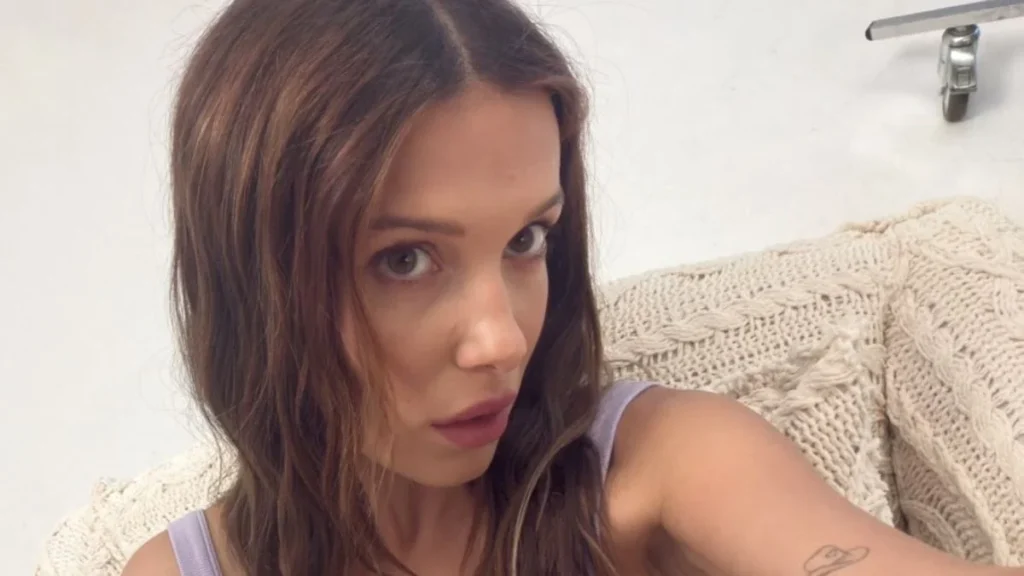

Millie Bobby Brown recently offered a masterclass in modern loungewear branding by utilizing her official social media presence to spotlight a key piece from her eponymous lifestyle and fashion label, Florence by Mills. On October 29, the acclaimed British actress—globally recognized for her starring roles in Netflix’s cultural phenomenon Stranger Things and the cinematic franchise Enola Holmes—took to Instagram to share a carousel of photographs. In the images, Brown models the pastel-lavender Softie Seamless Knit Shortie Set, a matching ensemble that effortlessly bridges the gap between cozy domestic comfort and contemporary editorial styling. The post immediately drew significant engagement from her massive digital following, generating widespread discussions across lifestyle blogs, fashion publications, and social media platforms regarding the ongoing commercial viability of the soft, nostalgic coquette aesthetic.
The outfit itself serves as a prime example of current loungewear design trends that prioritize tactile textures and soothing color palettes. The ensemble features a cropped camisole top defined by a sharp square neckline bordered with delicate ribbed trim, while its wide tank straps elegantly frame the collarbones. Constructed from a fine-gauge cable-knit pattern, the bodice introduces a subtle linear texture that elevates the garment beyond standard sleepwear. A tiny rosette accent positioned precisely at the center of the bust adds a vintage-inspired touch.
Complementing the top are the matching high-waisted knit micro shorts, which mirror the intricate cable-knit motif of the upper garment and feature a dainty bow trim along the elasticized waistband. Designed to contour the natural waist, the shorts deliver a comfortable silhouette while cutting high on the upper thighs. By pairing these minimalist garments with avant-garde styling choices, Brown and her styling team successfully transformed a basic loungewear set into a high-fashion statement.
To elevate the pastel-lavender foundations of the look, the actress integrated unexpected footwear and layering pieces. She adorned her lower legs with heavy knit, slouchy, off-white ribbed leg warmers that gathered loosely above the ankle. These cozy coverings were layered directly over ivory pointed-toe pumps, a footwear selection that elongated her frame while maintaining a bright, cohesive color palette. Accessories were kept deliberately minimal, limited to a selection of subtle metallic rings that provided a warm contrast against the soft pastel textures of the knitwear. Her beauty regimen complemented the romantic theme, featuring a classic middle part with natural, undone chestnut brown waves cascading over her shoulders. Her makeup composition highlighted a rosy flush across the cheeks, feathered brows, and a neutral eyeshadow wash, finished with a neutral berry-pink lip color that anchored the overall aesthetic.
The Evolution of Florence by Mills and Celebrity Entrepreneurship
The strategic placement of Florence by Mills merchandise on Millie Bobby Brown’s personal social media channels highlights a broader, highly successful business model that has come to dominate the modern entertainment and retail landscapes. Founded initially as a clean beauty brand tailored to Generation Z consumers, Florence by Mills has steadily expanded its footprint into the apparel and lifestyle sectors. The brand’s expansion into knitwear, loungewear, and contemporary ready-to-wear reflects a calculated effort to capture a loyal demographic that grew up alongside the actress.
In the fast-paced retail industry, celebrity-owned brands face immense pressure to prove authenticity and sustained consumer demand. Analysts note that while initial spikes in sales are often driven by sheer star power and high-volume social media impressions, long-term brand equity relies heavily on product quality, trend alignment, and seamless integration into the founder’s daily lifestyle. By wearing her own designs in unscripted, highly aesthetic Instagram posts, Brown bridges the gap between traditional advertising and organic peer-to-peer recommendation. This grassroots-style marketing campaign resonates deeply with younger consumers who favor relatable, lifestyle-driven branding over traditional corporate advertising.
The economic implications of such digital endorsements are substantial. In an era where a single social media post can dictate retail search trends and drive immediate inventory sell-outs, celebrities wield unprecedented direct-to-consumer power. For Florence by Mills, spotlighting key seasonal items like the Softie Seamless Knit Shortie Set directly on an account boasting tens of millions of followers functions as an invaluable conversion tool. It bypasses conventional retail acquisition funnels, driving direct traffic to the brand’s e-commerce platform and solidifying its position as a dominant force in youth-centric fashion.
The Cultural Resurgence of the Coquette Aesthetic
Millie Bobby Brown’s recent styling choice also underscores a wider cultural fascination with the coquette aesthetic, a design movement characterized by pastel hues, bows, delicate knits, ribbons, and a hyper-feminine sensibility. Originating partly from digital subcultures on platforms like TikTok and Instagram, this aesthetic reimagines traditional Victorian and Edwardian femininity through a modern, self-empowered lens.
Fashion historians and trend forecasters observe that the coquette movement offers consumers a sense of escapism and comfort during periods of economic and social uncertainty. By blending soft, tactile fabrics—such as cable-knit cottons and wool blends—with contemporary silhouettes like micro shorts and pointed-toe pumps, modern stylists have successfully updated the aesthetic for professional editorial and everyday street style contexts. Brown’s interpretation leans into this duality, balancing the innocent, nostalgic charm of lavender knitwear with the sharp, edgy sophistication of architectural footwear and exposed legs.
This stylistic versatility is precisely why trends rooted in comfort and nostalgia continue to dominate the contemporary market. As consumers increasingly prioritize garments that offer both psychological comfort and visual impact, brands that can successfully merge loungewear utility with high-fashion presentation are uniquely positioned to capture market share. The widespread online discourse surrounding Brown’s outfit demonstrates that the appetite for elevated loungewear shows no signs of abating.
Broader Industry Implications and Future Outlook
As Millie Bobby Brown continues to navigate her multifaceted career as an internationally recognized actress, producer, and entrepreneur, her influence on the fashion industry remains a subject of intense observation. Her transition from child star to a mature style icon is carefully managed through deliberate wardrobe choices that balance youthful playfulness with refined elegance. Whether she is walking the red carpet in high-end couture or promoting her own brand via social media, every public appearance functions as a calculated step in personal brand architecture.
The success of the Florence by Mills fashion line points to a future where celebrity beauty and apparel brands operate less as vanity projects and more as fully integrated lifestyle empires. As digital platforms continue to evolve into primary shopping destinations, the line between personal identity and commercial enterprise will only continue to blur. For industry competitors, Brown’s latest digital showcase serves as a timely reminder that authenticity, strategic timing, and trend awareness are the ultimate currencies in the modern retail economy. Moving forward, observers will be watching closely to see how Florence by Mills expands its product lines and whether other young Hollywood entrepreneurs can replicate the organic synergy that Brown has cultivated between her personal aesthetic and her commercial ventures.