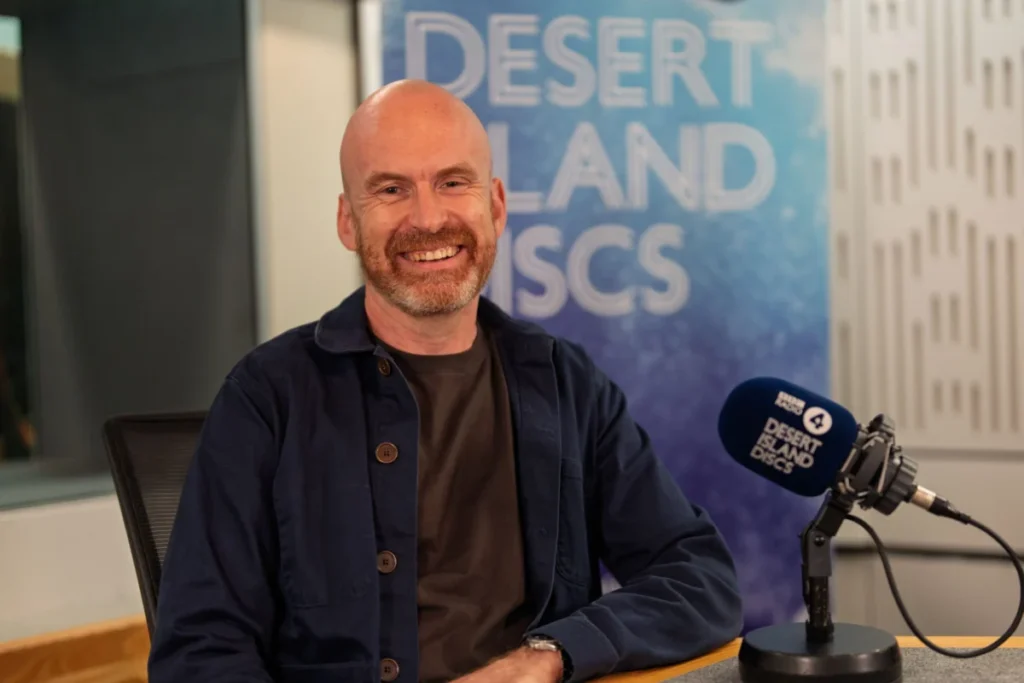

The renowned author Matt Haig, whose literary works—including the global sensation The Midnight Library—have often navigated the complexities of the human condition, has recently offered a profound insight into his own history with severe mental health crises. In a candid appearance on BBC Radio 4’s Desert Island Discs, the 61-year-old writer detailed a period in his early 20s when a sudden, catastrophic breakdown left him grappling with suicidal ideation, a pervasive sense of derealization, and a long-standing "phobia" of seeking clinical assistance.
The Ibiza Breakdown: A Crisis of Reality
The sequence of events began while Haig was living in Ibiza alongside his then-partner, Andrea Semple. Describing the onset as a "panic attack that didn’t end," Haig recalled a morning run that preceded a total psychological collapse. What began as a physical manifestation of distress quickly spiraled into a state of intense existential dread.
Haig emphasized that his suicidal thoughts were not rooted in a conventional "death wish," but rather in an inability to reconcile with the reality he was experiencing. The proximity of his villa to the cliffs of Ibiza presented an immediate danger, as the isolation and the height offered a stark, final solution to the confusion and terror he felt. It was his partner, Andrea, who intervened during this volatile period, recognizing the gravity of his state and physically removing him from the vicinity of the cliffs.
The immediate medical intervention that followed proved counterproductive. Haig was prescribed high-strength diazepam, which he described as ineffective and unsettling. The experience left him feeling physically and mentally estranged, exacerbated by a severe sense of agoraphobia that persisted even after his return to the United Kingdom.
The Nottingham Period and the Failure of Early Intervention
Following the events in Ibiza, Haig returned to his hometown of Nottingham, seeking refuge in his parents’ home for three months. This period was characterized by chronic physical symptoms, including chest tightness and a racing heart, alongside the disorienting psychological state known as derealization—a condition where the world feels dreamlike or detached, and the individual struggles to recognize themselves in the mirror.
A pivotal, albeit damaging, moment occurred when Haig finally consulted a general practitioner (GP). He recounted that the consultation was derailed almost immediately upon his disclosure of past recreational drug use. According to Haig, the atmosphere in the room shifted instantly as the doctor’s professional objectivity was eclipsed by moral judgment.
The consequences of this encounter were profound. Not only was he denied a referral for psychological therapy, but the experience instilled in him a deep-seated distrust of the medical establishment. Haig later characterized himself as his own "worst enemy" during this time, noting that the combination of the GP’s reaction and his own internal shame led to a 20-year avoidance of professional therapeutic support.
The Path to Recovery: Processing and Persistence
The trajectory of Haig’s recovery was slow and largely self-directed. After moving to Leeds, he and Semple began a routine of daily walks, which served as a meditative practice that allowed him to gradually process his trauma. During this time, Haig made significant lifestyle changes, including the cessation of alcohol and drug use.
His recovery was underscored by a battle against the "lies" his brain told him—specifically the conviction that he would not survive past the age of 25. Each passing year became a milestone of resilience. It was in this state of survival that the seeds of his literary career were sown; he began to entertain the possibility of writing as a viable path forward, moving away from the despair that had previously consumed his vision of the future.
Contextualizing Mental Health Stigma in the 1990s
Haig’s experience highlights a critical period in the evolution of mental health care in the UK. During the 1990s and early 2000s, the integration of mental health awareness into general practice was significantly less developed than it is today.

Research from the Royal College of General Practitioners (RCGP) and various mental health charities, such as Mind, has frequently noted that historical biases—particularly those linking mental health issues to lifestyle choices or substance use—often acted as significant barriers to treatment. The "moral judgment" Haig described was a common complaint among patients during that era, contributing to a "revolving door" of temporary symptom management rather than long-term therapeutic engagement.
The Broader Impact: From Personal Trauma to Public Advocacy
Since the publication of his 2015 memoir Reasons to Stay Alive, Haig has become a prominent voice in the global discourse on mental health. His work serves as a bridge between clinical understanding and the lived experience of depression and anxiety.
The publication of The Last Family in England in 2004 marked the beginning of a prolific career, which includes titles such as The Radleys (2010), How to Stop Time (2017), and The Midnight Library (2020). These works have garnered millions of readers worldwide, often touching upon themes of regret, the "what ifs" of life, and the importance of perseverance.
The implications of his advocacy are far-reaching. By speaking openly about his 20-year avoidance of therapy, Haig has brought attention to the systemic failures that can prevent individuals from accessing life-saving care. His story serves as a reminder that the quality of the initial patient-doctor interaction can determine the long-term prognosis for those in crisis.
Current Perspectives and Clinical Implications
Modern mental health standards in the UK now place a greater emphasis on "parity of esteem," a policy aimed at ensuring mental health is treated with the same urgency and care as physical health. Organizations like the NHS have implemented the Improving Access to Psychological Therapies (IAPT) program, which aims to provide evidence-based interventions for those struggling with depression and anxiety.
However, the "phobic" response to seeking help that Haig described remains a pervasive issue. Clinical psychologists often point to "treatment-seeking stigma" as a primary reason for the delay in intervention. When a patient feels judged—or fears being judged—the likelihood of them disengaging from the health service increases exponentially.
Haig’s account serves as a case study in the necessity of empathy in clinical practice. The transition from a state of acute crisis to one of sustained stability often requires more than just biological intervention; it requires an environment where the patient feels heard, validated, and free from the weight of moral scrutiny.
Legacy and Personal Life
Today, Matt Haig’s life stands in stark contrast to the despair of his early 20s. Married to Andrea Semple in 2013, he lives in Brighton with their two children, Lucas and Pearl. His career as a writer continues to evolve, with new projects like The Midnight Train (2026) demonstrating his sustained creative output.
His willingness to revisit his darkest moments in a public forum like Desert Island Discs underscores a commitment to destigmatization. By tracing the arc of his life from the cliffs of Ibiza to his current role as a globally recognized author, Haig provides a narrative of hope that is rooted in the reality of human struggle. The lesson drawn from his experience is not merely that one can recover, but that the process of recovery is often long, nonlinear, and fundamentally dependent on the courage to eventually reach out—despite the failures of the past.
As mental health awareness continues to grow, Haig’s testimony acts as a vital reminder to both patients and practitioners: the initial point of contact in a medical setting is not merely a bureaucratic process, but a defining moment that can shape the trajectory of a human life. His journey from being a young man convinced of his own imminent death to an author who has helped countless others find their own reasons to stay alive remains one of the most compelling narratives in contemporary literature.