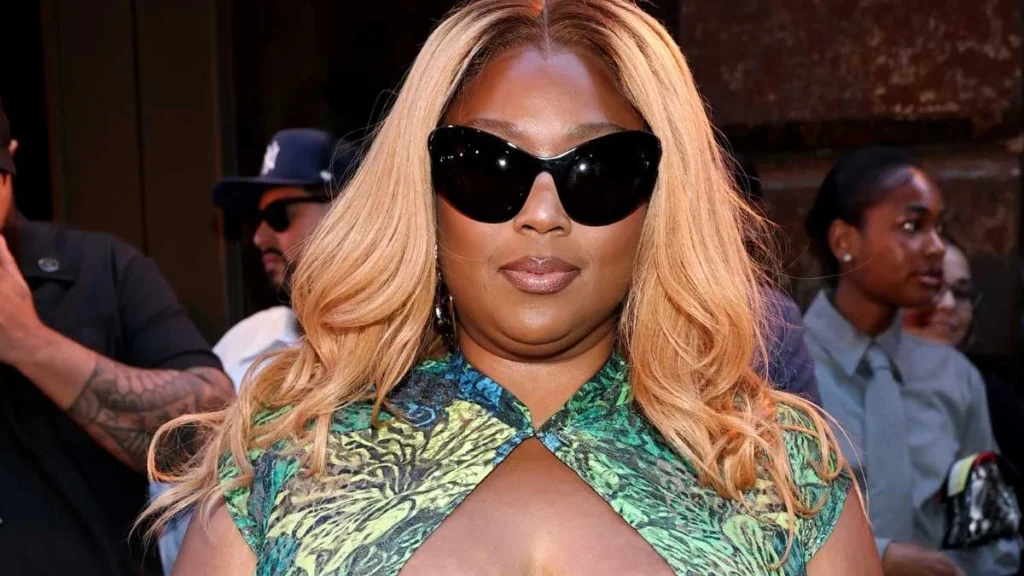

Grammy Award-winning artist Lizzo once again captured the global fashion spotlight during New York Fashion Week (NYFW), stepping out in a striking, avant-garde ensemble designed by acclaimed contemporary designer Kim Shui. Known for her fearless approach to personal style and body-positive fashion advocacy, the singer and songwriter commanded attention as she arrived at the high-profile industry event wearing a meticulously tailored, warm brown gown that effortlessly blended high-octane glamour with structural sophistication.
The appearance underscored a broader industry movement toward bold silhouettes, body-celebratory cuts, and individualistic expression—themes that have increasingly dominated the runways of the global fashion capitals. As New York Fashion Week continues to serve as a premier incubator for boundary-pushing trends, Lizzo’s sartorial choice reinforced her status as a notable fixture within the intersection of music, culture, and high fashion.
Main Facts of the NYFW Appearance
Lizzo’s arrival at the Kim Shui presentation during New York Fashion Week generated immediate buzz across both mainstream media outlets and digital fashion platforms. The centerpiece of her look was a floor-length, form-fitting dress that leaned heavily into structural minimalism while incorporating high-impact design details.
The garment featured a dramatic, plunging chest cutout that extended deeply across the bodice, framed by darker contrasting trim that accentuated its geometric lines. Complementing the plunging neckline was a daring, thigh-high slit running up the left leg, which broke up the column-like silhouette of the long skirt and allowed for fluid movement as the artist navigated the venue. Rendered in a rich, warm brown hue, the dress balanced its revealing elements with a sophisticated, polished length and tailored construction that hugged the singer’s figure.
In alignment with styling philosophies that let statement pieces speak for themselves, Lizzo opted for a restrained accessories palette. She paired the gown with sleek black sunglasses—a nod to classic front-row aesthetics—and minimal statement earrings that added a subtle metallic glint without overwhelming the neckline. Her beauty look featured long, cascading waves of hair that fell softly over her shoulders, providing a textural counterpoint to the sharp architectural lines of the Kim Shui creation.
Chronology and Context of New York Fashion Week
The timing of Lizzo’s appearance coincided with the peak days of the Spring/Summer and Fall/Winter fashion calendar iterations, a period when Manhattan transforms into a global nexus for designers, celebrities, editors, and influencers. New York Fashion Week, historically managed by the Council of Fashion Designers of America (CFDA) and various corporate sponsors, remains one of the Big Four global fashion weeks, alongside London, Milan, and Paris.
In recent years, NYFW has evolved significantly, incorporating digital streaming platforms, immersive presentations, and celebrity-driven front rows to maximize global reach. Kim Shui, a designer renowned for her contemporary interpretations of streetwear, traditional motifs, and hyper-feminine silhouettes, has steadily built a reputation as a staple of the New York calendar. Shui’s eponymous label has gained a dedicated following among top-tier artists and trendsetters who favor garments that challenge traditional notions of modesty and structure.
Lizzo’s participation in the week’s events reflects a well-established timeline of high-profile fashion partnerships. Over the past several years, the artist has systematically expanded her presence in the fashion industry, moving from a consumer of trends to an active collaborator and muse. Her attendance at major shows—ranging from Paris Fashion Week to the Met Gala—has consistently demonstrated a calculated evolution in her style, characterized by a preference for custom creations that highlight her silhouette rather than conceal it.
Supporting Data and the Economics of Celebrity Fashion at NYFW
The synergy between music superstars and fashion houses during events like New York Fashion Week generates substantial economic and media value, a metric increasingly quantified by digital analytics firms such as Launchmetrics. While exact financial figures for specific celebrity appearances are rarely disclosed, industry analyses consistently highlight the immense return on investment (ROI) that high-profile attendees provide to independent and established designers alike.
For a contemporary designer like Kim Shui, securing an endorsement from a globally recognized figure like Lizzo translates directly into amplified digital engagement. Media impact value (MIV)—a proprietary metric used to measure the publicity generated through print, social media, and online channels—typically spikes significantly for brands associated with major cultural icons during fashion week windows.
Furthermore, data from consumer research firms indicates that body-inclusive fashion and bespoke sizing have transitioned from niche market segments to essential drivers of brand loyalty. By outfitting prominent artists who champion body positivity, designers signal a commitment to inclusivity that resonates strongly with millennial and Gen Z demographics. Lizzo’s consistent alignment with designers who tailor specifically to her proportions has helped accelerate industry-wide conversations regarding the necessity of diverse sizing on both the runway and the red carpet.
Official Responses and Industry Perspectives
While formal statements from Lizzo’s immediate styling team remained succinct, fashion critics and industry insiders widely praised the collaboration. Fashion editors noted that the pairing of Kim Shui’s signature aesthetic with Lizzo’s commanding physical presence exemplified modern red-room styling at its finest.
Commentators emphasized that the success of the look lay in its careful equilibrium. By choosing a dress with high-impact elements—specifically the chest cutout and the thigh-high slit—the risk of visual clutter was high. However, the decision to pair the gown with understated accessories, classic eyewear, and unpretentious hair styling demonstrated a mature understanding of visual storytelling.
Design analysts observed that Kim Shui’s collections often explore themes of empowerment, identity, and modern armor. In this context, Lizzo served as an ideal ambassador for the brand’s ethos. The structural integrity of the brown dress, combined with its skin-baring cuts, mirrored the designer’s ongoing exploration of duality: strength balanced with vulnerability, and tradition juxtaposed with subversion.
Broader Impact and Cultural Implications
Lizzo’s fashion choices have long transcended mere aesthetic presentation, frequently serving as cultural touchstones in ongoing dialogues surrounding body autonomy, representation, and the democratization of luxury fashion. For decades, the high-fashion industry struggled with inclusivity, frequently limiting haute couture and avant-garde designs to narrow traditional sizing standards.
The increasing visibility of artists who do not conform to historical sample sizes—and their active partnerships with forward-thinking designers like Kim Shui—marks a tangible shift in industry standards. When celebrities of Lizzo’s stature occupy the front rows of major fashion presentations wearing custom, high-concept garments, it challenges lingering exclusionary practices and broadens the definition of who can participate in high fashion.
Moreover, the viral nature of such appearances highlights the democratization of style critique. Within minutes of stepping onto the scene, Lizzo’s look was dissected, shared, and celebrated across millions of digital devices worldwide. This instant feedback loop not only amplifies the designer’s commercial prospects but also empowers consumers to engage directly with fashion as a form of personal narrative and self-determination.
Conclusion
Lizzo’s appearance at the Kim Shui show during New York Fashion Week serves as more than just a fleeting moment of red-carpet glamour; it is a continuation of a deliberate personal and professional branding strategy that prioritizes authenticity, boldness, and artistic collaboration. By seamlessly blending structural tailoring with high-cut drama, the singer reaffirmed her position as a modern style icon capable of shaping industry conversations. As fashion weeks continue to adapt to a digital-first, culturally diverse landscape, partnerships between visionary designers and fearless artists will undoubtedly remain at the forefront of the global style dialogue.