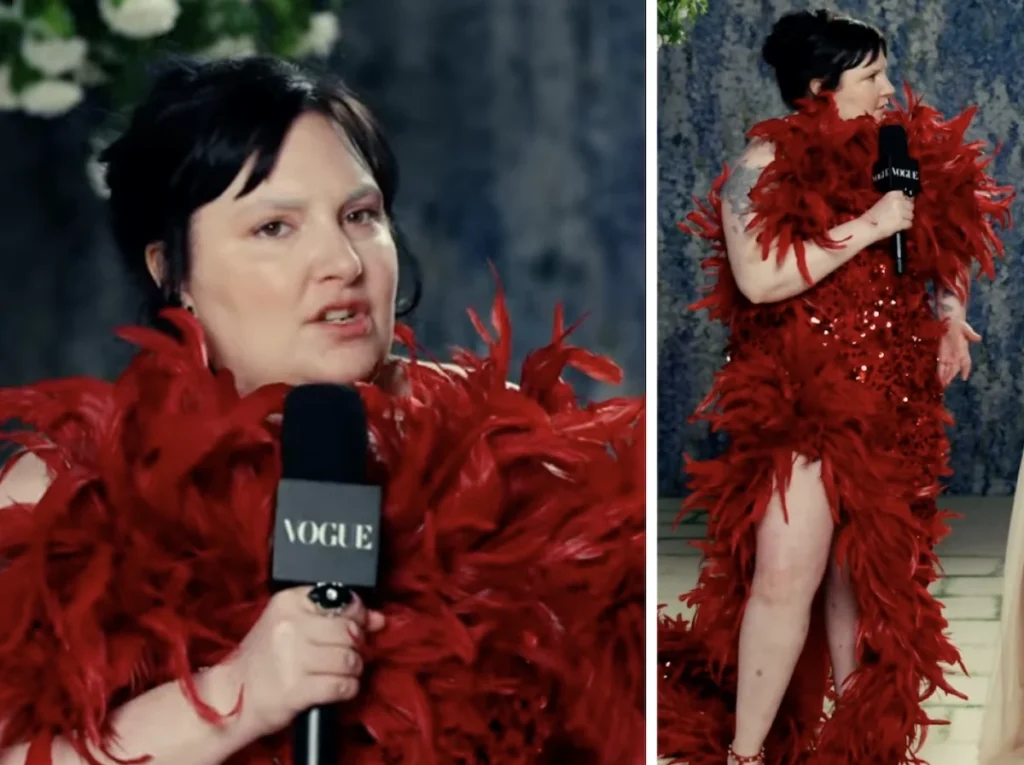

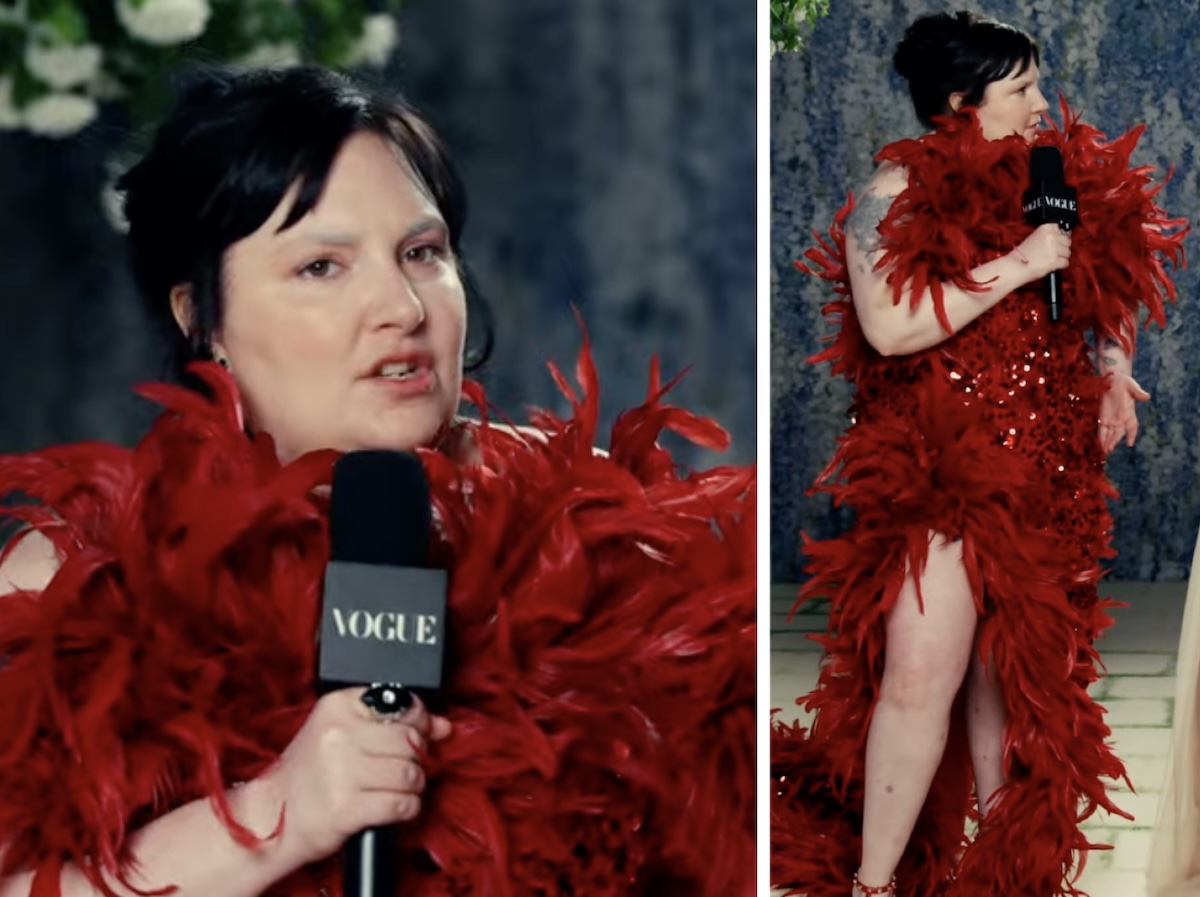
Lena Dunham commanded significant attention at the 2026 Met Gala, making a dramatic return to the prestigious event after a notable absence since 2019. The acclaimed creator of Girls graced the red carpet in a fiery red Valentino ensemble, characterized by its extensive feather boa train and intricate detailing, a look that unequivocally aligned with the evening’s dual theme of "Costume Art" and "Fashion Is Art." Her appearance was a bold declaration, designed not merely to be seen, but to provoke discussion and embody the avant-garde spirit central to the Metropolitan Museum of Art’s annual fundraising spectacle.
The Met Gala: A Premier Cultural and Philanthropic Event
The Met Gala, formally known as the Costume Institute Gala, stands as one of the most exclusive and highly anticipated events in the global fashion and entertainment calendar. Inaugurated in 1948 by fashion publicist Eleanor Lambert, its primary purpose has always been to raise funds for the Metropolitan Museum of Art’s Costume Institute, now officially named the Anna Wintour Costume Center. Over the decades, under the meticulous guidance of Vogue‘s Editor-in-Chief Anna Wintour, the event has transformed from a local society fundraiser into a global fashion phenomenon, drawing A-list celebrities, designers, and cultural luminaries. Each year, the gala coincides with the opening of the Costume Institute’s spring exhibition, with the theme of the exhibition dictating the dress code for the evening. This synergistic approach ensures that the attire worn by attendees serves as a living, breathing extension of the art on display, blurring the lines between fashion and curatorial practice.
The 2026 iteration, held traditionally on the first Monday in May—which fell on May 4th that year—continued this rich tradition. Beyond its celebrity glamour, the Met Gala is a formidable fundraising powerhouse. In recent years, the event has consistently raised over $15 million annually for the Costume Institute, funding its exhibitions, acquisitions, and conservation efforts. This financial underpinning allows the institute to maintain its position as a world-leading repository of fashion history and design. The gala’s influence extends far beyond mere fundraising; it serves as a powerful platform for cultural discourse, challenging perceptions of fashion’s role in society and its legitimacy as an art form.
Decoding the 2026 Theme: "Costume Art" and "Fashion Is Art"
The 2026 Met Gala’s theme, "Costume Art" with a "Fashion Is Art" dress code, provided fertile ground for artistic interpretation, inviting guests to transcend conventional aesthetics and embrace the theatricality and conceptual depth inherent in high fashion. This theme likely sought to explore the historical and contemporary intersections between costume design for performance (theater, film, dance) and the haute couture runway, emphasizing how both disciplines utilize clothing to tell stories, convey character, and evoke emotion. The "Fashion Is Art" directive further pushed attendees to consider their outfits not just as garments, but as wearable sculptures or performance pieces, requiring a thoughtful engagement with artistic principles such as form, color, texture, and narrative.
Such a theme encouraged designers and their celebrity muses to move beyond mere beauty or trend-following, instead prioritizing conceptual integrity and expressive power. It implicitly challenged the often-superficial perception of red-carpet events, positioning the Met Gala as a serious platform for artistic expression and critical dialogue. For many, this theme was an opportunity to showcase fashion’s potential as a medium for social commentary, personal statement, and pure aesthetic exploration, often leading to polarizing yet memorable looks that spark extensive public and critical debate.
Lena Dunham’s Artistic Interpretation: The "Blood Splatter" Vision
Lena Dunham’s choice to interpret the "Costume Art" and "Fashion Is Art" theme through the lens of "blood splatter" was a characteristically bold and provocative move. During a livestream interview from the red carpet, Dunham articulated this intention, stating that her voluminous red Valentino gown was designed to evoke the dramatic, visceral imagery of "blood splatter." This statement immediately elevated her ensemble beyond a simple fashion choice into a deliberate artistic statement, inviting viewers to delve deeper into its conceptual underpinnings.
The gown itself, a vibrant, almost aggressive shade of red, cascaded with an abundance of fabric and a spectacular, oversized feather boa train. The interplay of sequins, which would catch and refract light, combined with the organic, somewhat chaotic texture of the feathers, could indeed create an impression of dynamic, spreading fluid, particularly under the gala’s dramatic lighting. This interpretation aligns with the theme’s call for fashion to be art, transforming a garment into a narrative piece, albeit one that leans into the macabre or the intense. By explicitly stating her inspiration, Dunham provided a lens through which her audience could interpret the visual drama of her outfit, shifting focus from mere aesthetics to symbolic meaning. This approach exemplifies the very essence of the Met Gala’s intention: to stimulate conversation about fashion’s capacity for artistic expression, even if that expression is challenging or unconventional.
Valentino’s Masterpiece: Craftsmanship and Design Philosophy
The creation of Lena Dunham’s 2026 Met Gala gown by Valentino speaks volumes about the enduring legacy and innovative spirit of the iconic Italian fashion house. Under the creative direction, presumably still Pierpaolo Piccioli in 2026 given his long tenure and consistent acclaim, Valentino has cultivated a reputation for exquisite craftsmanship, romantic silhouettes, and a fearless embrace of color and volume. Piccioli’s vision often blends historical reverence with contemporary edge, frequently pushing boundaries while maintaining a core sense of elegance and grandeur.
A gown of this magnitude—described as "fiery red" with a "gigantic feather boa train" and "sequins"—would represent hundreds, if not thousands, of hours of meticulous handcraft by Valentino’s highly skilled petites mains in their Roman atelier. The selection of specific shades of red, the precise cutting and draping of fabric to achieve such volume, and the intricate application of countless sequins would all be executed with unparalleled precision. The feather work, in particular, would require specialized techniques to ensure the boa train achieved both its dramatic scale and its ethereal, flying quality, as noted in the initial article. Such a piece is not merely sewn; it is engineered, designed to withstand movement on the red carpet while maintaining its structural integrity and visual impact. The choice of Valentino for such a bold statement further underscores the brand’s ability to deliver high-impact, artistic creations that resonate with the Met Gala’s demanding aesthetic and thematic requirements, reinforcing its position at the pinnacle of haute couture.
Dunham’s Met Gala Journey: From 2019 to 2026
Lena Dunham’s appearance at the 2026 Met Gala marked a significant return, her first since 2019, highlighting a deliberate re-engagement with one of fashion’s most prominent stages. Her prior appearances at the Met Gala have often been characterized by thoughtful, sometimes unconventional, choices that reflect her unique personal style and artistic sensibilities. In 2019, for the "Camp: Notes on Fashion" theme, Dunham attended alongside Jemima Kirke, wearing a vibrant, playful Christopher Kane dress adorned with embellished gloves, a look that was both whimsical and subversive, perfectly capturing the theme’s essence of exaggerated theatricality.
Her absence from the event for several years following 2019, while not uncommon for celebrities, created a heightened anticipation for her return. This hiatus allowed her 2026 ensemble to feel even more impactful, signaling a deliberate choice to make a grand statement upon her re-entry. The shift from the playful camp of 2019 to the intense, conceptual "blood splatter" vision of 2026 showcases an evolution in her approach to public fashion, demonstrating a willingness to engage with increasingly complex artistic narratives through her attire. Her 2026 look, therefore, can be viewed as a culmination of her journey, embracing a more pronounced artistic and dramatic flair, indicative of an artist who understands the power of visual storytelling on a global platform. The boldness of her choice in 2026 suggests a renewed confidence and a desire to actively participate in the Met Gala’s capacity as a living art exhibition.
The Broader Conversation: Fashion, Art, and Celebrity Expression
Lena Dunham’s 2026 Met Gala ensemble, with its explicit "blood splatter" inspiration and undeniable visual impact, contributes significantly to the ongoing discourse surrounding fashion as an art form and the role of celebrity expression within it. The Met Gala itself is a crucible for these discussions, annually generating debates about creativity versus commercialism, beauty versus provocation, and the boundaries of wearable art. Dunham’s look, which she herself described as deliberately unsubtle, embodies the very tension that makes the Met Gala so compelling.
In an era saturated with social media and instant commentary, celebrity fashion at high-profile events like the Met Gala is often dissected with unprecedented scrutiny. Looks that are overtly artistic or conceptually driven, rather than simply "pretty," frequently divide public opinion. This division, however, is precisely what the "Fashion Is Art" theme encourages. It moves the conversation beyond mere aesthetic judgment to a deeper inquiry into meaning, intention, and execution. By choosing a motif as striking as "blood splatter," Dunham deliberately courted a reaction, challenging viewers to confront the uncomfortable or unconventional, much like performance art or conceptual installations often do. This kind of sartorial statement underscores the power of celebrities to leverage their platforms not just for personal branding, but for artistic commentary, pushing the boundaries of what is considered acceptable or beautiful on a red carpet. Her confidence in presenting such a provocative vision, particularly after a break from the event, reinforces the idea that the Met Gala is increasingly a space for daring artistic expression rather than just a showcase for conventional glamour.
Conclusion
Lena Dunham’s return to the Met Gala in 2026 was a meticulously planned and powerfully executed statement. Her fiery red Valentino gown, with its dramatic feathers and sequins, was more than just an outfit; it was a deliberate artistic interpretation of the "Costume Art" and "Fashion Is Art" theme, envisioned by Dunham as "blood splatter." This bold choice, while undoubtedly polarizing, fulfilled the core purpose of the Met Gala: to ignite conversation, challenge perceptions, and celebrate fashion as a legitimate and potent form of artistic expression. Her appearance, a testament to Valentino’s haute couture mastery and Dunham’s own evolving artistic voice, ensures her place among the most memorable attendees of the 2026 event, leaving an indelible mark on the intersection of celebrity, fashion, and art. The Met Gala continues to thrive as a unique platform where the boundaries of style are not just tested but often gloriously shattered.