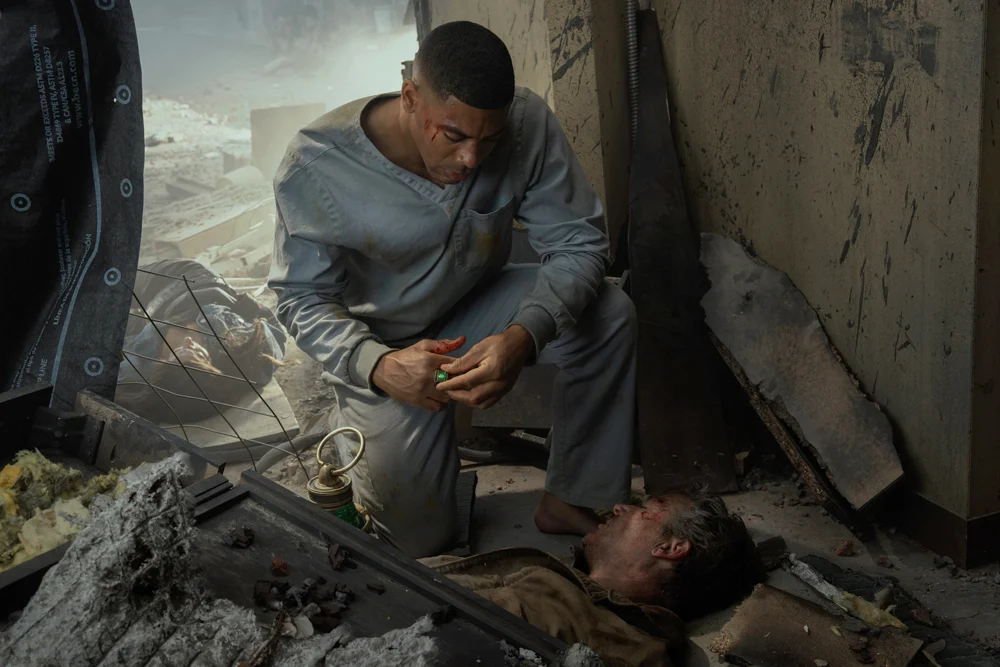

The fifth episode of HBO’s critically acclaimed science-fiction drama series Lanterns delivered a watershed moment for its overarching narrative, resolving several long-standing mysteries while dramatically restructuring the power dynamics within the fictional town of Rushville, Nebraska. Co-created by Damon Lindelof—widely known for his foundational work on complex mystery-box television formats such as Lost—the series has consistently maintained a rigorous pacing strategy designed to prevent audience fatigue. By accelerating the resolution of major plot points, this episode broke away from traditional serialized pacing, leaving viewers with three remaining episodes to explore uncharted narrative territory as the first season approaches its conclusion.
Chronological Disruptions and Narrative Setup
Right from the opening sequence, the episode subverted established structural patterns by utilizing a flashback set in 2007. The series has previously anchored its timeline to decennial intervals: 1986, marking Hal Jordan’s initial acquisition of the power ring; 1996, when Jordan went public with his cosmic identity; 2006, the year of Jordan’s last recorded Halogram system backup; 2016, the primary temporal setting for the current season’s events; and a brief glimpse into 2026, where Jordan’s alleged remains were discovered on a high school football field.
The 2007 flashback established foundational backstory for character Kerri Kane, depicting her arrival in Rushville while attempting to flee a troubled past in Gotham City. The sequence detailed her encounter with two operatives, her subsequent rescue by the character Zoe, and the establishment of a lifelong allegiance. This flashback not only shed light on Zoe’s deep-rooted influence over the town’s populace but also introduced critical context regarding how long Rushville has operated as an autonomous enclave protected by extraterrestrial and clandestine forces.
The Conflict in Rushville and Tactical Divisions
Set against the backdrop of 2016, the narrative intensified as air-soil alarms sounded across Rushville, mobilizing an armed citizenry fiercely loyal to Zoe. The town’s readiness to defend its protector highlighted decades of meticulous community cultivation. Meanwhile, the strategic divide between veteran space cop Hal Jordan and his newly assigned partner, John Stewart, widened significantly.
Trapped inside a heavily damaged rental vehicle following an ambush, John found himself sidelined while Hal executed a calculated maneuver to draw out Antaan and confront Zoe directly. Hal’s rationale—arguing that John’s compliance made him vulnerable and that the Guardians of the Universe were fundamentally untrustworthy—redefined the interpersonal dynamics of the duo. Despite the ethical ambiguities of Hal’s methods, the narrative increasingly validated his skepticism regarding the interstellar authorities, particularly given John’s compromised association with the elusive Manhunter network.
Unraveling the Manhunter Conspiracy
A major turning point in the episode involved the definitive identification of the Manhunter suspect. Confirming earlier viewer theories, William Macon Sr. was unmasked as the operative Manhunter embedded within the community. Following a brutal encounter with Antaan—who infiltrated Macon’s headquarters—Macon’s true nature was exposed before his heart was harvested, failing to crystallize as expected of traditional cosmic artifacts.

Simultaneously, a hospitalized John Stewart confronted Zoe following his near-fatal vehicular entrapment. During this tense exchange, Zoe revealed monumental lore regarding the origins of the Manhunters. According to Zoe, the interstellar guardians created the android operatives to dispense absolute justice, but ultimately deactivated them upon deeming their methods excessively brutal. Zoe claimed to be the sole survivor of the purge, admitting further culpability in the historical assassination of Abin Sur to secure her own survival.
Climax, Confrontation, and Consequences
The climax of the episode culminated in a multi-pronged tactical engagement across Rushville. Hal Jordan confronted Zoe near the municipal water tower, utilizing aerial extraction tactics before her operatives deployed anti-Lantern countermeasures designed to neutralize his ring’s energy reserves. Concurrently, a healed John Stewart broke out of medical containment, armed himself, and moved to intercept both Hal and Zoe.
The resulting confrontation between the two Lanterns at a local motel underscored John’s physical dominance and emotional exhaustion. Rather than executing Hal, John utilized the tactical opening to confront Zoe directly. In a devastating emotional and physical resolution, John chose to breach the foundational oath of the Green Lantern Corps, shooting Zoe and harvesting her heart, which crystallized upon extraction.
Following the elimination of Zoe, John transferred the power ring from Hal to himself, effectively accepting the mantle while simultaneously rejecting the bureaucratic oversight of the Guardians. In his final meeting with Lianna, a representative of the Guardian hierarchy, John returned the crystallized heart—terming it a physical manifestation of intergalactic sins—and explicitly refused to retain the power ring, citing the psychological toll it inflicted on Hal and his own disillusionment with interstellar politics.
Broader Implications and Future Outlook
The fallout from these explosive revelations leaves the remaining three episodes of the season with immense narrative weight. By addressing core mysteries regarding the Manhunters, the death of Abin Sur, and the true nature of Rushville’s isolationism, the production team has cleared the deck for a high-stakes finale.
Analyses of the episode suggest that John Stewart’s ultimate rejection of the ring aligns with the broader thematic exploration of systemic corruption within cosmic institutions. Furthermore, the narrative threads connecting the 2007, 2016, and 2026 timelines indicate that the consequences of these events will reverberate far beyond the current season. With questions remaining regarding the ultimate fate of supporting figures like Billy Macon and the precise sequence of events leading to the 2026 flash-forward, Lanterns continues to cement its status as a cornerstone of modern television science fiction.