

Detailed Chronology of the Incident
The tragedy unfolded in the early hours of May 5, a day typically reserved for the celebration of children and family. At approximately 12:11 a.m., a 17-year-old female high school student was walking home alone along a pedestrian path in the vicinity of Nambu University in Gwangsan-gu, Gwangju. According to police reports, the suspect, Jang, had been waiting in his parked vehicle nearby, allegedly scouting for a potential target.
As the victim passed his location, Jang exited his vehicle and launched a sudden, unprovoked attack with a weapon. The victim’s screams alerted a male high school student who was in the area. Despite the inherent danger, the young man rushed to the scene to assist the female victim. In the ensuing struggle, the male student was also stabbed by the assailant.
The male victim sustained non-life-threatening wounds and was later stabilized at a local medical facility. However, the female student suffered critical injuries. Emergency services transported her to a nearby hospital, but despite the efforts of medical staff, she succumbed to her wounds and was pronounced dead.

Following the attack, Jang initiated a calculated escape. He initially fled the scene in his private vehicle but eventually abandoned it, switching to a taxi in an attempt to evade law enforcement. The Gwangju Gwangsan Police launched an immediate and intensive manhunt, utilizing CCTV footage and tracking the suspect’s movements through transportation records. At approximately 11:24 a.m. the same day—roughly 11 hours after the initial attack—police successfully apprehended Jang and took him into custody.
Suspect Profile and Interrogation Findings
During preliminary interrogations at the Gwangju Gwangsan Police Station, Jang’s statements provided a chilling insight into the random nature of the crime. The 24-year-old suspect reportedly confessed to the stabbing but claimed that he had no prior relationship with either victim. When questioned about his motive, Jang stated that he had been suffering from persistent suicidal ideations and a general sense of despair.
"I didn’t have a specific reason for attacking her," Jang reportedly told investigators. He further explained that he felt a sense of hopelessness regarding his own life and had been contemplating self-harm before deciding to direct his internal distress outward toward a random passerby.
Police investigations revealed that the attack was not entirely impulsive. Evidence suggests that Jang had "laid in wait" inside his car, suggesting a degree of premeditation in the act of committing violence, even if the specific target was chosen at random. This distinction is critical for the legal proceedings, as premeditation can lead to more severe sentencing under South Korean law.

The Phenomenon of "Mudigma" Crimes in South Korea
This incident is the latest in a series of "Mudigma" (motive-less) crimes that have shaken South Korea over the past few years. The term refers to violent acts where the perpetrator targets individuals without a clear personal grievance or financial incentive, often citing societal resentment or mental health struggles as the catalyst.
In 2023, South Korea witnessed a surge in such incidents, most notably the stabbing spree near Sillim Station in Seoul and the car-ramming and stabbing attack at a department store in Seongnam’s Bundang district. These events prompted the National Police Agency to increase patrols in crowded areas and led the government to consider the introduction of "life without parole" as a sentencing option to deter such heinous acts.
The Gwangju incident shares several characteristics with previous "Mudigma" cases:
- Random Targeting: The victim was a stranger walking in a public space.
- Young Perpetrator: Many of these crimes involve men in their 20s or 30s who report feeling socially isolated or economically disenfranchised.
- Internalized Distress: The suspect’s claim of suicidal thoughts mirrors the psychological profiles of previous attackers who externalized their self-destructive urges.
Public Reaction and the Heroism of the Bystander
The death of a high school student on Children’s Day has sparked an outpouring of grief and anger across South Korea. Social media platforms have been flooded with tributes to the deceased student and calls for justice. Many citizens have expressed a growing sense of unease regarding the safety of public spaces, particularly at night.

Concurrently, there has been significant praise for the bravery of the male high school student who intervened. Public sentiment highlights his actions as a rare display of courage in an era often characterized by the "bystander effect." Local authorities are reportedly considering official recognition for the young man’s heroic attempt to save his peer, despite the personal risk he faced.
Legal experts suggest that the male student’s testimony will be a cornerstone of the prosecution’s case. His firsthand account of the attack provides essential evidence of the suspect’s intent and the brutality of the assault.
Broader Implications and Mental Health Concerns
The Gwangju stabbing brings the intersection of mental health and public safety back into the national spotlight. Jang’s admission of suicidal thoughts prior to the murder highlights a critical gap in the country’s mental health support systems. While South Korea has made strides in de-stigmatizing mental health issues, the transition from internal ideation to external violence remains a significant challenge for law enforcement and social workers alike.
Experts argue that "Mudigma" crimes are often the result of a "lonely wolf" syndrome, where individuals who feel disconnected from society reach a breaking point. The Gwangju incident underscores the need for proactive intervention strategies that can identify at-risk individuals before they resort to violence.
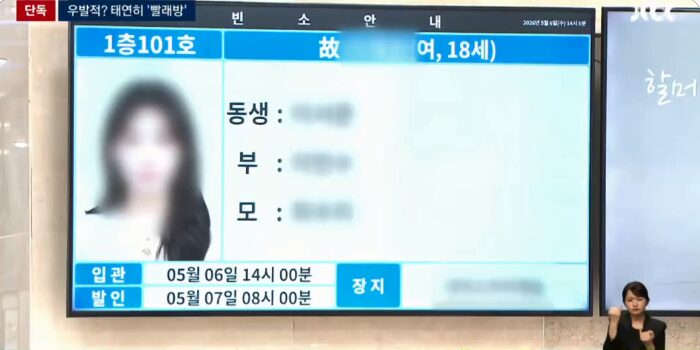
Furthermore, the timing of the attack—on a national holiday—has amplified the trauma for the local community. Children’s Day is meant to represent the safety and future of the youth; the loss of a 17-year-old girl in such a violent manner stands in stark contrast to the values the day is intended to uphold.
Legal Proceedings and Potential Sentencing
As the investigation continues, the Gwangju Gwangsan Police are expected to conduct a psychological evaluation of Jang to determine his mental state at the time of the crime. While his claims of suicidal thoughts may be used by the defense to argue for leniency, the evidence of him "laying in wait" strongly suggests a level of planning that prosecutors will likely use to push for the maximum penalty.
Under the South Korean Criminal Act, murder is punishable by death, life imprisonment, or a prison term of at least five years. However, the death penalty, while still on the books, has not been carried out in South Korea since 1997, effectively making life imprisonment the harshest available sentence. Given the unprovoked nature of the attack and the fact that it resulted in the death of a minor and the injury of another person, legal analysts expect the prosecution to seek a life sentence.
The police are also investigating Jang’s digital footprint and personal history to see if there were any warning signs or previous threats made online. In the wake of the 2023 attacks, South Korean authorities have become more vigilant in monitoring online forums for "murder hints" or threats of mass violence.

Conclusion and Future Outlook
The fatal stabbing in Gwangju is a tragic reminder of the fragility of public safety and the devastating impact of unaddressed mental health crises. As the family of the young victim mourns her untimely death, the nation is left to grapple with difficult questions about how to prevent such senseless acts of violence in the future.
The bravery of the male student who intervened serves as a solitary beacon of hope in a dark narrative, yet his injuries serve as a reminder of the danger inherent in such situations. For Gwangju and the rest of South Korea, the path forward involves not only rigorous legal prosecution of the suspect but also a comprehensive re-evaluation of social safety nets, urban security, and mental health outreach to ensure that a tragedy of this nature does not recur.
The Gwangju Gwangsan Police Station is expected to forward the case to the prosecution within the coming week, at which point more details regarding the suspect’s background and the specific weapon used may be disclosed. For now, a community remains in mourning, reflecting on a Children’s Day that was marred by an unthinkable act of cruelty.