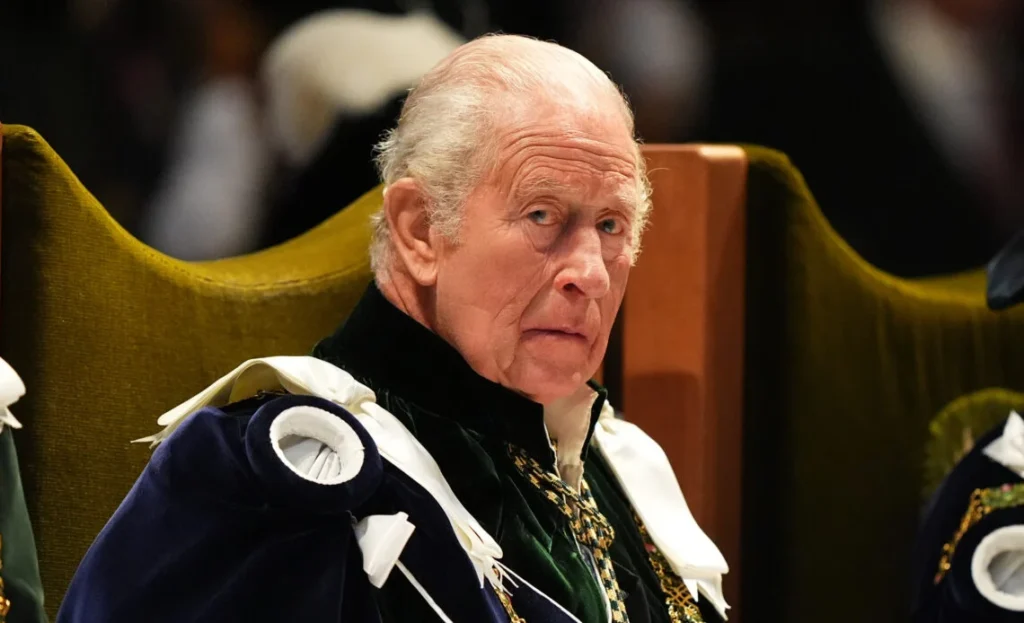

The British monarchy could soon find itself charting a profoundly new diplomatic course in East Asia, as senior palace aides confirm that King Charles III would carefully consider undertaking a historic state visit to China should the British Government formally request it. Such a landmark engagement would shatter a four-decade absence of British sovereigns traveling to the world’s second-largest economy, marking the first time a reigning British monarch has set foot on mainland Chinese soil since Queen Elizabeth II’s historic journey in October 1986.
While no formal invitation has been issued, and no official plans have been scheduled by Whitehall or Beijing, the mere acknowledgment by senior royal officials that such a trip is under consideration signals a notable evolution in foreign policy strategy. It also underscores a broader shift in how the current sovereign views his role as a diplomatic asset. As global geopolitical alignments shift and economic pressures mount, the British Government increasingly relies on the Crown to navigate complex international waters. However, a potential visit by King Charles to Beijing would not occur in a vacuum; it would require navigating a delicate minefield of historical grievances, past personal criticisms, and deeply polarized human rights debates that have defined the monarch’s relationship with Chinese leadership for decades.
A Four-Decade Diplomatic Hiatus
To understand the magnitude of a potential royal tour to China, one must look back to the shifting geopolitical sands of the late Cold War. In October 1986, Queen Elizabeth II and the Duke of Edinburgh undertook a six-day historic state visit to China at the invitation of President Li Xiannian. That tour was widely hailed as a watershed moment in Sino-British relations, coming just two years after the historic Sino-British Joint Declaration was signed in 1984, paving the way for the 1997 handover of Hong Kong’s sovereignty.
Yet, in the forty years since that landmark journey, no reigning British monarch has returned to the country. While British prime ministers, foreign secretaries, and trade delegations have traveled extensively to Beijing and Shanghai to foster commercial ties, the Crown has remained conspicuously absent from mainland diplomatic itineraries.
The reasons for this prolonged hiatus are multifaceted, rooted in a combination of shifting political priorities, logistical hurdles, and, crucially, the personal reservations of the current monarch. When asked by reporters whether the King would entertain a trip to Beijing, a senior royal aide offered a carefully calibrated response that illuminated the internal thinking of the royal household. “If the Government said, ‘Will the King go to China?’, I think we [would] think about it very carefully,” the aide noted.
The official elaborated on the immense complexities involved in orchestrating such a journey, stating, “China is a hugely important country. It’s a very complex country. It would pose a lot of complexity in putting a programme together. There hasn’t been a state visit there for 40 years. This is the 40th anniversary of the last state visit.”
A History of Friction: Charles, Hong Kong, and the "Appalling Old Waxworks"
The prospect of King Charles III visiting Beijing carries considerable historical baggage, given the monarch’s well-documented skepticism toward successive generations of Chinese leadership. Unlike his mother, whose diplomatic duties routinely superseded her personal opinions, Charles has occasionally allowed his private views regarding Chinese officials to become public, creating lingering diplomatic sensitivities.
The most famous instance of this friction occurred in July 1997, when then-Prince of Wales traveled to Hong Kong to represent the Queen at the official handover ceremony marking the end of British colonial rule. Standing alongside Chinese President Jiang Zemin, Charles oversaw the transfer of the territory back to Beijing. However, his private thoughts on the proceedings were far less measured than his public demeanor.
In private diary entries that were subsequently leaked to the media, Charles offered a scathing assessment of the Chinese leadership attending the ceremony. He famously dismissed the high-ranking officials as “appalling old waxworks,” an unflattering characterization that caused acute embarrassment in Whitehall and chilled relations with Beijing.
The tension manifested in subsequent diplomatic snubs over the following decade. During President Jiang Zemin’s historic state visit to the United Kingdom in 1999—the first-ever visit by a Chinese head of state to Britain—Prince Charles attended a preliminary lunch with the visiting leader. However, in a pointed diplomatic protest, he deliberately boycotted the state banquet hosted by the Queen at Buckingham Palace, as well as a reciprocal banquet held at the Chinese embassy. Former royal press secretary Mark Bolland later confirmed that the absence was a calculated snub rather than a scheduling conflict.
Further estrangements followed. In 2005, when Chinese President Hu Jintao undertook a state visit to Britain, Prince Charles was notably absent from the proceedings, instead undertaking a series of official engagements in the United States. Three years later, in 2008, he chose not to attend the opening ceremonies of the Beijing Olympic Games, joining a chorus of international figures expressing concern over China’s domestic policies and human rights record in Tibet. Consequently, despite a lifetime of extensive international travel that has seen him visit nearly every corner of the globe, King Charles has never set foot on mainland China.
The Evolution of the Sovereign’s Diplomatic Role
The renewed discussion surrounding a potential state visit to China coincides with a noticeable recalibration of the British monarchy’s diplomatic posture under King Charles III. Since ascending the throne in September 2022 following the passing of Elizabeth II, the 76-year-old monarch has embraced a more active, hands-on approach to international relations, positioning himself as what aides have described as a “great secret weapon” for the British Government.
In contrast to Queen Elizabeth II, whose reign was defined by strict adherence to political neutrality and a reactive diplomatic posture, King Charles has demonstrated a willingness to lean into politically sensitive scenarios when invited to do so by Whitehall. Over the past several years, his official overseas itinerary has included high-profile state visits to European powers such as Germany and France, as well as Commonwealth nations like Kenya and Australia, alongside trips to Italy and the United States.
These engagements have frequently required the King to navigate deeply complicated historical and contemporary issues. His recent tour of the Caribbean, for instance, unfolded against a backdrop of intensified debate regarding Britain’s colonial past, growing demands for financial and systemic reparations for the transatlantic slave trade, and active domestic discussions within several Commonwealth realms regarding transition to republican status.
Palace officials have emphasized that the King’s active diplomatic engagement is conducted in strict compliance with the British constitution and always with the full backing of the Government. One senior aide explained the subtle yet distinct philosophical shift defining the new reign: “In a completely constitutionally compliant way, and with full support of the Government, the King does still engage in issues. Not anything which is party political, certainly, but where there is consensus, there is an agreement now that it is perfectly reasonable for the sovereign to do that.”
The aide added that this dynamic represents a departure from the style of the late Queen, while carefully stressing that neither approach is inherently superior to the other—merely reflective of different eras and changing national needs.
Geopolitical Implications and Strategic Realities
For the current Labour government, led by Prime Minister Keir Starmer, navigating relations with Beijing has been a complex balancing act. Ministers have sought to stabilize economic ties and engage with the world’s second-largest economy on pressing global challenges such as climate change and international trade, while simultaneously pushing back against China’s security crackdowns in Hong Kong, cyberespionage allegations, and geopolitical posturing regarding Taiwan.
Deploying the sovereign for a state visit to Beijing would represent the ultimate diplomatic gambit. State visits are powerful instruments of statecraft, traditionally deployed only when a government wishes to signal a major strategic reset, solidify economic cooperation, or smooth over fractured bilateral relations.
Analysts note that if a royal visit were to materialize, it would carry significant symbolic weight both domestically and internationally. For Beijing, hosting the British monarch would serve as a major diplomatic coup, conferring immense prestige and signaling international normalization and engagement with Western powers despite ongoing ideological friction. For London, a royal tour could unlock critical trade agreements, foster cultural exchange, and provide a direct channel of communication at a time when traditional diplomatic pathways face increasing strain.
At the same time, any such initiative would inevitably draw intense scrutiny from human rights organizations, parliamentary critics, and international allies. Questions would immediately be raised regarding how the King—who has spent decades championing environmental sustainability, cultural preservation, and interfaith dialogue—would address China’s environmental record, treatment of religious and ethnic minorities, and suppression of political dissent during public and private discussions.
The Path Forward
As it stands, the possibility of King Charles III traveling to China remains purely hypothetical. Palace officials have reiterated that no official invitation has been extended, and no concrete planning has been initiated by the Foreign, Commonwealth & Development Office (FCDO).
Nevertheless, the openness expressed by senior aides indicates a pragmatic realization within royal circles: that the challenges of the 21st century require a dynamic, flexible monarchy willing to transcend historical baggage in the service of national interest. Whether the 40-year anniversary of Queen Elizabeth II’s historic 1986 journey will ultimately inspire a new chapter in Sino-British royal diplomacy remains to be seen. For now, the decision rests firmly in the hands of Whitehall, waiting for a strategic moment when the complex benefits of engagement outweigh the considerable political and historical risks.