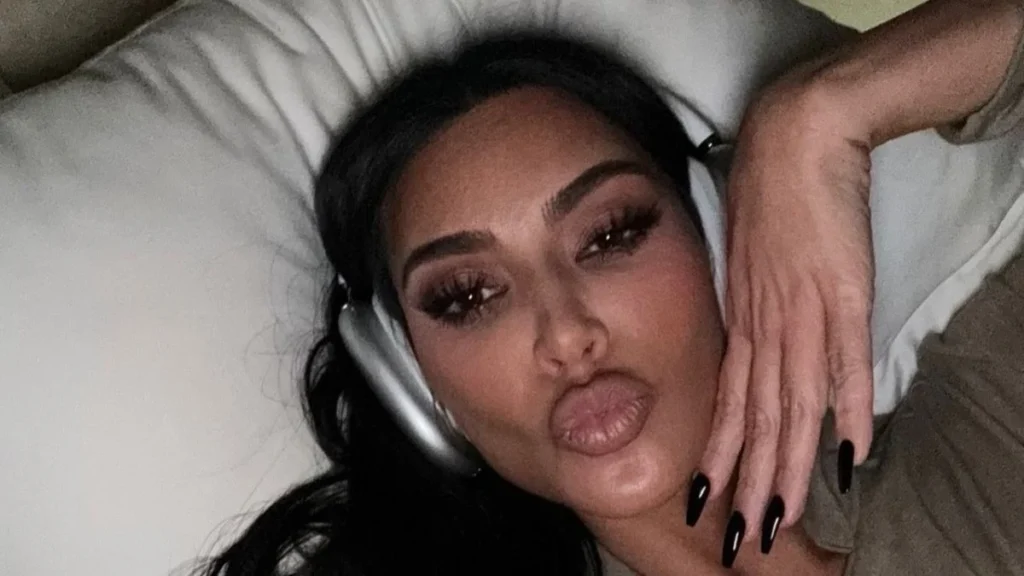

Kim Kardashian continues to blur the lines between television character styling and high-fashion curation, most recently stepping into an archival Alexander McQueen ensemble for a high-profile editorial feature. Published on November 5, the photograph—captured by stylist Soki Mak as part of a new feature for Perfect Magazine—showcases the reality television mogul, entrepreneur, and budding actress posing against a minimalist, neutral background. The look highlights a growing trend among celebrities and luxury stylists: digging deep into fashion history to source museum-quality ready-to-wear pieces for modern media consumption.
In the striking new snap, Kardashian wears a vintage two-piece set originating from Alexander McQueen’s critically acclaimed Spring/Summer 2004 collection, sourced by the New York-based luxury vintage retailer Into Archive. The beige-and-cream ensemble marries historical tailoring techniques with avant-garde sportswear influences, blending structured high-fashion corsetry with complex paneled construction. This sartorial choice arrives concurrently with Kardashian’s ongoing work on the second season of the Hulu legal drama All’s Fair, where she reprises her role as high-powered attorney Allura Grant—a character whose wardrobe has quickly become a focal point of fashion commentary.
Anatomy of an Archival Masterpiece
The Alexander McQueen archival set worn by Kardashian represents a masterclass in garment construction from the British designer’s eponymous label. The jacket features sharp, structured shoulder pads typical of mid-2000s runway silhouettes, balanced by a row of tonal buttons running down the center front. In styling the piece, Kardashian left several upper buttons undone, creating a dramatic, plunging V-neckline that frames her décolletage while maintaining the garment’s inherent architectural integrity.
Intricate detailing defines the torso of the jacket. Quilted geometric inserts, metallic silver textile appliqués, and elaborate corset-like stitching trace the wearer’s body, pulling inward to create an intensely pinched waistline before flaring gracefully into a subtle peplum hem. This careful play on volume and structure is mirrored in the coordinating midi skirt, which features matching silver accents and ribbed side panels. Cut in a sleek pencil silhouette, the skirt breaks just below the knees into a flared, asymmetrical flounce hemline that introduces fluid movement to an otherwise rigid and tightly tailored look.
To disrupt the monochromatic nude palette, stylist Soki Mak introduced a sharp pop of color via Kardashian’s footwear. The ensemble was anchored by vibrant cherry-red pointed-toe pumps, detailed with high-contrast black ghillie laces that wrapped securely around the ankles. Beauty styling was kept intentionally understated to prevent competing with the intricate construction of the McQueen pieces. Kardashian wore her dark hair parted down the middle, with soft waves cascading over her shoulders and down her back. Her makeup leaned into warm, bronzed contouring, paired with a subtle brown smoky eye and a muted nude glossy lip. Eschewing visible jewelry and accessories, the overall aesthetic remained clean, architectural, and strictly focused on the garment’s historical provenance.
The Convergence of Television and High Fashion in All’s Fair
The timing of Perfect Magazine’s feature coincides with heightened media attention surrounding Season 2 of Hulu’s legal drama All’s Fair, executive produced by Ryan Murphy. Kardashian’s involvement in the legal series has positioned her as a central figure in modern television style, drawing comparisons to other landmark fashion-centric shows. As Allura Grant, Kardashian’s character navigates high-stakes courtroom battles and upscale Los Angeles boardrooms, with a costume design department tasked with projecting authority, wealth, and contemporary trendiness.
The choice to utilize archival pieces—both on-screen and in promotional editorial spreads—reflects a strategic shift in how celebrity wardrobes are curated. Rather than relying solely on freshly debuted runway looks straight from Paris or Milan fashion weeks, stylists are increasingly collaborating with luxury vintage archives and specialty retailers. This approach not only provides a distinct visual identity that separates the wearer from mass-market trends but also aligns with broader consumer movements toward sustainable luxury and fashion history appreciation.
The Rise of Into Archive and the Archival Fashion Market
The sourcing of the Spring/Summer 2004 Alexander McQueen set through Into Archive underscores the booming market for vintage designer garments. Over the past half-decade, the demand for pre-owned runway pieces from legendary designers—such as Alexander McQueen, John Galliano for Christian Dior, Jean Paul Gaultier, and Vivienne Westwood—has skyrocketed. Museums, private collectors, and celebrity stylists now compete for rare pieces from the late 1990s and 2000s, driving secondary market prices to unprecedented heights.
For retailers like Into Archive, placements in prominent publications like Perfect Magazine and associations with high-profile figures like Kim Kardashian serve as powerful validation of their curation business model. By rescuing historical garments from obscurity and placing them on some of the world’s most recognizable cultural icons, these vintage purveyors bridge the gap between museum conservation and contemporary pop culture. The strategy elevates vintage clothing from mere nostalgia to active, cutting-edge style statements.
Implications for Celebrity Styling and Sustainable Luxury
Kardashian’s embrace of archival fashion in editorial settings signals a maturing approach to celebrity image-making. Historically, the pressure for top-tier celebrities was to wear looks that were strictly contemporaneous—debuted mere weeks prior during international fashion weeks. However, the integration of historical archives allows stylists to construct narratives that span decades of design innovation.
Furthermore, this trend carries positive implications for sustainability within the luxury sector. By highlighting pre-owned, vintage, and archival garments, high-profile figures normalize the circulation of existing luxury goods rather than demanding continuous, resource-intensive new production. While high-fashion archival pieces are often inaccessible to the general public due to cost and scarcity, their visibility in mainstream media encourages a deeper appreciation for garment durability, exceptional craftsmanship, and fashion history.
As Kardashian continues to balance her burgeoning legal career, television projects like All’s Fair, and her status as a global style icon, her collaboration with stylists like Soki Mak demonstrates a calculated effort to align her public image with intellectual fashion curation. Whether she is walking a red carpet, filming on a studio lot, or appearing in the pages of Perfect Magazine, the message remains clear: the future of high-fashion styling is deeply rooted in a respectful, creative re-examination of the past.