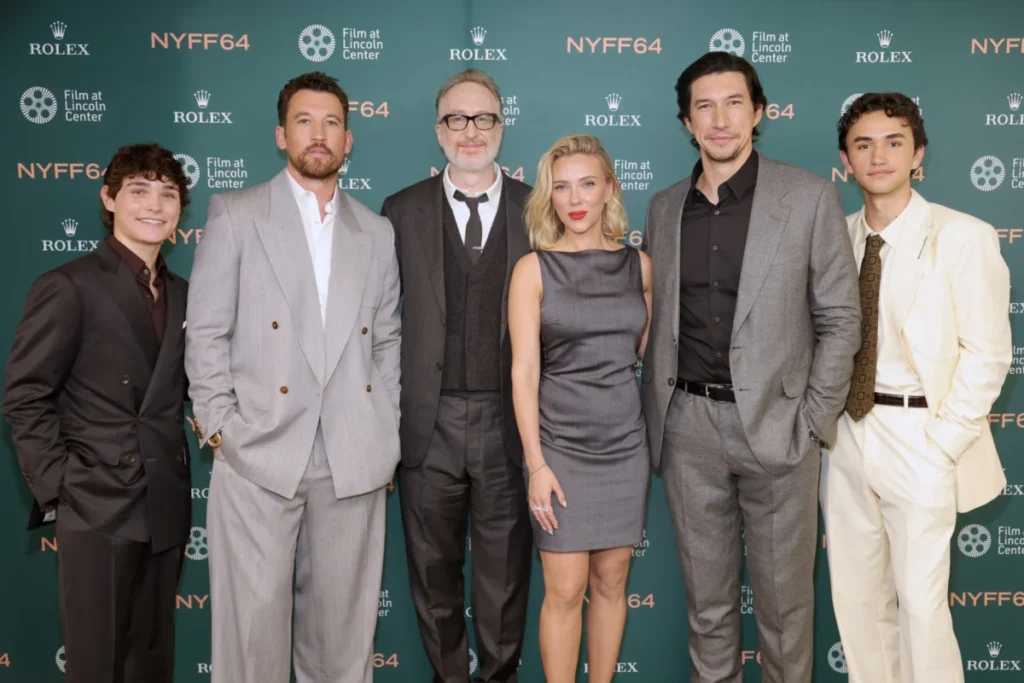

Acclaimed filmmaker James Gray returned to the festival circuit with his latest cinematic endeavor, Paper Tiger, which made its highly anticipated North American premiere as the opening-night feature of the 2026 New York Film Festival. Known for his deeply personal, character-driven storytelling, Gray once again mines his own upbringing in Queens, New York, to construct a gripping semi-fictionalized narrative set against the gritty backdrop of the 1980s. Distributed by Neon, the film is scheduled for a theatrical rollout beginning with a select U.S. release on November 13, followed by a wider expansion on November 20.
Main Facts and Narrative Premise
Paper Tiger follows the tumultuous journey of a working-class Queens family whose lives are upended after becoming entangled with the Russian mob. The central conflict is sparked by a high-stakes moneymaking scheme pitched to family patriarch Irwin—portrayed by Miles Teller—by his ambitious and volatile older brother, Gary, played by Adam Driver. Rounding out the central domestic dynamic is Hester, Irwin’s wife, brought to life by Scarlett Johansson.
While the film shares thematic DNA with Gray’s previous work—most notably his 2022 semi-autobiographical coming-of-age drama Armageddon Time—the director has been quick to clarify that Paper Tiger is neither a direct sequel nor a strict transcription of his own childhood memories. Instead, the feature blends biographical touchstones with heightened dramatic tension, adopting a structural and atmospheric tone that evokes classic thriller cinema.
Speaking to journalists and audiences following the premiere at the New York Film Festival, Gray elaborated on the tonal departure from his earlier filmography. “This one is much different. I think that one was much more close to the facts of the case,” Gray noted, referencing Armageddon Time. “There are many things that my brother, I’m sure, will recognize as from our life, but it’s not a documentary. And I didn’t think it was a sequel. I wanted to make something kind of a little bit… Hitchcockian. Pulpier is the wrong word, but a little bit more dramatically intense.”
Chronology and Festival Debut
The journey of Paper Tiger to the 2026 New York Film Festival marks another major milestone in Gray’s enduring relationship with elite autumn cinema showcases. The film first gained international industry attention earlier in the year, notably during its initial rollout discussions and promotional events following its European footprint in Cannes.
The North American premiere at Lincoln Center’s prestigious festival served as a major cultural event for the 2026 calendar, drawing critical acclaim for its performances, meticulous period detail, and atmospheric tension. The rigorous festival reception set the stage for Neon’s targeted theatrical release strategy, which positions the film as both a prestige awards contender and a gripping theatrical experience heading into the competitive late-autumn box office window.
Following the screening, Gray, alongside members of the cast and crew, participated in an in-depth Q&A session on Friday night, shedding light on the thematic underpinnings, directorial philosophy, and unconventional narrative choices that define the project.
Supporting Data and Character Dynamics
Beneath the veneer of a 1980s crime thriller involving organized crime and financial desperation, Gray has consistently emphasized that Paper Tiger functions fundamentally as a domestic drama. The narrative places interpersonal relationships at the absolute center of the frame, treating external criminal pressures as catalysts to test the bonds of familial love and loyalty.
“I was trying to make a film in which the personal connection is everything, that love is everything,” Gray explained during press interviews leading up to the premiere. “Through that of course you want people to feel suspense and intensity and things that we love in a good drama, you hope. But then in the end, dare I use the word catharsis, what connects us is what matters. It’s almost a cautionary tale.”
This thematic emphasis on authentic human connection extended directly to the directorial guidance on set, particularly for younger cast members. Roman Engel, who portrays Irwin and Hester’s youngest son—serving as a narrative proxy for Gray himself—shared insights into the collaborative environment fostered by the director. According to Engel, Gray’s primary direction was to prioritize emotional truth over theatrical mimicry. “He would mostly just try to tell me to be myself on set and don’t try to live someone else’s experience, try to live your own and do the actions you would do while whatever’s happening to you,” Engel remarked.
Unconventional Resolutions and Open-Ended Storytelling
One of the most striking elements of Paper Tiger is its refusal to provide tidy narrative closures for its central characters. The film concludes as Gary, Irwin, and Hester navigate their respective personal crises, reaching a critical juncture before any of them learn the definitive fates of the others.
Rather than viewing this ambiguity as a narrative hurdle, Gray intentionally designed the conclusion to transcend the physical boundaries of the screen. During the post-screening Q&A session, the director articulated his philosophical approach to the film’s finale, championing an open-ended structure that mirrors the unpredictable nature of real life.
“I love the idea that the life of the movie goes on past the movie,” Gray stated. “I love the open ending. I love the idea that the film exists past the boundaries of the screen and the time. With all of the characters, I wanted to make sure that there was a completion to their openness in a way, how open their characters were, and that nobody has the whole picture, because that’s like life, and it’s very untraditional actually for movies. Usually, in a movie somebody has the whole story.”
Broader Impact and Industry Implications
The release of Paper Tiger arrives at a critical juncture for specialized prestige cinema, occupying a unique space where auteur-driven storytelling meets commercial genre elements. By pairing an intensely personal, geographically specific narrative about 1980s Queens with the high-stakes tension of a mob drama, Gray bridges the gap between intimate biographical drama and accessible cinematic thrills.
Furthermore, the casting configuration—featuring powerhouse performances from Adam Driver, Miles Teller, and Scarlett Johansson—places the project at the forefront of the fall film conversation. As independent distributors like Neon continue to navigate shifting box office landscapes, platform releases such as the November rollout for Paper Tiger demonstrate a continued commitment to theatrical exhibition for original, adult-oriented dramas.
As audiences prepare to experience the film when it hits select theaters on November 13 before expanding nationally on November 20, Paper Tiger stands poised to leave a lasting impression. By prioritizing emotional authenticity, atmospheric suspense, and a defiant resistance to conventional Hollywood closure, James Gray has crafted a work that resonates far beyond the final frame, inviting viewers to ponder the fragile ties that bind families together under the weight of external peril.