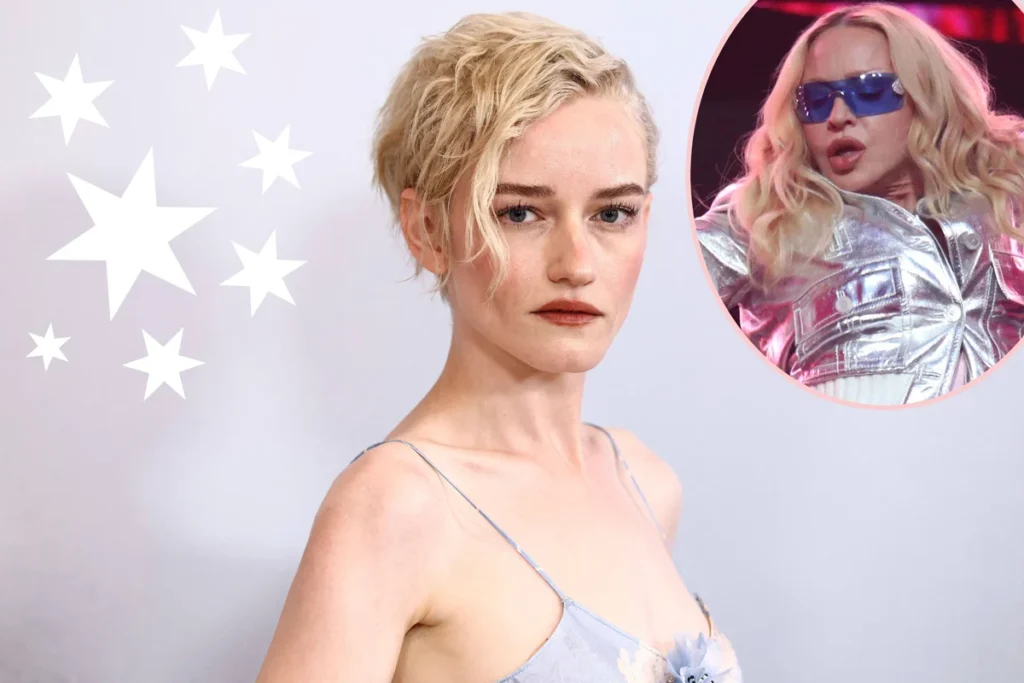

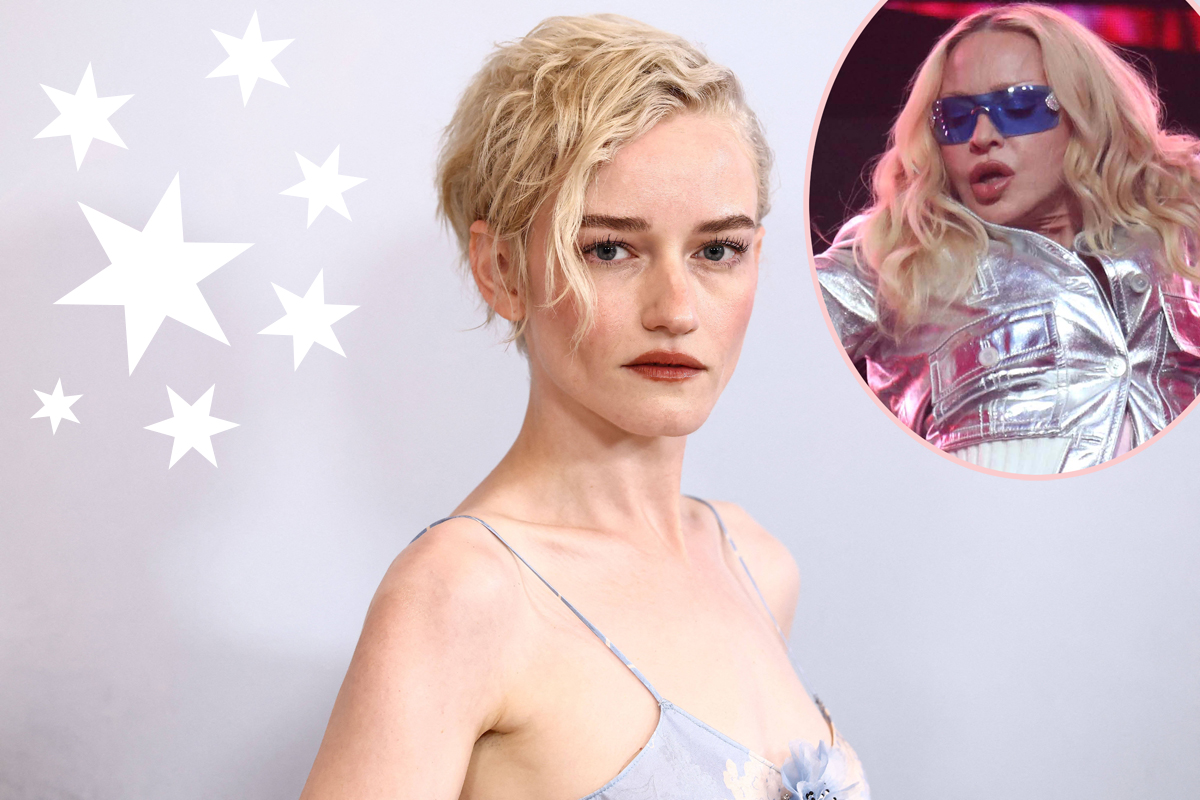
The highly anticipated biographical film detailing the life and career of pop icon Madonna remains in a state of professional uncertainty, with lead actress Julia Garner recently offering a pragmatic update on the project’s stalled status. Originally envisioned as a comprehensive chronicle of the Material Girl’s ascent to global superstardom, the production has encountered significant headwinds since its inception, moving from a greenlit studio priority to a project currently seeking a new home.
In a recent interview with CBS News, Garner, who was selected to portray the singer following an intensive "boot camp" audition process, confirmed that the project’s future is no longer within her purview. Garner’s remarks, which highlighted her deep professional respect for the artist, underscored the disconnect between the creative preparation she invested and the administrative hurdles facing the film’s production. "I love Madonna. I think she’s incredible. She works. She taught me properly how to work," Garner stated, emphasizing the personal connection she developed with the singer during the film’s development cycle. Regarding the film’s current status, she added, "It’s not up to me. I would love for the movie to get made, obviously. But I also feel whatever happens, like, I made a great friend."
A Chronology of Development and Stagnation
The genesis of the project dates back to September 2020, when Universal Pictures officially announced that it would develop a film centered on Madonna’s life. The project generated immediate industry buzz, largely due to Madonna’s unprecedented level of involvement. Unlike many unauthorized biopics, this project was designed to be directed by the icon herself, with a script co-written by Madonna and Diablo Cody, the Academy Award-winning screenwriter of Juno.
The casting process became a significant cultural event in itself. In 2022, after a grueling, months-long audition process involving singing, dancing, and acting challenges—which industry insiders described as a "Madonna boot camp"—Julia Garner was selected from a field of high-profile candidates, including Florence Pugh and Sydney Sweeney.
However, the momentum shifted in early 2023. Universal Pictures officially shelved the project, citing a combination of creative differences and fiscal concerns. The cancellation coincided with the announcement of Madonna’s "Celebration Tour," a massive global retrospective of her four-decade career. At the time, industry analysts suggested that the logistical demands of a global tour and the complexities of condensing a massive cultural legacy into a two-hour narrative contributed to the studio’s decision to move on. Since that time, the project has effectively entered "development limbo," a common but often terminal phase in Hollywood where a project retains its creative elements but lacks the financial backing or distribution platform required for principal photography.
The Dynamics of Artistic Control in Biopics
The challenges faced by the Madonna project highlight a recurring tension in the film industry: the balance between artist-led creative vision and studio-mandated budgetary discipline. Madonna’s insistence on directing her own life story is a rarity in modern Hollywood. While studios often favor established directors to manage the technical and financial risks of a production, the subject’s desire to maintain narrative control often complicates the traditional relationship between talent and the studio.
By choosing to direct, write, and oversee the creative direction of the biopic, Madonna sought to avoid the common pitfalls of biographical films that often mischaracterize or oversimplify the subject’s lived experience. However, this level of control requires a studio willing to surrender significant oversight. When that alignment fails, the project often stalls. The lack of a confirmed director or studio at this juncture suggests that the creative vision for the script may still be in flux or that the current market for musical biopics—though historically successful—requires a specific financial risk profile that the current draft does not meet.
The Economic Context of Music Biopics
The broader context of this delay must be viewed against the backdrop of the current commercial landscape for musical biopics. In recent years, films like Bohemian Rhapsody (2018), Rocketman (2019), and Elvis (2022) have proven that there is a massive, built-in audience for stories rooted in the histories of iconic musical figures. Bohemian Rhapsody, in particular, earned over $900 million globally, signaling to studios that the genre is a reliable vehicle for both box office returns and awards recognition.
However, the genre is also prone to market saturation. With the release of Back to Black (Amy Winehouse) and other upcoming projects centered on figures like Bob Dylan and Michael Jackson, studios are becoming increasingly selective. The financial viability of a Madonna biopic is indisputable, given the longevity and cultural footprint of her discography. Yet, the budget required to authentically recreate the various eras of her career—from the gritty New York club scene of the late 1970s to the elaborate stadium spectacles of the 1990s—requires a substantial investment. If a studio cannot reconcile the projected budget with the potential for international box office performance, they are likely to pause production indefinitely.
Future Implications and Potential Pathways
As of late 2026, the question remains: where does the project go from here? There are three primary paths typically available to stalled productions of this caliber.
First, the project could be picked up by a streaming giant. Platforms like Netflix or Apple TV+ have demonstrated an appetite for high-profile biographical content and have the liquidity to fund large-scale productions without the immediate pressure of theatrical box office returns. Such a partnership would provide the necessary capital to move the film into pre-production, though it would also necessitate a shift in distribution strategy.
Second, the film could undergo a significant creative restructuring. This might involve bringing in a seasoned production partner to assist with the technical aspects of direction, allowing Madonna to serve as an executive producer or creative consultant rather than the primary director. This "compromise" model is often the key to unlocking stalled projects in the studio system.
Third, the project could remain in its current state of inactivity. Should the creative differences remain unresolved, the intellectual property could simply lapse. However, given the significant progress already made on the screenplay and the high-profile nature of the casting, it is highly probable that the project will eventually find a home.
Conclusion: The Resilience of the Vision
Despite the professional uncertainty, Julia Garner’s comments reveal that the internal work conducted during the "boot camp" phase was not in vain. The dedication to accuracy—the focus on the rigorous work ethic that defined Madonna’s rise—has created a lasting professional bond between the actress and the subject.
For fans of the icon, the silence from the studio is frustrating, but it is not unprecedented. Many of the most successful biographical films in cinema history underwent years of development, script revisions, and studio changes before reaching the screen. The Madonna biopic, should it eventually move forward, will be evaluated not just on its commercial success, but on its ability to navigate the complex narrative of a woman who effectively redefined the parameters of modern celebrity. Until such time as a studio announces a new production schedule, the project remains a high-profile "what if," a testament to the immense difficulty of capturing a singular, multifaceted life on the silver screen.