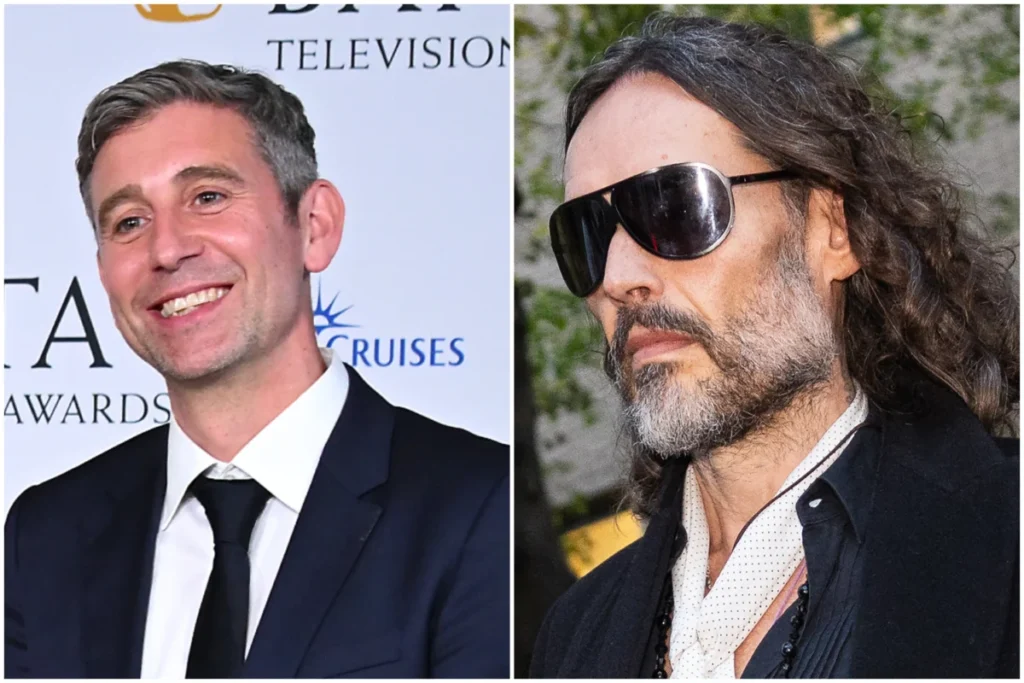

The fallout from the conviction of Russell Brand has reached the upper echelons of the British television industry, with Jack Bayles, the head of comedy at the award-winning production house Various Artists Limited (VAL), being asked to step back from his duties. This decision comes in the wake of harrowing testimony delivered during Brand’s high-profile criminal trial at Southwark Crown Court, where the disgraced comedian was found guilty of one count of rape and three counts of sexual assault.
The impact on Mr. Bayles’ professional life is immediate; he has been removed from his responsibilities on two high-profile sitcom projects currently in development for the BBC. The production company, which has been lauded for its contributions to British television, issued a statement confirming that Mr. Bayles would remain sidelined while the board evaluates the findings and the broader implications of the trial’s revelations.
A Culture of Complicity and Silence
The trial of 51-year-old Russell Brand has acted as a catalyst for a long-overdue reckoning within the UK media landscape. For decades, Brand operated as a central figure in British entertainment, moving seamlessly between the BBC, Channel 4, and various commercial outlets. His rapid ascent to stardom in the mid-2000s saw him hosting major awards ceremonies, headlining panel shows, and securing film roles, often while a culture of alleged impunity flourished behind the scenes.

Following the jury’s guilty verdict this past Thursday, a wave of criticism has been directed toward the institutional structures that allowed such behavior to persist. Broadcasters and production executives are now facing intense scrutiny, with public figures, labor unions, and advocacy groups arguing that the industry fostered a "toxic environment" that prioritized celebrity and ratings over the safety and dignity of staff.
The 2009 Incident: Testimony and Allegations
The specific allegations against Mr. Bayles emerged during the trial, centering on a 2009 incident involving a young female staffer. According to the court records, the woman was working on a project for Channel 4 when she was allegedly coerced by Mr. Bayles and fellow producer Gareth Roy to perform a massage on Brand.
The victim testified that she was deeply uncomfortable and reluctant to participate. Despite her clear reservations, the pressure from her superiors—Mr. Bayles and Mr. Roy—resulted in her compliance. The subsequent assault, which occurred while the woman was performing the requested massage, was described in harrowing detail to the jury. The victim stated that Brand thrust his head into her groin, ceasing the action only after she made a comment about his physical appearance that he found insulting.
Reflecting on the trauma of that day, the survivor told the jury: "I was so repulsed by the situation." Her testimony further highlighted that she reported the incident to her superiors at Channel 4, raising significant questions about how that complaint was handled—or if it was ignored—at the time.

The Response from Jack Bayles
In a detailed statement provided to The Times, Mr. Bayles addressed the allegations, expressing "appalled" sentiments regarding Brand’s actions while simultaneously denying memory of the specific 2009 incident.
"I am appalled and sickened by Brand’s actions and have co-operated fully and voluntarily with the investigation and endeavoured to assist as best I can," Mr. Bayles stated. He acknowledged the gravity of the situation, noting that while he has no recollection of the events 17 years ago, he accepts that he "clearly missed something at the time."
Mr. Bayles framed his tenure with Brand as a product of a high-pressure, chaotic, and fundamentally toxic environment. "At the time of the offence, I was in the early stages of my career… Brand was chaotic, dismissive and manipulated the people around him." He asserted that he ceased working with the comedian in 2010 and has maintained no contact since. He concluded his statement by offering a sincere apology for his failure to intervene, emphasizing that he would never "willingly or proactively wish to make anyone feel uncomfortable, unsafe or unsupported at work."
Institutional Accountability and Industry Standards
The decision by Various Artists Limited to ask Mr. Bayles to step back is indicative of a broader shift in how media companies are handling allegations of misconduct. In the past, such allegations might have been managed through private settlements or non-disclosure agreements. However, in the current climate—driven by the #MeToo movement and increased public demand for accountability—companies are finding it increasingly difficult to retain staff associated with high-profile criminal convictions.

The BBC, which is facing its own internal review regarding its history with Brand, has yet to issue a comprehensive statement on the status of the two sitcoms affected by Mr. Bayles’ departure. The corporation remains under pressure to explain its oversight mechanisms during the period when Brand was a fixture of its programming.
Chronology of Events
- Mid-2000s: Russell Brand becomes a ubiquitous presence on British television, gaining fame through the BBC and Channel 4.
- 2009: The incident involving a female staffer occurs during the production of a Channel 4 project, involving Mr. Bayles and Gareth Roy.
- 2010: Mr. Bayles ceases professional association with Russell Brand.
- 2024: Mr. Bayles wins a BAFTA for Scripted Comedy for his work on Such Brave Girls.
- November 2026: Russell Brand is found guilty at Southwark Crown Court of one count of rape and three counts of sexual assault.
- November 2026 (Post-Verdict): Various Artists Limited announces that Mr. Bayles has been asked to step back from his role as head of comedy.
Broader Implications for the Television Sector
The fallout from the Brand trial serves as a stark warning to the television industry regarding the dangers of "star power" and the risks of unchecked authority. When individuals are permitted to operate outside the standard behavioral norms of a workplace, the entire organizational culture is compromised.
Experts in organizational psychology suggest that the "frantic, pressured" environments often found in television production can lead to the normalization of abusive behavior. When leaders like Mr. Bayles describe their younger selves as being caught in a "toxic environment," it highlights the systemic nature of the problem. If junior staff are not protected by clear HR policies, and if middle management feels powerless or coerced by talent, the cycle of abuse becomes institutionalized.
Furthermore, the involvement of major broadcasters like the BBC and Channel 4 in this narrative raises questions about the due diligence performed by public service media. There is a growing consensus that broadcasters must overhaul their safeguarding protocols, ensuring that complaints from junior staff are treated with the seriousness they deserve, regardless of the seniority or fame of the accused party.

The Path Forward
As the legal proceedings conclude—with Brand’s sentencing scheduled for the coming Monday—the focus will likely shift to the survivors and the long-term impact on the industry. Charities supporting sexual assault survivors have called for a comprehensive independent inquiry into the culture that allowed Brand to flourish for so long.
For Various Artists Limited, the path forward involves balancing the need for creative continuity with the imperative of addressing the ethical concerns raised by the trial. The company’s statement, which explicitly noted that their "thoughts, though, are primarily with every one of Brand’s victims at this time," suggests an attempt to align with contemporary ethical standards. However, whether this step-back is merely a temporary measure or the beginning of a more permanent structural change remains to be seen.
The case of Jack Bayles is a microcosm of a much larger struggle within the media sector. It is a reminder that professional success, even when recognized with awards like a BAFTA, does not insulate individuals from the consequences of their past actions—or inactions. As the industry moves forward, the scrutiny on production companies, broadcasters, and the individuals who facilitate the careers of controversial figures will only intensify, forcing a fundamental reassessment of the values that underpin British television.