
The contemporary cinematic landscape of Cyprus has entered uncharted territory, spearheaded by the critical and commercial momentum of Myrsini Aristidou’s feature-length directorial debut, Hold Onto Me. Following a celebrated international premiere circuit that included a landmark victory at the Sundance Film Festival, the Cyprus-Denmark-Greece co-production has shattered domestic glass ceilings by securing Cyprus’ first-ever official submission for the Academy Award for Best International Feature Film.
Currently screening at the 30th edition of the Tallinn Black Nights Film Festival (PÖFF) in Estonia—specifically within the Just Film youth and children’s competitive program—the film continues to expand its global footprint. As international sales agency Cercamon manages ongoing territory acquisitions, Hold Onto Me stands as both a deeply personal artistic triumph for its creator and a watershed moment for the burgeoning Mediterranean island nation’s cinematic infrastructure.
Plot Architecture and Narrative Themes
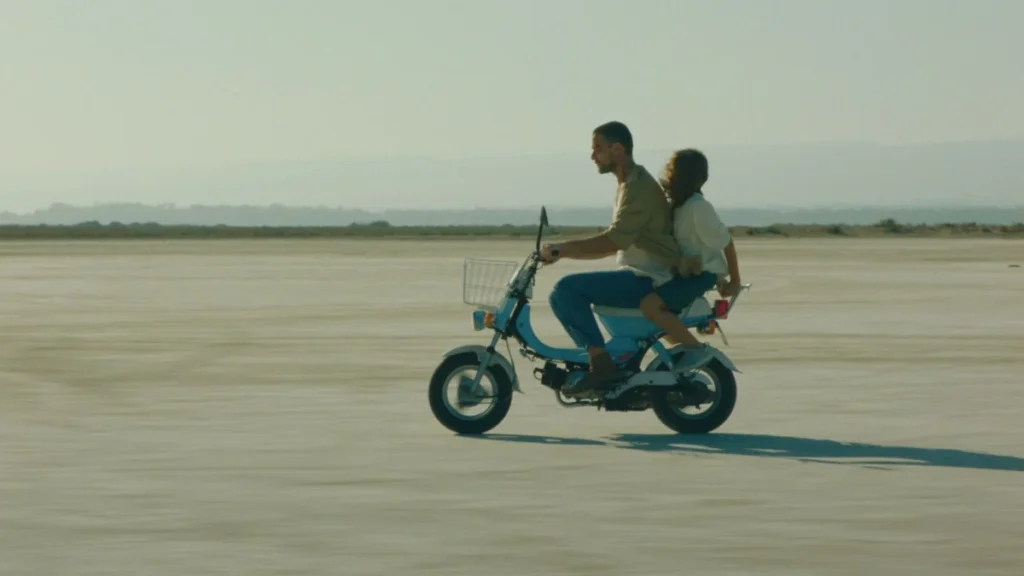
At its narrative core, Hold Onto Me unfolds against the sun-bleached, coastal backdrop of a Cypriot summer. Eleven-year-old Iris, navigating the liminal space between childhood and adolescence, spends her days in the company of her older, more worldly best friend, Danae. The rhythm of Iris’s youth is abruptly fractured by the death of her grandfather. The subsequent funeral brings into town a figure who has hitherto existed only as an abstraction: her father, Aris, played by acclaimed Dogtooth actor Christos Passalis.
Aris, characterized as a petty criminal resistant to the burdens of domesticity and accountability, presents an immediate hazard. Despite explicit warnings from her mother and older brother, Iris refuses to remain alienated from the man. She actively inserts herself into his illicit and chaotic schemes. What begins as a stubborn, almost desperate bid for paternal attention gradually transforms into a complex, highly fragile interpersonal bond. However, this hard-won connection is jeopardized when Aris’s shadowed past catches up to them, dragging father and daughter into severe peril.
The feature marks the culmination of a thematic triptych for Aristidou, who has spent the better part of a decade examining the nuanced, often fraught mechanics of paternal-filial relationships.
A Chronological Evolution: The Short Film Genesis
To understand the emotional weight of Hold Onto Me, one must trace the developmental timeline of Aristidou’s cinematic preoccupations. The thematic exploration began in earnest with her 2015 short film, Semele, which similarly focused on a father-daughter dynamic and served as the writer-director’s initial formal inquiry into the subject.
Aristidou followed this with her second short film, Aria, which advanced the age of the central daughter into the turbulent years of adolescence. While these short-form projects allowed the filmmaker to sketch the outlines of familial estrangement and reconciliation, they left her with a desire to probe deeper.

Transitioning to a feature-length format presented both logistical hurdles and creative opportunities. Aristidou deliberately sought to subvert the conventional tropes associated with family dramas. Rather than leaning purely into sentimentalism, she positioned the father-daughter relationship within the narrative framework of a romance.
In interviews, the director has articulated this conceptual choice, noting that the psychological tension of the film stems from societal expectations placed on blood relatives. When individuals share DNA, society dictates an inherent, foundational love. Yet, in the reality of Aristidou’s narrative, Iris and Aris are essentially strangers who share no prior developmental history or mutual milestones. They are forced to construct a relationship from zero, navigating the paradox of feeling simultaneously obligated to and alienated from one another.
Personal Resonance and Production Realities
The authenticity underpinning Hold Onto Me is derived directly from Aristidou’s biographical architecture. Mirroring the narrative trajectory of her protagonist, the filmmaker experienced the divorce of her parents at an early age. Her own father was largely absent during her early childhood years—not as a criminal, but as a writer—before re-entering her life with greater frequency around the ages of 12 and 13. By her mid-teens, a process of mutual forgiveness, communication, and profound acceptance took root, establishing a template of emotional resolution that permeates the film.
Furthermore, the physical geography of the production mirrors Aristidou’s upbringing. Growing up near the Cypriot coast, surrounded by memories of her father’s small boat and social circles defined by older peers, the director infused the mise-en-scène with lived-in textures.
Behind the camera, Aristidou collaborated with cinematographer Lasse Ulvedal Tolbøll to capture the harsh, unforgiving, yet visually arresting landscapes of Cyprus, Denmark, and Greece. The editing room saw a collaborative effort between Jenna Mangulad and the director herself, maintaining a rigorous structural pace designed to propel the narrative forward in every single scene—a deliberate countermeasure against the self-indulgence frequently found in debut features.
High-Stakes Casting and Unscripted Chemistry
The emotional viability of Hold Onto Me hinges almost entirely on the palpable, simmering chemistry between its two leads. The casting process for Aris was relatively straightforward, with Aristidou settling on Christos Passalis months before principal photography commenced in July. However, finding the right child actor to embody Iris proved to be a high-stakes logistical challenge.
After evaluating numerous candidates, primarily in Athens, Passalis traveled to Cyprus to test alongside local children. It was during these sessions that Aristidou paired Passalis with Maria Petrova, a young girl possessing zero prior acting experience. Despite Petrova’s lack of a resume, the director recognized an unquantifiable, authentic resonance between them. Physically and temperamentally, they projected a subconscious familial alignment.
External circumstances compounded the production’s risks. Due to conflicting shooting schedules and a subsequent COVID-19 diagnosis, Passalis was unable to participate in traditional pre-production rehearsals. He arrived on location merely twenty-four hours before cameras began rolling. Following a single, truncated script read-through, Aristidou thrust Petrova directly into scenes opposite the seasoned professional.

Rather than hindering the production, this logistical bottleneck elevated the film’s realism. The genuine lack of familiarity between the veteran actor and the novice mirrored the exact psychological alienation of their characters, lending their on-screen rapport an unforced, spontaneous tension.
Historic Milestones and Industry Implications
The trajectory of Hold Onto Me has fundamentally altered the international profile of Cypriot cinema. For decades, the island nation’s film industry has operated on the periphery of European funding schemes, struggling to achieve sustained global distribution or high-profile festival recognition.
When the film secured its world premiere at the Sundance Film Festival—subsequently capturing the World Cinema Dramatic Audience Award—it marked a historic first for Cyprus. The momentum compounded when the Ministry of Education, Culture, Sports and Youth of Cyprus selected the film as its official Academy Awards submission, making it the first time the country has entered the international feature film race.
Reflecting on these milestones, Aristidou has expressed a profound sense of stewardship regarding her country’s cinematic reputation. Acknowledging that she and her collaborators are essentially carving a path where none previously existed, she embraces the underdog status while navigating the steep learning curve of an international awards campaign.
Future Horizons
With Hold Onto Me currently continuing its international festival run at Tallinn and managing global sales through Cercamon, Aristidou is already looking toward her next creative endeavors. While she has expressed an intention to step away from father-daughter narratives—having thoroughly mined that thematic triptych across her shorts and debut feature—she remains fascinated by the narrative architecture of strangers forced into profound proximity.
Indicating a pivot toward genre storytelling, Aristidou is currently developing a television project centered on crime and espionage. Additionally, through her representation by U.S. agencies, she is actively reviewing external scripts, signaling an openness to direct material originating outside her own writing desk. As Hold Onto Me charts its historic course toward the global stage, Myrsini Aristidou stands positioned not merely as a promising debutant, but as a vanguard for a newly visible national cinema.