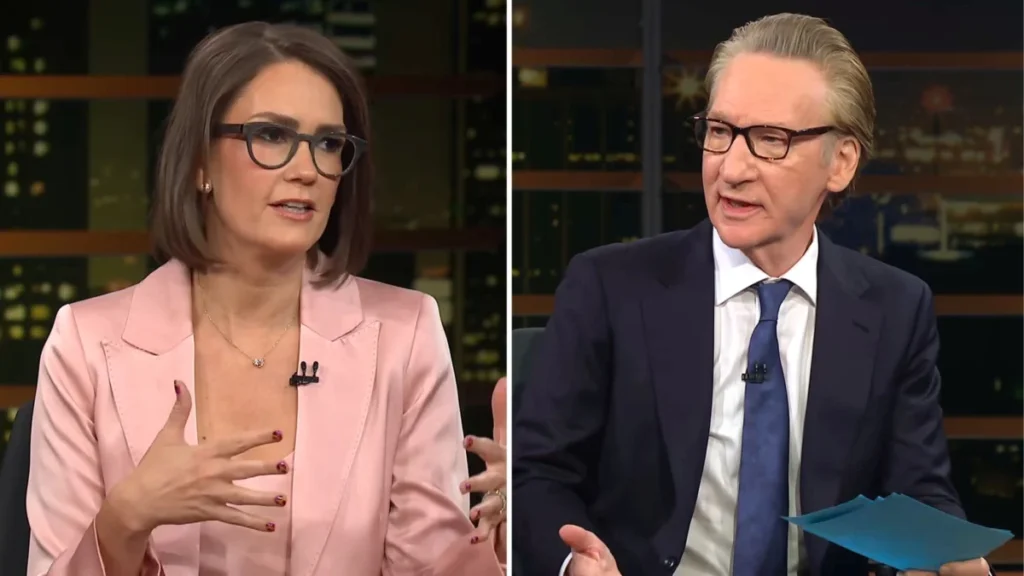

The intersection of political commentary and media personality dynamics reached a notable inflection point on the most recent episode of HBO’s Real Time with Bill Maher, as Fox News contributor Jessica Tarlov engaged in a spirited debate regarding the perceived stability of the two major American political parties. The exchange, which occurred during the program’s panel segment on September 18, 2026, underscored the deepening ideological fissures in the national discourse and highlighted the distinct challenges faced by pundits operating across diverse media ecosystems.
The discourse began with host Bill Maher attempting to parse the current political landscape in the lead-up to midterm elections. Maher, who often positions himself as a critic of ideological extremes on both sides of the aisle, suggested that the prevailing voter sentiment revolves around the perception that the Democratic Party is overly focused on polarizing social issues, while simultaneously noting that while Donald Trump’s political brand is often characterized by chaos, the traditional economic arguments once tethered to his platform have shifted.
The Exchange and the "Less Crazy" Debate
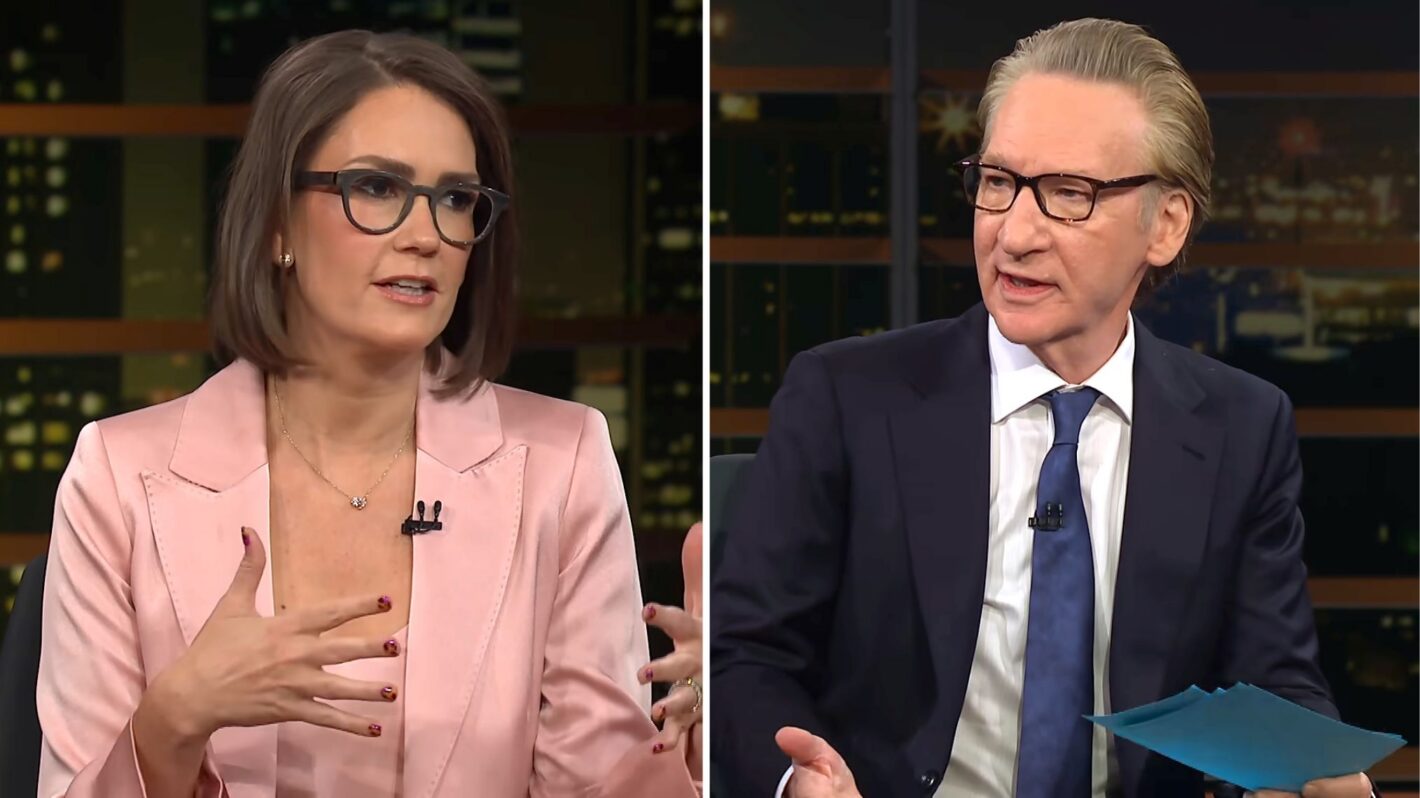
In an unscripted moment that clearly caught the veteran comedian off guard, Tarlov—a regular fixture on Fox News’ The Five—interjected to assert that the Democratic Party is "less crazy" than its Republican counterpart. Maher, clearly stunned by the sincerity of the statement, requested clarification. When Tarlov reiterated her stance, Maher’s reaction transitioned from amusement to genuine disbelief. He questioned whether she was speaking in earnest, prompting a nuanced clarification from Tarlov. She argued that while internal party dynamics may be heated, the public-facing rhetoric from Democrats—particularly regarding economic policy and government accountability—represents a more disciplined and grounded approach compared to the current platform of the Republican Party.
This moment of friction serves as a microcosm of the broader national debate. For many voters, the "craziness" factor—often defined as the degree of ideological volatility or adherence to populist fringes—is a primary driver of electoral decision-making. Tarlov’s defense of the Democratic messaging strategy highlights a tactical shift: an attempt to move the focus away from "culture war" flashpoints and back toward tangible policy concerns such as inflation, regulatory corruption, and fiscal stability.
Background and Professional Context
Jessica Tarlov has carved a unique niche in the American media landscape. As a liberal voice on a network predominantly catering to conservative viewership, her role on The Five requires a high degree of rhetorical agility. Her recent literary endeavor, I Disagree: Winning Arguments Without Losing Friends, released by Random House, explores the mechanics of this professional balancing act. In her book, Tarlov documents the challenges of maintaining ideological integrity while engaging with colleagues and audiences that hold diametrically opposed viewpoints.
The publication of her book coincides with a period of heightened scrutiny regarding her career. Throughout 2026, Tarlov has frequently served as a lightning rod for criticism, most notably from former President Donald Trump. In April 2026, following her analysis of his declining approval ratings, Trump took to his platform, Truth Social, to launch a personal attack against her. Tarlov’s decision to publicly refute these claims on X (formerly Twitter), asserting the validity of the data she presented, underscored a broader trend: the increasing hostility between media figures and the political subjects they cover.
Chronology of Public Conflict
The trajectory of this public tension can be traced through several key milestones in 2026:
- April 2026: Tarlov presents data on air regarding Donald Trump’s approval ratings, which indicates a downward trend.
- April 2026 (Immediate Aftermath): Trump issues a statement via Truth Social labeling Tarlov as lacking talent and accusing her of fabricating polling data.
- April 2026 (Response): Tarlov utilizes social media to defend the statistical integrity of her sources, maintaining that the data reflects a genuine dip in voter sentiment.
- September 2026: Tarlov releases I Disagree, which details her experiences as a liberal commentator in a conservative media space.
- September 18, 2026: During Real Time with Bill Maher, Tarlov defends the Democratic platform against Maher’s critique, sparking a viral moment of debate regarding political "craziness."
Data and Political Implications
The debate over which party is "less crazy" is not merely a rhetorical exercise; it reflects deep-seated anxieties within the American electorate. According to recent polling data from the mid-2026 cycle, voters are increasingly exhausted by partisan hostility. Analysts suggest that the party capable of framing their agenda around "stability" rather than "ideological purity" stands to gain significant ground among independent voters.
Democrats, as Tarlov suggested, have attempted to pivot toward the "kitchen table" issues that defined the mid-20th-century political era. By focusing on corruption and economic revitalization, the party leadership hopes to distance itself from the more radical social initiatives that have, in the past, alienated suburban moderates. Conversely, the Republican Party’s reliance on populist rhetoric and the personality-driven brand of Donald Trump continues to energize its base but creates potential vulnerabilities in general election scenarios where suburban and independent turnout is decisive.
Expert Analysis of Media Dynamics
The interaction on Real Time also highlights the changing nature of political television. Bill Maher’s program has long been a venue for "candid" political discussion, yet the surprise he exhibited at Tarlov’s defense of the Democratic Party suggests that even industry insiders are struggling to keep pace with the hardening of partisan lines.
"When a commentator like Tarlov—who spends her days in a high-pressure, ideologically charged environment—makes a bold, simple statement like ‘we are less crazy,’ it signals a departure from the usual performative nuance," says one political communications strategist who requested anonymity. "It is an attempt to boil down complex political failures into a binary choice for the voter."
The implications of this discourse are significant for both parties as they head into the final weeks of the midterm cycle. If the Democratic strategy is to convince the electorate that their policy-first approach is the "sane" alternative, they must succeed in drowning out the noise of internal party disagreements. Simultaneously, the Republican Party faces a challenge of its own: maintaining the fervor of its base without triggering the "crazy" label that has historically cost them in swing districts.
Future Outlook and Conclusion
As the political calendar progresses, the role of media figures like Jessica Tarlov will continue to be a focal point for both supporters and critics. Her ability to navigate the complexities of Fox News while maintaining a clear, unwavering perspective has made her a prominent, if controversial, figure in the national conversation.
The exchange with Bill Maher is likely to be remembered as a snapshot of a political era defined by a search for order in the midst of extreme polarization. Whether the voters ultimately agree with Tarlov’s assessment of the Democratic Party’s relative stability will be determined at the ballot box. For now, the debate continues to rage—not just in the halls of Congress, but in the media forums where the American public consumes its political reality.
As we look toward the upcoming elections, the discourse will undoubtedly remain heated. The tension between professional decorum and the need for sharp, clear-cut political identity will remain a defining feature of the 2026 election cycle. Jessica Tarlov’s appearance on Real Time was more than a television segment; it was a testament to the fact that, even in a world of curated soundbites, the fundamental questions about governance, sanity, and political identity remain at the forefront of the American experience.