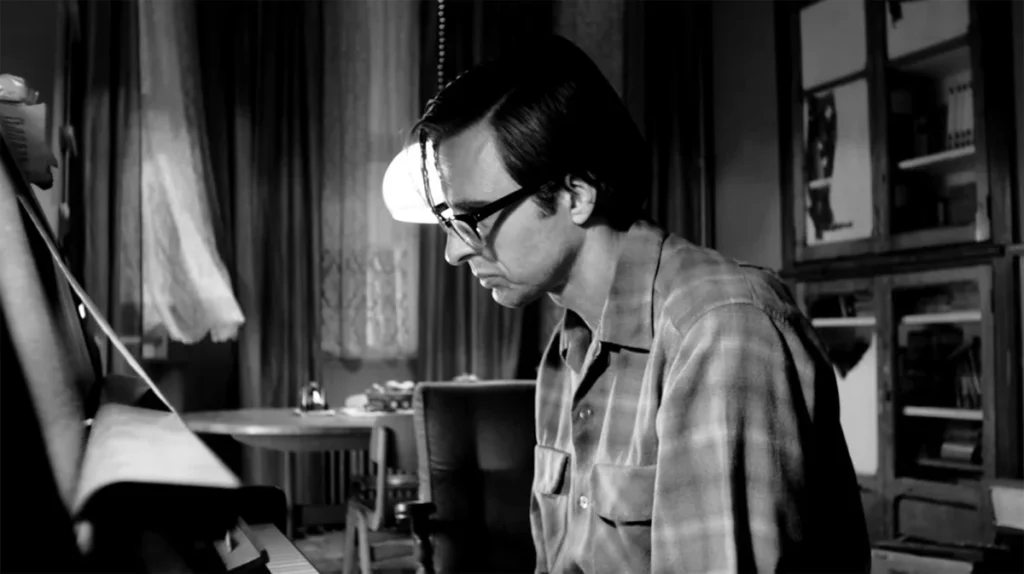

The cinematic landscape is set to welcome a profound exploration of artistic struggle and personal devastation with the unveiling of the first official trailer for "Everybody Digs Bill Evans." This indie drama, helmed by acclaimed director Grant Gee, delves into the life and turbulent psyche of the legendary jazz pianist Bill Evans. The film, which made its international debut at the prestigious 2026 Berlin Film Festival and subsequently screened at the Dublin and Karlovy Vary Film Festivals, is poised to offer a deeply personal and unflinching portrait of a musical genius grappling with profound loss.
A Master’s Descent and Ascent
"Everybody Digs Bill Evans" centers on a pivotal period in the life of Bill Evans, an artist renowned for his innovative harmonic language and deeply emotive improvisations. The narrative focuses on the period following the tragic death of his brilliant young bassist, Scott LaFaro, in a car accident in June 1961. This devastating event plunged Evans into a profound state of grief, leading him to cease playing music for the first time since his childhood. The film meticulously chronicles Evans’ arduous journey to overcome this crippling sorrow and find his way back to the music that defined him.
The trailer, released by Modern Films UK, offers a tantalizing glimpse into the film’s aesthetic and thematic core. Shot in a dynamic black-and-white, "Everybody Digs Bill Evans" employs a narrative structure that fluidly cuts between Evans’ past and present. This stylistic choice aims to immerse the audience in the fractured state of the artist’s mind, mirroring the disarray and emotional turmoil he experienced. The film promises to explore not just the technical brilliance of jazz, but the raw, often agonizing, human experience that underpins great art, particularly in the face of overwhelming grief.

The Heart of the Music and the Pain
Norwegian actor Anders Danielsen Lie delivers a compelling performance as Bill Evans, inhabiting the role with what appears to be a deep understanding of the jazz icon’s complex inner life. Lie has previously garnered critical acclaim for his nuanced portrayals in films such as "Oslo, August 31st" and "The Worst Person in the World," making him a fitting choice to embody the sensitive and troubled musician. His casting suggests a commitment to capturing the emotional depth and vulnerability of Evans.
The film draws its title from one of Evans’ own albums, "Everybody Digs Bill Evans," released in 1958, which further cemented his reputation as a formidable talent. However, the narrative’s focus on the period surrounding the "Sunday at the Village Vanguard" live album—recorded in 1961 with LaFaro and drummer Paul Motian—highlights the profound artistic and personal connection that was tragically severed. This particular recording session, which resulted in two seminal jazz albums released on the same day, is widely regarded as a pinnacle of jazz trio performance, showcasing an almost telepathic interplay between the musicians. The film’s exploration of this formative period and its devastating aftermath is central to its dramatic arc.
A Stellar Supporting Cast
Beyond Anders Danielsen Lie’s central performance, "Everybody Digs Bill Evans" boasts an impressive ensemble cast that further bolsters its artistic credentials. Bill Pullman, a veteran actor known for his versatility, takes on a significant role, as does Laurie Metcalf, a multiple Emmy Award winner celebrated for her sharp and often emotionally resonant performances. Barry Ward and Valene Kane round out the principal cast, contributing to what is expected to be a rich tapestry of character interactions. The presence of such accomplished actors suggests a collective dedication to bringing this poignant story to life with authenticity and gravitas.
Director’s Vision and Literary Roots
Grant Gee, an English filmmaker with a distinguished background in music documentaries and music videos, brings his distinctive visual sensibility to "Everybody Digs Bill Evans." His previous directorial efforts, including "Meeting People Is Easy," a behind-the-scenes look at the band Radiohead, and "Joy Division," a documentary about the iconic post-punk band, demonstrate his ability to capture the essence of artistic creation and the pressures that accompany it. Gee’s experience in translating the complexities of music and the lives of musicians to the screen suggests that "Everybody Digs Bill Evans" is in capable hands.

The screenplay, penned by Mark O’Halloran, is based on Owen Martell’s book titled "Intermission." This literary foundation provides a robust narrative framework, allowing O’Halloran to adapt the biographical material into a compelling cinematic experience. The book’s exploration of Evans’ inner life and his struggle with addiction and grief is likely to be a key element in O’Halloran’s script, offering a rich source of material for Gee’s directorial interpretation.
Chronology of a Masterpiece and a Tragedy
The film’s narrative unfolds around a critical juncture in Bill Evans’ career and personal life. A brief but potent chronology of the events depicted in the film and their historical context is as follows:
- June 1961: Bill Evans forms his legendary trio with bassist Scott LaFaro and drummer Paul Motian. This period marks a creative zenith for Evans, characterized by profound musical synergy.
- June 25, 1961: The trio performs at New York’s Village Vanguard, capturing material for two groundbreaking live albums. This legendary session is considered a high point in jazz history, showcasing an unprecedented level of improvisational dialogue and harmonic sophistication between Evans and LaFaro.
- July 6, 1961: Just ten days after the Village Vanguard performances, Scott LaFaro is tragically killed in a car accident. This event shatters Bill Evans, plunging him into a deep depression and leading to a hiatus from performing.
- Post-Tragedy: The film "Everybody Digs Bill Evans" explores Evans’ subsequent struggle to cope with LaFaro’s death, his battles with addiction, and his eventual, arduous return to music. The narrative will likely weave through his relationships, including those with his family and a girlfriend who shared his artistic sensibilities and struggles.
This period of profound loss and subsequent recovery is central to understanding the enduring legacy of Bill Evans, a musician whose work continued to resonate despite his personal demons.
Supporting Data and Artistic Context
Bill Evans’ influence on modern jazz is undeniable. His distinctive approach to voicings, his lyrical improvisations, and his introspective musicality set him apart from his contemporaries. He is credited with pioneering a more harmonically complex and emotionally resonant style of jazz piano, influencing generations of musicians across various genres. His album "Kind of Blue" with Miles Davis, while not the direct focus of this film, is a landmark recording that profoundly shaped the sound of jazz. However, "Everybody Digs Bill Evans" appears to delve into the more personal and challenging aspects of his life, particularly the impact of loss on his creative output and his well-being.

The film’s commitment to a black-and-white aesthetic is not merely a stylistic choice but likely serves to enhance the mood and atmosphere of introspection and emotional weight. This visual approach can evoke a sense of timelessness and gravitas, drawing parallels to classic cinematic portraits of artists and their struggles. It also potentially reflects the often stark and monochromatic nature of grief.
Official Statements and Festival Buzz
While direct statements from the cast and crew beyond the provided press materials are not yet available, the film’s reception at the 2026 Berlin Film Festival, along with subsequent festival appearances, suggests a positive critical reception. Festival circuits often serve as crucial platforms for independent films, generating buzz and critical discussion that can lead to wider distribution and audience engagement. The film’s inclusion in such prestigious events indicates a strong artistic merit and a compelling narrative that resonated with festival programmers and early audiences. The Berlinale, in particular, is known for showcasing films that are artistically ambitious and thematically rich, making its selection of "Everybody Digs Bill Evans" a significant endorsement.
Broader Impact and Implications
"Everybody Digs Bill Evans" has the potential to reach beyond the dedicated jazz enthusiast audience. By focusing on universal themes of grief, loss, addiction, and the resilience of the human spirit, the film can connect with a broader audience on an emotional level. The exploration of how profound personal tragedy can impact artistic creation offers a compelling narrative for anyone who has experienced loss or grappled with creative challenges.
The film’s release in the UK on September 11th, 2026, marks a significant step in its journey to audiences. The absence of an immediate US release date leaves anticipation for a wider international rollout. As more information becomes available regarding distribution, particularly in North America, audiences will have a clearer picture of when and where they can experience this intimate portrayal of a jazz icon’s enduring struggle and artistic triumph. The film serves as a potent reminder that even the most gifted artists are profoundly human, susceptible to the same sorrows and challenges that shape us all. Its success will hinge on its ability to balance the intricacies of musical genius with the raw, relatable experience of human suffering and eventual recovery.