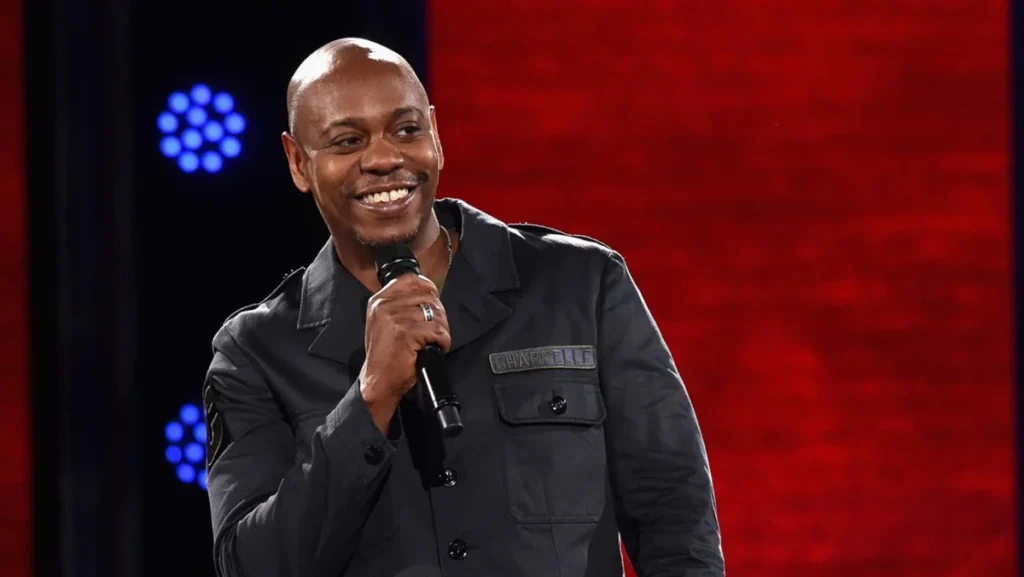

The escalating intersection of American politics, high-profile comedy, and public discourse reached a tense new threshold over the weekend when Erika Kirk, Chief Executive Officer of Turning Point USA (TPUSA), issued a scathing public condemnation of political violence and the normalization of fatal tragedies as comedic fodder. The rebuke followed a controversial performance by veteran comedian Dave Chappelle at a sold-out Madison Square Garden in New York City, where the entertainer delivered a monologue touching upon the September 2025 assassination of conservative activist Charlie Kirk.
The remarks at the famed Manhattan venue have reignited a fierce national debate regarding the boundaries of free speech, the chilling effect of political violence on public figures, and the moral responsibilities of entertainers, media commentators, and podcasters in a deeply polarized society. As the legal proceedings surrounding the high-profile murder inch forward amid scheduling controversies, the cultural fallout from public levity surrounding the killing continues to claim professional and financial casualties across the entertainment landscape.
The Madison Square Garden Monologue and Immediate Backlash
During his sold-out weekend set at Madison Square Garden, Dave Chappelle addressed the nervous climate surrounding public speaking and political commentary in the wake of Charlie Kirk’s death. Kirk, a prominent conservative figure and the founder of Turning Point USA, was fatally shot while delivering a speech at Utah Valley University in September 2025.
Addressing the crowd, Chappelle reflected on the acute pressure public figures face to carefully calibrate their words in a volatile political environment. He noted the anxiety inherent in modern public speaking before referencing the tragedy that stunned the nation. "I feel fucked up saying this," Chappelle told the audience. "It’s scary being a public speaker. And I mean, look, ever since that guy Charlie Kirk got murdered — and I shouldn’t say this publicly — but, I feel better. I know I shouldn’t say that, but it’s just a feeling."
The remarks were swiftly circulated across digital platforms, prompting immediate outrage from conservative commentators, public figures, and the Kirk family. Erika Kirk, who stepped into the role of TPUSA CEO following her husband’s assassination, took to the social media platform X on Sunday to denounce the routine minimization of political murder.
"To see leftist podcasters, comedians, and commentators laugh about political assassination as though it’s entertainment and the destruction of a human life is a punchline, is beyond disgusting," Erika Kirk wrote. "My husband, Charlie Kirk, was killed in an act of political violence, something our two children and I will live with every day for the rest of our lives. A culture that laughs at assassination is one of profound moral decay. It threatens the very foundation of our country and the principles that hold our democracy together."
She continued, emphasizing the universal necessity of valuing human life above political divisions: "You do not have to agree with someone’s politics to recognize the value of their life. This should not be so hard. Political violence must never be something this country tolerates, excuses, or celebrates."
As of Monday, representatives for Dave Chappelle have not publicly responded to Erika Kirk’s statement or the broader wave of criticism directed at the Madison Square Garden performance.
A Broader Pattern of Cultural Fallout and Media Repercussions
The controversy surrounding Chappelle’s set is only the latest chapter in a prolonged period of cultural reckoning regarding speech and political violence that began immediately after Charlie Kirk’s assassination in the fall of 2025. The tragedy sent immediate shockwaves through traditional media, digital networks, and the entertainment industry, triggering a wave of swift disciplinary actions against public commentators who crossed established professional lines.
In the weeks immediately following the shooting at Utah Valley University, several high-profile television personalities and journalists faced professional suspensions or termination. Among the most notable casualties was Matthew Dowd, then an MSNBC political analyst, who was let go by the network after suggesting on air that Kirk’s advocacy for Second Amendment rights had contributed to the very political climate that ultimately resulted in his murder.
The cascading industry-wide sensitivity peaked when network executives at ABC intervened directly in late 2025, pulling Jimmy Kimmel Live! off the air for nearly a week. The suspension followed a controversial late-night monologue in which host Jimmy Kimmel addressed the national reaction and public rhetoric surrounding the conservative leader’s death.
Observers note that Chappelle has long maintained a complex relationship with contemporary identity politics and public controversy. His 2021 Netflix special, The Closer, sparked intense internal friction within the streaming giant, culminating in employee walkouts and widespread protests over jokes directed at the transgender community. Earlier this year, in an interview with NPR’s Newsmakers, Chappelle addressed these ongoing cultural flashpoints, asserting that certain political figures on the right had "weaponized" his material on transgender issues for partisan electoral gains. Despite his history of pushing boundaries, the pivot from social commentary to joking about a fatal political assassination has introduced a starkly different dimension to his career controversies.
Podcast Sponsors Sever Ties Following On-Air Laughter
The cultural friction extended beyond traditional stand-up comedy and late-night television, directly impacting the burgeoning digital podcast ecosystem. On Saturday, Jennifer Welch and Angie Sullivan, hosts of the progressive podcast I’ve Had It, issued a formal public apology after drawing severe backlash for laughing at a joke concerning Charlie Kirk’s death during a previous recording.
During an episode released the prior Thursday, the hosts read through various social media posts concerning midterm political developments. One of the items read aloud on the show included the remark: "We’re digging up Charlie Kirk and doing it again." Rather than moving past the provocative text, the hosts laughed, triggering an immediate and organized backlash from listeners and digital watchdogs.
The financial consequences were swift. Within 48 hours of the episode’s release, major corporate advertisers announced they were severing ties with the program. Prominent sponsors Cash App and Chewy both utilized X to publicly state that they were dropping their financial backing of the podcast.
Faced with a mounting public relations crisis and the loss of key commercial partners, Welch and Sullivan published an official apology via Instagram on Saturday, alongside an announcement that they had made a financial contribution to Everytown for Gun Safety.
"It was an insensitive joke, and we should not have laughed. We regret it, and we apologize," the hosts wrote in their joint statement. "Whatever our political differences, there is nothing funny about gun violence. We’ve long supported common-sense gun safety reform. To that end, we’ve made a donation to Everytown for Gun Safety, the largest gun violence prevention organization in America."
Legal Chronology and the Road to Trial
While public commentators and comedians navigate the cultural minefield of post-assassination rhetoric, the formal legal system is moving forward at a pace that has frustrated the victim’s family.
On Monday, Utah District Court Judge Tony Graf officially scheduled Tyler Robinson, the 23-year-old individual accused of carrying out the assassination of Charlie Kirk, to stand trial in the summer of 2028. The timeline means that legal accountability for the high-profile murder will not be adjudicated in a courtroom until nearly three years after the initial tragedy occurred on the campus of Utah Valley University.
In response to Judge Graf’s scheduling decision, the Kirk family released an official statement expressing deep dissatisfaction with the protracted timeline. The statement characterized the judicial delay as "deeply disappointing," highlighting the prolonged emotional strain the family and their supporters continue to endure while awaiting formal closure and a judicial verdict.
Implications for Public Discourse and Free Speech
As America approaches the mid-point of the decade, the convergence of these events highlights a fragile national landscape. The friction between absolute protections for free expression and the societal imperative to reject political violence remains a central tension in modern public life.
Ethicists and media analysts suggest that the willingness of prominent cultural figures to reference acts of political violence—whether as a critique of a chilling effect on speech or as a dark punchline—reflects a profound widening of political divides. Conversely, defenders of comedians and commentators argue that satire and dark humor have historically served as vital, albeit uncomfortable, mechanisms for society to process collective trauma and political anxiety.
Nevertheless, as Erika Kirk’s forceful statement underscores, the families of victims of political violence view the normalization of such humor not as a protected exercise of artistic liberty, but as a dangerous symptom of moral degradation that actively undermines democratic norms and encourages further instability. With corporate sponsors increasingly willing to distance themselves from controversial rhetoric and judicial timelines stretching years into the future, the cultural and political shockwaves set off by the events of September 2025 continue to reverberate across every corner of American society.