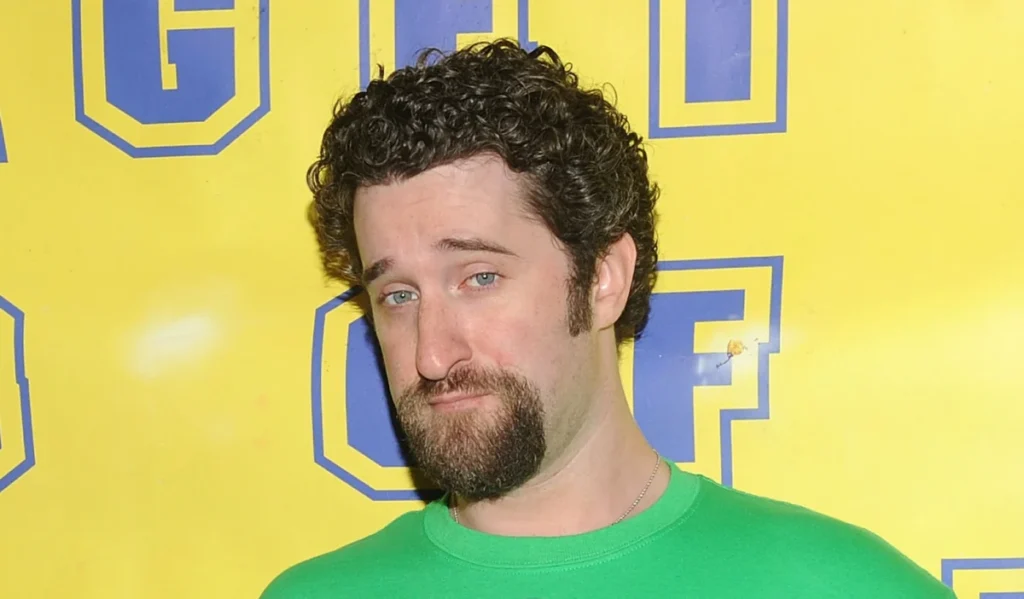

The lingering shadow of financial disputes surrounding the estate of the late Saved by the Bell star Dustin Diamond has been brought to the forefront once again, with his father, Mark Diamond, publicly addressing and vehemently denying accusations that he misappropriated his son’s earnings. These claims, amplified by an episode of Investigation Discovery’s Hollywood Demons titled "After The Bell," have reopened old wounds and shed light on the complex and often contentious financial realities faced by young actors navigating the entertainment industry.
The episode, which aired on Monday, May 4th, delved into the darker aspects of the beloved 1990s sitcom Saved by the Bell, exploring the alleged "scams, lies, and sex tapes" that reportedly impacted its cast. A significant portion of the program focused on Diamond, who rose to fame as the endearingly awkward Samuel "Screech" Powers, a role that defined his early career and extended into the show’s spin-off, Saved by the Bell: The New Class.
At the heart of the controversy lies the assertion made by Dan Block, a close friend of Diamond’s in the late 2010s. Block stated on the program that Diamond had confided in him, alleging that his parents had essentially pilfered the majority of the money he earned during his formative years on Saved by the Bell. Diamond reportedly told Block that while he was receiving a salary of $1,250 per week, he never actually saw the bulk of that income.
This was not the first time Diamond had publicly voiced such concerns. In a 2015 interview with FOX6 Milwaukee, he expressed his deep-seated disappointment, stating, "My parents wasted so much of my hard work. A lot of my youth." These statements painted a picture of a young star whose financial future, entrusted to his parents, was allegedly squandered, leaving him with little to show for his significant early success.
A Father’s Defense: Navigating Child Actor Contracts and Expenses
Mark Diamond, appearing on Hollywood Demons, offered a starkly different perspective, one steeped in the practicalities and pressures of managing a child actor’s career in the 1990s. His interview, as reported by Entertainment Weekly, was characterized by a profound sense of hurt and a desire to set the record straight. "It really made me upset," Mark Diamond stated, recounting a conversation with his son. "And I told [Dustin], ‘Why are you throwing me under the bus, when I can’t pop myself on television and go, ‘Uh, no!’"
Mark Diamond explained that the financial realities of his son’s burgeoning career were far more complex than simply receiving a weekly paycheck. He detailed how his son’s agent would automatically deduct a 10 percent commission from earnings. The remaining funds, he asserted, were then allocated to cover a myriad of essential, yet often overlooked, expenses associated with maintaining a child star’s career. These included taxes, transportation (gasoline), and the crucial cost of professional headshots.
Furthermore, Diamond highlighted the immense volume of fan mail that accompanied his son’s popularity. "Every fan letter wanted the same things: ‘Can you send us an 8×10 picture, autographed?’ Thousands of letters," he explained. "See, we had to pay for that. This didn’t leave much money for us to do anything. In fact, nothing." This assertion suggests that the perceived wealth of a child star was often consumed by the ongoing demands of sustaining their public image and professional obligations, leaving little surplus for personal savings or family enrichment.
The Unforgiving Landscape of 1990s Child Acting Contracts

The Hollywood Demons episode also provided broader context regarding the contractual landscape for child actors in the 1990s, a period where the power dynamic often heavily favored studios and production companies. Denise Simon, a seasoned child star manager, elaborated on these challenges. "As a 12-year-old, you probably don’t have any credits behind you," Simon explained. "Chances are, this is going to be your first big job. I’ve seen deals that are, ‘This is what we’re offering, take it or leave it. And if you leave it, we’ll have somebody else.’ When you’re offered your first job, you don’t say no."
This "take it or leave it" environment meant that young actors and their families had minimal leverage to negotiate favorable terms. The pressure to secure a role, especially a potentially career-defining one like that of Screech, often necessitated accepting contracts that were not necessarily designed to maximize the child’s long-term financial benefit. Simon further commented on the inherent difficulties, stating, "Look, it’s tough. I do feel bad for parents. But the money… I think it really messes up that sacred relationship between a child and parent." Her observation points to the profound emotional and familial strain that financial disagreements, especially when involving a child’s earnings, can inflict.
A Brief Chronology of Dustin Diamond’s Career and Later Life
Dustin Diamond’s journey in Hollywood began at a remarkably young age. Born on January 7, 1977, he landed the role of Screech Powers in Saved by the Bell in 1989 at the age of 12. The show, which aired until 1993, became a cultural phenomenon, and Diamond’s character was a fan favorite. He reprised the role in Saved by the Bell: The New Class from 1993 to 2000, and in subsequent reunion specials and films.
Following Saved by the Bell, Diamond struggled to replicate the same level of success. He appeared in various reality television shows, including Celebrity Big Brother and The Surreal Life, and had a brief foray into adult filmmaking. His personal life was often scrutinized, marked by legal troubles and public disputes, including the allegations of financial mismanagement by his parents.
Despite these challenges, there were moments of reconciliation. Mark Diamond revealed in the Hollywood Demons episode that he and Dustin had mended their relationship before the actor’s untimely death. Dustin Diamond passed away in February 2021 at the age of 44, following a brief but aggressive battle with small-cell carcinoma. His death marked the end of a career that, while defined by a singular iconic role, was also characterized by the complexities and often harsh realities of the entertainment industry.
Broader Implications: The Vulnerability of Child Stars
The situation involving Dustin Diamond and his father underscores a recurring issue within the entertainment industry: the vulnerability of child actors. The significant sums of money earned by young talent can be a double-edged sword, attracting scrutiny and potential exploitation if not managed with the utmost integrity and transparency.
- Legal Protections: In many jurisdictions, laws like California’s Coogan Act are in place to protect child actors’ earnings by requiring a portion of their income to be placed in a trust fund, inaccessible until they reach adulthood. The effectiveness and implementation of such laws can vary, and past legal frameworks may have offered less stringent protections.
- Parental Role: While parents are often the primary caretakers and financial managers for child actors, this role carries immense responsibility. The financial pressures and temptations associated with a child’s success can strain even the strongest family bonds, as evidenced by Diamond’s allegations.
- Industry Practices: The historical context of "take it or leave it" contract negotiations highlights the power imbalance that has long existed. While the industry has evolved, the core challenge of ensuring fair compensation and ethical management for young performers remains a critical concern.
- Public Perception vs. Reality: The public often perceives child stars as living lives of immense privilege and wealth. However, the reality can be far more complex, with earnings subject to agent fees, taxes, living expenses, and the ongoing costs of maintaining a career.
The public airing of these grievances, even years after the fact and after Diamond’s passing, serves as a stark reminder of the human element behind the glitz and glamour of Hollywood. It prompts reflection on the ethical responsibilities of all parties involved in a child’s career – parents, agents, and studios – and the lasting impact that financial decisions made during formative years can have on an individual’s life and legacy. The reconciliation between Mark and Dustin Diamond, as revealed by the father, offers a poignant, albeit late, testament to the enduring power of family ties, even in the face of profound disagreements and accusations.