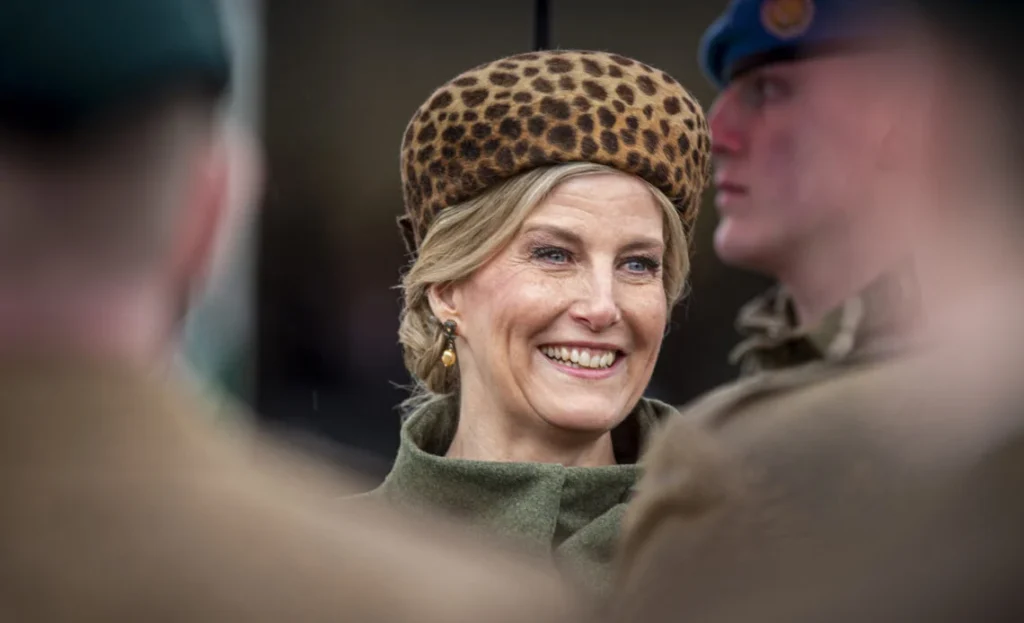

The Duchess of Edinburgh encountered an unexpected logistical hurdle at the very outset of her high-profile international tour, yet maintained her characteristic poise and good humor. Embarking on a critical five-day diplomatic and humanitarian mission to Zambia, Her Royal Highness was forced to pivot her schedule immediately upon arrival after commercial luggage delays parted her from her official tour wardrobe. Rather than allowing the inconvenience to disrupt proceedings, the Duchess addressed the situation with self-deprecating wit, candidly informing dignitaries and hosts during her initial engagement that she was meeting them directly in her “aeroplane clothes.”
This unpretentious reaction quickly set a warm, approachable tone for the tour. According to reports from the exclusive royal accompanying press corps, the Duchess’s ability to laugh off the travel mishap underscored her seasoned approach to international diplomacy. The minor luggage delay, while frustrating, did little to dampen the momentum of a packed itinerary designed to address pressing public health and human rights concerns across the African nation.
Lusaka Arrival and High-Level Engagements
The itinerary commenced in the Zambian capital of Lusaka, where the Duchess was greeted by key diplomatic figures and representatives of the host nation. Among her first official stops was Community House in Lusaka, a focal point for civic engagement. There, she participated in a formal meeting with the First Lady of Zambia, Mutinta Hichilema. The two women discussed avenues for bilateral cooperation, women’s empowerment, and community resilience.
Also present to welcome the royal visitor was the British High Commissioner to Zambia, Rebecca Terzeon, who facilitated discussions regarding the strengthening of UK-Zambian relations. To mark her arrival, the Duchess was treated to a vibrant traditional dance display performed by local artists—a cultural reception that highlighted the warm diplomatic ties shared by the two nations.
Sharing a Royal Hobby: Apiary Diplomacy at State House
Following her initial community engagements, the Duchess of Edinburgh traveled to the Zambian State House for a formal meeting with President Hakainde Hichilema. During this diplomatic exchange, the royal visitor presented the Zambian leader with a uniquely personal selection of gifts that unexpectedly bridged British royal tradition with local agricultural interests.
The Duchess handed over three distinct pots of artisan honey, revealing a shared family passion that aligns her with other senior members of the British Royal Family. One of the jars came directly from her own private beehives at Bagshot Park, her Surrey residence. The remaining two jars were sourced from the historic royal hives located at Buckingham Palace and Windsor Castle.
Beekeeping has become a notable, albeit understated, hobby among several prominent royals in recent years. Both King Charles III and Catherine, Princess of Wales, have previously spoken publicly about their hands-on passion for apiary conservation and sustainable beekeeping. By gifting royal honey to President Hichilema, the Duchess not only offered a taste of British estate produce but also subtly highlighted the importance of pollinators in global agriculture and environmental sustainability—themes that resonate deeply with Zambia’s rural economy.
Focus on Global Eye Health and the Prevention of Blindness
While cultural exchanges and diplomatic pleasantries form the bedrock of any royal tour, the core objective of the Duchess’s journey to Zambia centers on substantive humanitarian work. A primary focus of the five-day visit is global eye health, specifically ensuring universal access to comprehensive eye care to prevent avoidable blindness and visual impairment.
The Duchess of Edinburgh has long championed the cause of vision preservation, serving as a global ambassador for the International Agency for the Prevention of Blindness (IAPb) and as a patron of the Vision 2020 initiative. During her time in Lusaka, she participated in a dedicated reception hosted by the international development charity Orbis in collaboration with the IAPb.
During the reception, health experts and policymakers briefed the Duchess on the systemic challenges facing eye health delivery in sub-Saharan Africa. Preventable conditions such as cataracts, trachoma, and refractive errors continue to disproportionately affect rural and impoverished communities, severely limiting educational and economic opportunities. By placing a high-level spotlight on eye health, the Duchess aims to mobilize international funding, encourage local capacity building, and dismantle stigmas associated with visual disabilities. Public health analysts note that royal patronage in this sector frequently translates to measurable increases in donor awareness and policy prioritization, turning high-level visibility into tangible medical outcomes.
Eradication of Gender-Based Violence
In addition to her advocacy for visual health, the Duchess of Edinburgh has dedicated a significant portion of her public platform to combating sexual and gender-based violence (SGBV) globally. This critical issue forms the second major pillar of her current itinerary in Zambia.
Gender-based violence remains a pervasive global crisis, undermining public health, economic stability, and human rights. During her five-day stay, the Duchess is scheduled to meet with local grassroots organizations, legal aid advocates, and survivors of abuse to evaluate the efficacy of support systems currently in place. Her engagement seeks to amplify the voices of women and girls subjected to violence, while simultaneously supporting institutional reforms designed to improve access to justice and psychological care.
Observers of royal philanthropy note that the Duchess’s approach to SGBV advocacy is characterized by behind-the-scenes diligence and direct engagement with frontline workers. By spotlighting these vulnerable populations, the tour aims to reinforce UK government commitments under the Preventing Sexual Violence in Conflict Initiative (PSVI) and encourage regional policy frameworks that offer robust legal protections for women.
Background Context of Royal Overseas Tours
Overseas visits undertaken by working members of the British Royal Family operate under the guidance of the Foreign, Commonwealth & Development Office (FCDO). These missions serve a vital strategic function in modern British statecraft, functioning as soft-power initiatives that reinforce bilateral partnerships, foster commonwealth solidarity, and draw international attention to critical humanitarian causes.
Zambia, a member of the Commonwealth of Nations, shares longstanding historical, political, and cultural ties with the United Kingdom. The nation has experienced notable democratic progress and economic stabilization in recent years, making it a key strategic partner for the UK in southern Africa. Royal visits to the region historically emphasize mutual respect, sustainable development, and collaborative problem-solving, moving away from archaic models of diplomacy toward partnership-driven engagement.
The choice of the Duchess of Edinburgh for this sensitive and demanding assignment reflects her growing prominence as a trusted senior diplomat within the royal household. Known for her empathetic communication style, sharp intellect, and rigorous preparation, the Duchess has successfully executed numerous international tours focused on complex social issues, including peacebuilding, women’s rights, and healthcare accessibility.
Chronology of the Five-Day Zambian Mission
- Day One: Arrival in Lusaka, international travel mishap managed with humor; initial meeting with First Lady Mutinta Hichilema at Community House; traditional dance welcome and reception with British High Commissioner Rebecca Terzeon.
- Day Two: Formal diplomatic talks at the State House with President Hakainde Hichilema; presentation of royal honey from Bagshot Park, Buckingham Palace, and Windsor Castle; high-level healthcare briefings on visual impairment and avoidable blindness.
- Days Three and Four: Field visits to regional eye-care clinics and community outreach centers; consultations with local healthcare workers, Orbis representatives, and IAPb delegates; dedicated sessions addressing gender-based violence, meeting frontline support workers and civil society advocates.
- Day Five: Concluding diplomatic wrap-up meetings; evaluation of ongoing UK-Zambian developmental projects; departure press briefing summarizing the core takeaways of the successful five-day mission.
Broader Impact and Strategic Implications
The implications of the Duchess of Edinburgh’s mission to Zambia extend far beyond the immediate media cycle. In the realm of public health, her advocacy for eye care directly supports the World Health Organization’s global targets for integrated people-centered eye care. By drawing attention to the economic burden of untreated visual impairment—which frequently traps families in cycles of poverty due to lost productivity—the tour provides a compelling socio-economic argument for increased healthcare investment.
Simultaneously, her focus on gender-based violence reinforces international pressure on governments to enact and enforce stringent legal frameworks protecting women and children. Civil rights organizations operating within southern Africa have frequently emphasized that high-profile international visits provide essential political cover and moral support for local activists lobbying for legislative reform.
Furthermore, the tour successfully projects a modern, adaptable image of the British monarchy. Handling a logistical inconvenience such as delayed luggage with grace and humor humanizes public figures, rendering them relatable to ordinary citizens while maintaining the dignity required of state diplomacy. As the modern royal family navigates a period of structural transition and reduced active personnel, the ability of senior figures like the Duchess of Edinburgh to execute high-impact, issue-driven international tours remains an indispensable asset to British foreign policy.