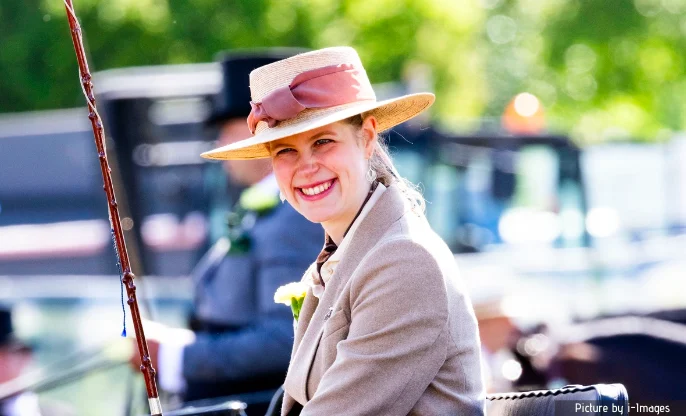

As Lady Louise Windsor celebrates her 23rd birthday, renewed public interest has turned toward a fascinating legal nuance within the British monarchy: whether the quiet, unassuming young royal could officially step into the style of an HRH and take the title of Princess. While the milestone birthday marks another year of adulthood for the late Queen Elizabeth II’s youngest granddaughter, it also highlights the persistent gap between historical legal precedent and modern royal parenting choices.
The question of Lady Louise’s royal status is not a matter of a new peerage or a special royal decree, but rather a dormant legal right established over a century ago. Under existing British constitutional and royal law, the path to becoming a princess remains legally open to her. However, a close examination of family dynamics, past announcements, and practical lifestyle choices suggests that this theoretical possibility will likely remain just that—theory.
The 1917 Letters Patent: The Legal Foundation of Royal Titles
To understand how Lady Louise could theoretically become Her Royal Highness Princess Louise of Edinburgh, one must look back to the early 20th century. On November 30, 1917, King George V issued a set of Letters Patent designed to streamline and clarify the distribution of royal titles within an expanding family.
These Letters Patent decreed that the children of any Sovereign of the United Kingdom, the children of the sons of any such Sovereign, and the eldest living son of the eldest son of the Prince of Wales would enjoy the titular style and attribute of Royal Highness, alongside the titular dignity of Prince or Princess.
Because Lady Louise and her younger brother, James, are the children of a monarch’s son—Prince Edward, the current Duke of Edinburgh—they squarely meet the genealogical criteria outlined in the 1917 document. Legally, they have been entitled to use the style of HRH and the title of Prince or Princess since the day they were born.
The 1999 Buckingham Palace Agreement and Parental Intent
Despite the automatic application of the 1917 Letters Patent, a distinct set of expectations was established when Prince Edward married Sophie Rhys-Jones in June 1999. In an era where the monarchy was increasingly conscious of public perception, cost, and the realities of modern economic life, Buckingham Palace issued an official press release outlining how the couple’s future children would be styled.
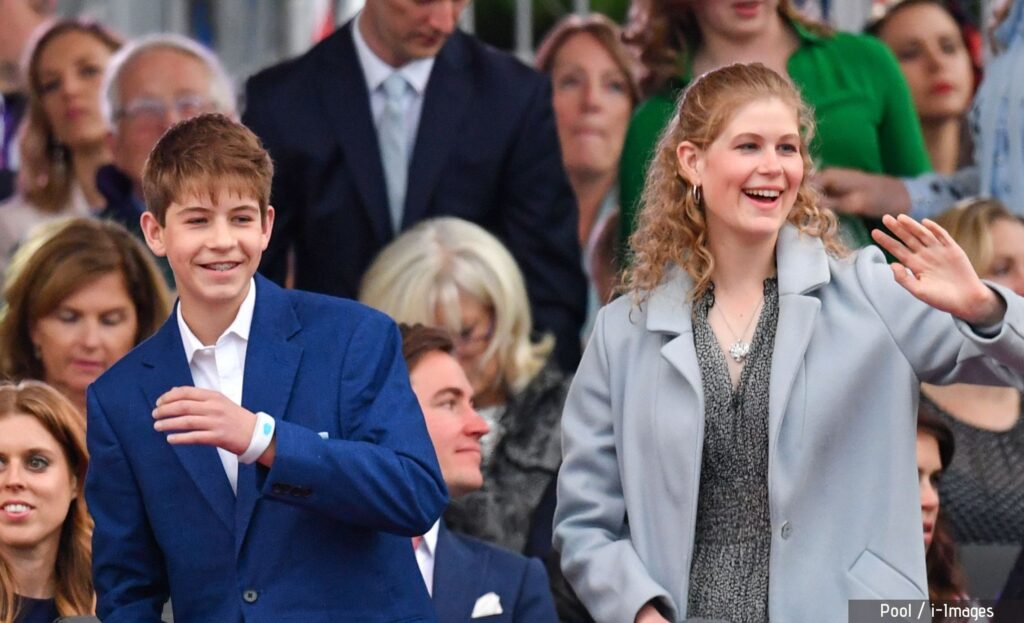
The announcement stated that Prince Edward had been created the Earl of Wessex and Viscount Severn, and that any children born to the marriage would be granted courtesy titles appropriate to the children of an earl, rather than the style of HRH. Consequently, Lady Louise was known publicly as Lady Louise Windsor, and her brother was styled as James, Viscount Severn (subsequently succeeding to the title of Earl of Wessex).
Crucially, however, this 1999 announcement was a press release—an administrative expression of intent—rather than a legally binding instrument like Letters Patent. It carried no power to formally override the statutory reach of King George V’s 1917 decree.
The Duchess of Edinburgh’s 2020 Revelation
For two decades, the public assumption was that the Wessex children simply did not possess royal titles. That paradigm shifted dramatically in 2020, when the Duchess of Edinburgh (then Countess of Wessex) gave a candid interview to journalist Christina Lamb.
During the interview, Sophie openly clarified the legal status of her children. She revealed that both Lady Louise and James do, in fact, possess the legal right to the HRH style and the titles of Prince and Princess. Addressing the choice made by her and her husband, the Duchess explained that these titles were legally theirs to claim.
"They have them and can decide to use them from 18, but I think it’s highly unlikely," Sophie stated at the time.
When pressed on why the 1999 press release had established a different expectation, the Duchess pointed to practical realities and the necessity of self-sufficiency. She noted that because she and Prince Edward fully anticipated their children would need to earn a living in the professional world rather than serving as full-time working royals, the decision was made to forgo the daily use of the HRH style. Buckingham Palace issued no official corrections or modifications to the Duchess’s remarks, cementing the reality that the final decision rests entirely with the siblings now that they have reached adulthood.
A Timeline of Key Royal Title Milestones
- November 1917: King George V issues Letters Patent restricting the styles of HRH and Prince/Princess to the children of the sovereign, the children of the sovereign’s sons, and the eldest son of the eldest son of the Prince of Wales.
- June 1999: Prince Edward marries Sophie Rhys-Jones. Buckingham Palace issues a press release stating their children will use the courtesy titles of an earl’s children rather than the HRH style.
- November 2003: Lady Louise Windsor is born at Frimley Park Hospital, Surrey, legally qualifying as an HRH under the 1917 Letters Patent despite her parents’ stated preferences.
- December 2007: James, Earl of Wessex (formerly Viscount Severn), is born, also falling under the criteria of the 1917 decree.
- April 2021: Prince Philip, the first Duke of Edinburgh, passes away. His hereditary dukedom temporarily merges with the Crown via his eldest son, Charles.
- June 2020: The Countess of Wessex publicly confirms in an interview that her children retain the legal right to use HRH and Prince/Princess titles once they turn 18.
- September 2022: Queen Elizabeth II passes away, and King Charles III ascends the throne. Lady Louise turns 18 and enters adulthood, choosing not to adopt the HRH title.
- March 2023: King Charles III recreates the Dukedom of Edinburgh as a lifetime peerage for his youngest brother, Prince Edward, elevating the family to the Duke and Duchess of Edinburgh.
Lifestyle Choices and the Reality of Independence
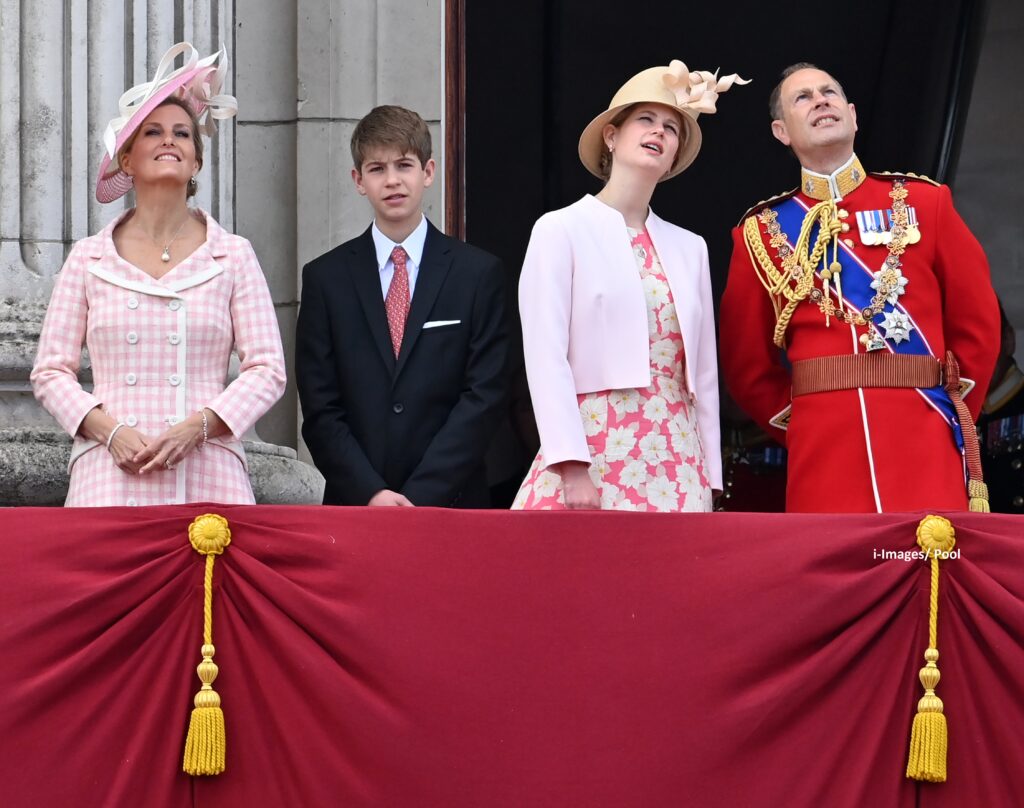
While attaining the age of 23 grants Lady Louise complete legal agency over her nomenclature, all available evidence suggests she has zero interest in transforming her identity into that of a traditional European princess.
Despite attending major national events—such as Trooping the Colour, state commemorations, and traditional family gatherings—both Lady Louise and her brother have been raised to maintain a relatively low profile. Lady Louise is currently pursuing higher education at the University of St Andrews, following a deliberate path of normalcy. Accounts of her daily life, such as being spotted traveling on crowded public trains or previously working a summer stint at a local garden centre, underscore a grounded upbringing far removed from the hyper-visible operations of senior working royals.
Furthermore, her parents’ deliberate modeling has emphasized public service through civic and charitable channels rather than through royal pageantry. The Duke and Duchess of Edinburgh remain dedicated working members of the Firm, supporting King Charles III, but they have consistently insulated their children from the pressures of front-line royal obligations.
Broader Implications for the Modern Monarchy
The situation surrounding Lady Louise highlights a broader constitutional and strategic evolution within the British royal family under King Charles III. As the institution moves toward a leaner, more cost-effective model—often referred to as a "slimmed-down monarchy"—the proliferation of working titles is increasingly tightly controlled.
The distinction between holding a legal title by birthright and actively exercising it provides a flexible framework for modern royals. It allows younger members of the extended royal family to transition seamlessly into private careers without the administrative and public relations burdens attached to the HRH style.
While the 1917 Letters Patent remain the ultimate legal authority on royal styles until a reigning monarch explicitly revokes or amends them through new legal instruments, the precedent set by the Edinburgh family demonstrates that title usage is increasingly a matter of personal and familial choice.
Ultimately, as Lady Louise Windsor marks her 23rd birthday, she does so as a private citizen in practice, even if her lineage links her directly to the heart of British history. Whether she remains simply Lady Louise or ever surprises observers by formally adopting the title of Princess, her current trajectory suggests she is entirely content defining her own future on her own terms.