
The landscape of the South Korean entertainment industry, particularly within the K-pop idol sphere, is one defined by rigorous standards of professionalism, fan engagement, and public image management. Recently, Yushi, a member of the newly debuted SM Entertainment group NCT Wish, has become the center of a polarizing discussion across various online communities. The discourse was ignited by a viral post on the popular Korean forum "theqoo," titled "his personality is too unique to be an idol," which compiled several instances of the artist’s interactions with fans that many netizens have characterized as blunt, dismissive, or otherwise unsuitable for the expectations placed upon modern idols.
As NCT Wish navigates the early stages of its career, these criticisms highlight a growing tension between traditional "fan service" expectations and the varying personalities of individual artists. The controversy encompasses not only Yushi’s behavioral responses during scheduled events but also unverified allegations regarding his family lineage, creating a complex situation for both the artist and his management agency.

Detailed Instances of Disputed Fan Interactions
The primary catalyst for the current wave of criticism stems from a series of documented interactions during "fansign" events—exclusive gatherings where fans purchase significant quantities of albums for a chance to speak briefly with the artists. In the K-pop economy, these moments are highly valued by consumers, who often expect a degree of warmth, gratitude, and engagement in exchange for their financial and emotional investment.
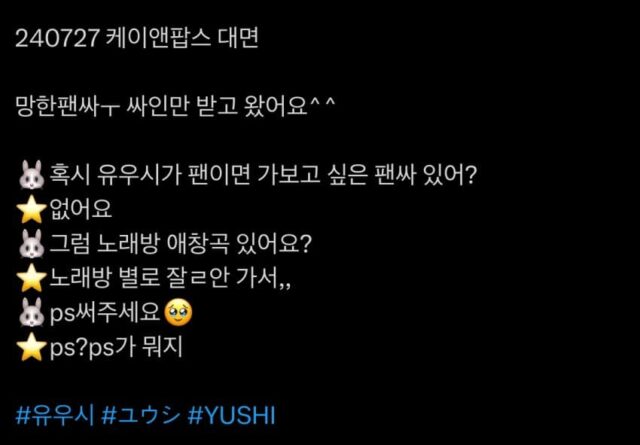
In one widely circulated account, a fan detailed an interaction that they described as a "failed fansign." According to the fan’s transcript, when asked which other artist’s fansign Yushi would want to attend if he were a fan himself, he responded with a curt "None." When the fan followed up by asking about his favorite song to sing at a noraebang (karaoke), Yushi reportedly stated that he does not go to such establishments. Furthermore, when requested to write a "PS" (a personalized post-script message) on the album, Yushi reportedly asked what a "PS" was. The fan expressed skepticism regarding this lack of knowledge, given that the term is standard nomenclature within the idol industry.
Another incident involved a video call fansign, a format that became a staple of the industry during the pandemic. A fan reportedly went to the beach specifically to provide Yushi with a scenic view during their allotted time. Upon seeing the effort, Yushi’s reaction was described as "lukewarm." When the fan directly asked if he did not like the sea, he simply confirmed that he did not.

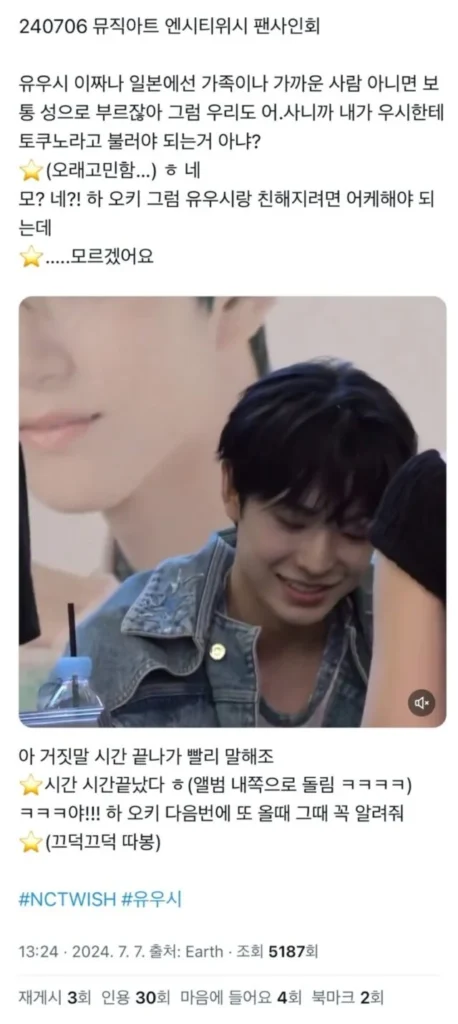
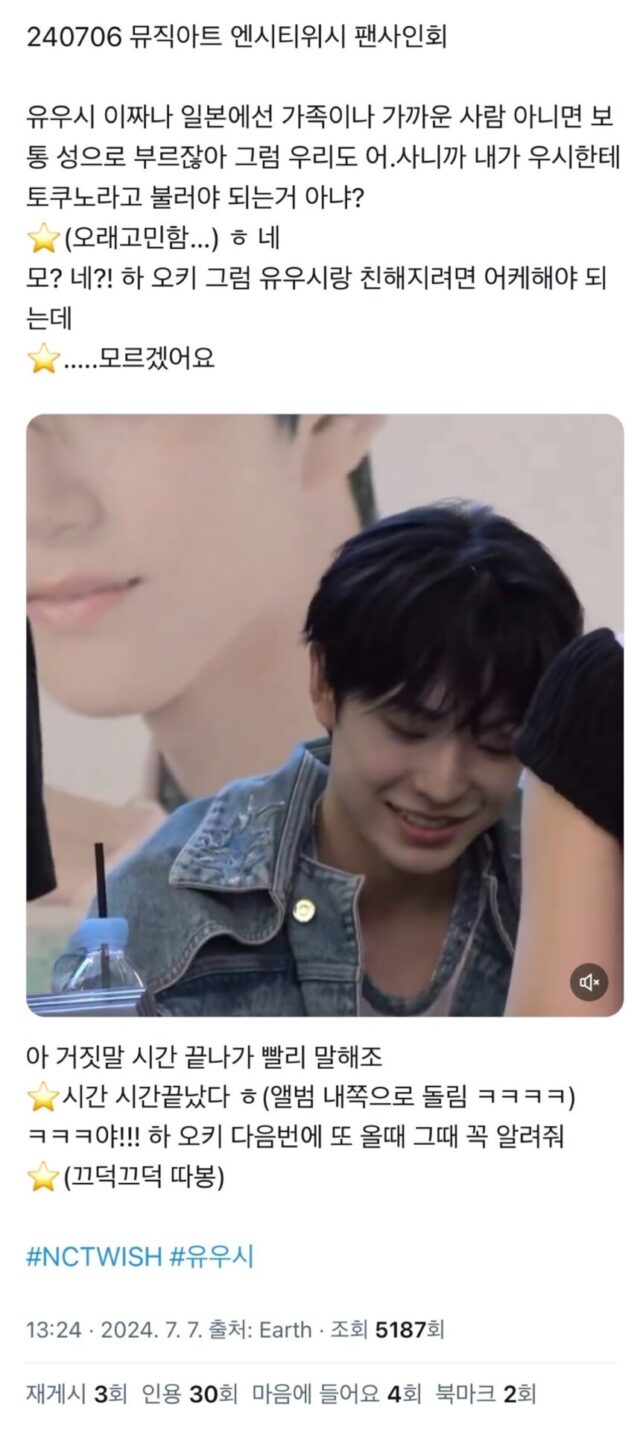
Further instances include an interaction regarding his surname. A fan, noting the traditional Japanese social etiquette of using surnames for those who are not close, asked if they should refer to him as "Tokuno" until they became more familiar. After a long pause, Yushi reportedly agreed. When the fan asked how they might bridge that distance and become closer, Yushi allegedly responded, "I don’t know."
Finally, a communication on the fan-interaction platform Weverse added to the scrutiny. When a fan suggested that he should visit the platform more frequently as it is "part of the job," Yushi replied with a simple "lol" (written as ‘ㅋㅋㅋㅋ’ in Korean). While some viewed this as a casual or humorous response, others interpreted it as a dismissive attitude toward professional obligations.
The Cultural Context of Fan Service in K-Pop
To understand why these interactions have garnered such significant backlash, one must examine the socio-economic structure of the K-pop industry. Unlike Western celebrities, who may maintain a greater distance from their fanbases, K-pop idols are marketed through a "parasocial" framework. Fans are encouraged to feel a personal connection to the artists, often facilitated by frequent live streams, private messaging apps like Bubble or Weverse, and intimate fansign events.
In this environment, "fan service" (paen-seobiseu) is viewed not as an optional courtesy but as a core professional competency. The financial model of the industry relies heavily on "super-fans" who spend thousands of dollars on albums and merchandise. When an idol provides short or seemingly disinterested responses, it is often viewed by the domestic Korean public as a breach of a "social contract" between the provider and the consumer.
Netizens on platforms like theqoo have argued that while having a "unique" or "honest" personality is not inherently negative, the role of an idol requires a baseline level of performative enthusiasm. Critics argue that fans attend these events for a positive emotional experience, and a "blunt" personality can be perceived as "sang-myeong-pae" (a term used for someone who ruins the mood or acts rudely).
Historical Allegations and Lineage Controversy
Adding a layer of geopolitical sensitivity to the situation are unconfirmed allegations regarding Yushi’s family background. Shortly after his debut, rumors began to circulate on social media suggesting that Yushi (born Tokuno Yushi) might be a descendant of a Japanese general involved in the historical occupation of the Korean Peninsula.

These claims are based on his relatively rare surname and geographic origins in Japan. In South Korea, historical grievances related to the 1910–1945 Japanese colonial period remain a deeply sensitive topic. Any perceived connection between a public figure and the colonial administration can lead to severe public relations crises.
It is important to note that these allegations currently lack documented proof and remain speculative. Neither SM Entertainment nor Yushi has issued a formal statement regarding his family history. However, the mere existence of these rumors has exacerbated the scrutiny of his behavior, as the Korean public often holds idols to high moral and historical standards.
Industry and Netizen Reactions
The reaction to Yushi’s conduct has been sharply divided. A significant portion of the online community has expressed disappointment, with comments such as "If he hates being an idol this much, why did he debut?" and "He seems to have no respect for the fans who are spending money to see him." Some have pointed out that other members of NCT Wish, who are also navigating a new career, have maintained a more traditional and welcoming demeanor.
Conversely, a segment of the fanbase has come to Yushi’s defense. These supporters argue that his behavior is likely a result of extreme introversion, social anxiety, or a cultural difference in communication styles. They suggest that his honesty is refreshing in an industry often criticized for being "fake" or "overly scripted." Defenders claim that Yushi’s charm lies in his "tsundere" (cold on the outside, warm on the inside) personality, which may take time for the broader public to appreciate.
Chronology of NCT Wish’s Emergence
NCT Wish is the final unit of the NCT (Neo Culture Technology) brand, a global boy group project managed by SM Entertainment. The group was formed through the reality survival show NCT Universe: LASTART, which aired in mid-2023.
- September 2023: The lineup for the group (then known as NCT New Team) was finalized, with Yushi being one of the first members confirmed due to his high rankings during the show.
- October–December 2023: The group embarked on a pre-debut tour across Japan to build a foundational fanbase.
- February 2024: The group officially debuted as NCT Wish with the single "WISH," performing at the SMTOWN LIVE 2024 at the Tokyo Dome.
- May 2024: As the group increased their activities in South Korea, domestic netizens began compiling and scrutinizing Yushi’s fan interaction logs, leading to the current viral controversy.
Broader Impact and Implications for SM Entertainment
The controversy surrounding Yushi presents a strategic challenge for SM Entertainment. The agency has historically been known for its "experimental" approach to idols, often debuting artists with distinct and sometimes "edgy" personalities. However, the "NCT" brand, while globally successful, has occasionally faced criticism regarding the perceived "coldness" of certain units compared to more traditionally "friendly" groups.
For NCT Wish, which is specifically branded with a "youthful" and "hopeful" concept, a member being labeled as "unsuitable" for the role could potentially hinder the group’s growth in the competitive Korean market. Marketing experts suggest that the agency may need to intervene by either providing media training to help Yushi adapt to fan expectations or by leaning into his "unique" personality as a specific "character" trait to make it more palatable to the public.
Furthermore, the unverified historical allegations represent a "high-risk" factor. In the K-pop industry, historical controversies can lead to boycotts or demands for a member’s withdrawal. The silence of the agency on this matter suggests a strategy of non-engagement to avoid giving the rumors more visibility, but as the behavioral controversy grows, the two issues may become inextricably linked in the public’s mind.
Conclusion
The ongoing debate regarding NCT Wish’s Yushi reflects a larger conversation about the evolution of the K-pop idol. As the industry becomes more global and diverse, the clash between individual personality and traditional professional expectations is likely to recur. Whether Yushi’s "unique" personality will eventually be embraced as a hallmark of authenticity or remain a point of contention depends on his future interactions and the agency’s ability to manage his public narrative. For now, the artist remains under a microscope, with every response and gesture analyzed by a public that demands not just talent, but a specific form of emotional labor that has become the hallmark of the Hallyu wave.