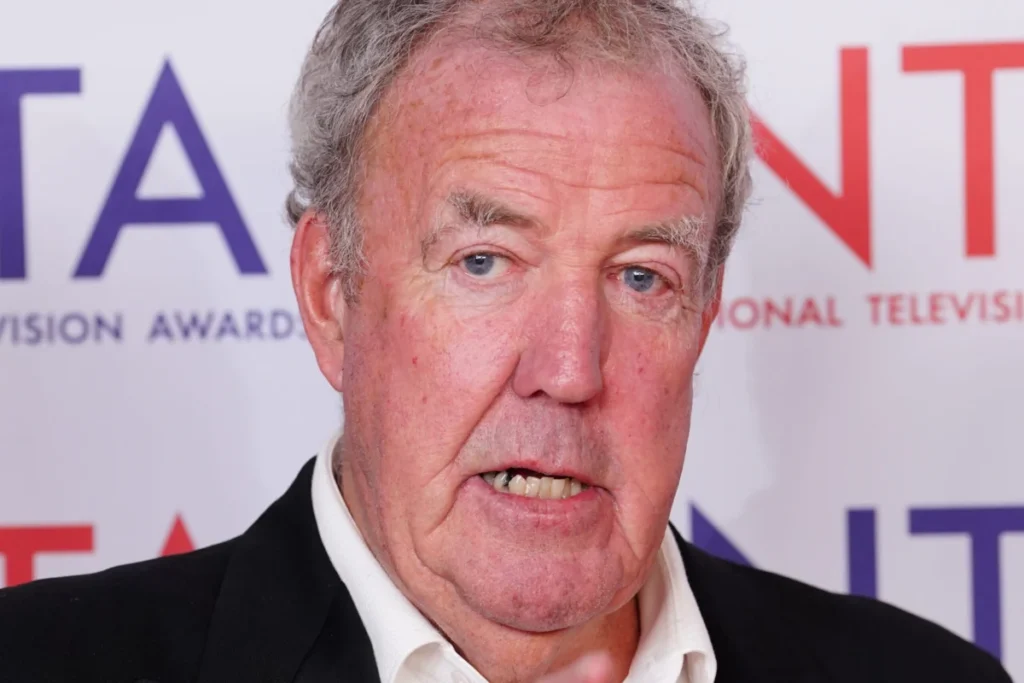

The highly anticipated fifth series of Clarkson’s Farm is set to debut on screens later this week, reigniting public and critical discourse surrounding Jeremy Clarkson’s unexpected journey into agricultural life. While the Amazon Prime Video series has cemented its status as a significant viewer favourite, initial critical assessments suggest a recurring theme: the challenge of maintaining narrative freshness within the inherently cyclical nature of farming. Critics acknowledge the show’s enduring appeal but have begun to scrutinize its reliance on a familiar, albeit successful, format.
The Telegraph’s Benji Wilson, in his review, offered a nuanced perspective, assigning the series a commendable four out of five stars. Wilson astutely pointed out that "agriculture is cyclical," a fundamental truth that presents both a "blessing and curse" for Clarkson and the show’s producers. This inherent rhythm of sowing, reaping, gestation, and birth allows the series to craft "gratifying stories" that resonate with audiences. However, this same cyclical pattern also poses a significant creative hurdle: the imperative to avoid repetition as the show progresses. Wilson highlighted the potential for diminishing returns in comedic scenarios, noting, "There are only so many times you can laugh at someone failing to herd sheep or slipping in a cow pat." Yet, he quickly conceded his personal enjoyment of the latter, underscoring Clarkson’s long-honed mastery of "stage-managed catastrophes," a comedic device perfected during his tenure on Top Gear and The Grand Tour. These meticulously orchestrated mishaps, Wilson argued, remain "very funny" when executed with Clarkson’s characteristic flair, proving him a "master of the modern staged farce."
Beyond the familiar comedic beats, Wilson identified a notable evolution in Clarkson’s on-screen persona. He observed a "softened" Jeremy, a departure from the more abrasive figure known to earlier audiences. This transformation is particularly evident in moments of vulnerability, such as a scene where Clarkson experiences breathlessness while attempting to fell a Christmas tree single-handedly, which Wilson described as looking "like death is looming." This brush with mortality, both real and dramatized, appears to usher in "a new Farmer Clarkson," characterized by a "gentler edge." Wilson strikingly contrasted this iteration with the Top Gear era Clarkson, noting that fans of his earlier work might not recognise the man seen "fighting back tears when his favourite pigs are loaded on to the truck that only does one-way journeys." Despite the emotional toll, Wilson concluded that Clarkson’s Farm remains "healthier than ever," suggesting that this newfound emotional depth adds another layer to its appeal.
Concurring with a four-star rating, Ben Dowell of The Times echoed the sentiment of the series’ enduring comedic power, describing it as "still deliciously funny." Dowell acknowledged that the fifth series might at times "feel scrappy," attributing this to the unpredictable nature of farming, a profession where events often defy meticulous planning. This raw authenticity, he argued, prevents the show from shying away from "the realities of rural life," promising that "later episodes will take a properly dark turn." This alludes to the more challenging and often heartbreaking aspects of agriculture that the series has consistently portrayed, from crop failures to animal welfare issues and the inherent economic precariousness.

Dowell also delved into the question of Clarkson’s personal investment in the project, questioning, "Is Clarkson’s heart still in this?" His conclusion was unequivocally positive, noting the genuine emotion in Clarkson’s "eyes well up whenever there’s a porker nearby" and his joyous reactions to technological advancements like remote-controlled tractors. These moments, Dowell asserted, reveal a deep, authentic connection to the farm and its inhabitants. Even when Clarkson appears to be "winging it," Dowell maintained that "Clarkson winging it is still deliciously funny," citing an instance where Clarkson comically rails against "k**b cheese" during a dairy-based breakfast. This blend of genuine passion and characteristic humour continues to be a cornerstone of the show’s charm.
A significant, and indeed sombre, element woven into the narrative of series five is Jeremy Clarkson’s recent health scare. The series trailer offers a stark glimpse into this personal crisis, depicting an ambulance speeding along a country road before cutting to Clarkson himself lying in a hospital bed, chest adorned with medical wires. In a candid conversation with his farm manager, Kaleb Cooper, Clarkson can be heard explaining the gravity of the situation: "You’ve got three arteries that feed your heart to keep it pumping. My heart wasn’t getting any blood." This on-screen portrayal aligns with Clarkson’s previous public statements regarding an emergency heart surgery he underwent, which he described as having saved him from being "days from death." He had been rushed to hospital after experiencing alarming symptoms including clamminess, chest tightness, and pins and needles in his left arm, indicative of a severe cardiac event. This personal health battle adds an unforeseen layer of vulnerability and gravitas to a series already praised for its authentic portrayal of life’s unpredictable challenges.
The Diddly Squat Phenomenon: A Brief History and Broader Impact
Clarkson’s Farm first launched in 2021, marking a significant pivot in Jeremy Clarkson’s career following his high-profile exit from Top Gear and subsequent success with The Grand Tour. The show chronicles his largely self-taught efforts to run a 1,000-acre farm in the Cotswolds, aptly named Diddly Squat Farm, with minimal prior agricultural experience. What began as an experimental venture for Amazon Prime Video quickly blossomed into a cultural phenomenon, captivating audiences far beyond the traditional farming demographic. Its unexpected success is attributed to a potent mix of Clarkson’s well-established charismatic, often bumbling, persona, the genuine struggles of modern farming, and the endearing supporting cast, including the knowledgeable Kaleb Cooper, Clarkson’s partner Lisa Hogan, and land agent Charlie Ireland.
The series has not only garnered critical acclaim but has also become a significant commercial success for Amazon Prime Video, reportedly boosting subscriptions and demonstrating the platform’s ability to produce engaging factual entertainment. Its popularity has led to a noticeable increase in public awareness and discussion surrounding the realities of farming, from the complexities of crop rotation and animal husbandry to the economic pressures and bureaucratic hurdles faced by agriculturalists in the UK. Diddly Squat Farm itself has become a tourist attraction, with its farm shop drawing thousands of visitors, often leading to local traffic congestion and planning disputes with the West Oxfordshire District Council, a recurring narrative thread in the show.

Navigating the Cycles: The Challenge of Agricultural Storytelling
The inherent "cyclical" nature of farming, as highlighted by Benji Wilson, presents a unique challenge for a television series. Each year, farmers face similar tasks: ploughing, sowing, harvesting, lambing, and managing livestock. The genius of Clarkson’s Farm lies in its ability to find fresh narratives within these recurring events. This is achieved through several key mechanisms:
- Exaggerated Catastrophe: Clarkson’s penchant for creating or stumbling into calamitous situations ensures that even routine tasks become comedic spectacles. A simple fence repair can escalate into a multi-episode saga, a new crop choice can lead to unforeseen disasters, and machinery malfunctions are always spectacularly inconvenient.
- Personal Stakes: The show consistently personalises the agricultural journey. It’s not just about growing crops; it’s about Jeremy’s financial investment, his pride, and his evolving relationship with the land and his animals. Failures feel genuine because they affect him directly.
- Human Element: The interactions between Clarkson and his team – Kaleb’s exasperated wisdom, Lisa’s pragmatic business sense, Charlie’s measured advice – provide constant comedic and dramatic fodder. Their personalities and reactions to Clarkson’s antics ensure that even familiar scenarios are infused with fresh dynamics.
- Real-World Challenges: The series unflinchingly tackles contemporary issues in farming, such as the impact of climate change, fluctuating market prices, government subsidies, and environmental regulations. These external factors introduce new variables and challenges each season, preventing the narrative from becoming stagnant. For instance, a drought one year or a sudden change in agricultural policy can dramatically alter the farm’s operations and the show’s plotlines.
Clarkson’s Transformation: From Controversial Journalist to Vulnerable Farmer
Jeremy Clarkson’s public image has undergone a remarkable metamorphosis through Clarkson’s Farm. For decades, he was synonymous with high-octane motoring journalism, known for his acerbic wit, confrontational style, and occasional controversies. Clarkson’s Farm has revealed a different side: a man grappling with physical labour, economic uncertainty, and genuine emotional attachment to the land and its creatures.
The emotional scenes mentioned by critics – his tears over the pigs destined for slaughter, his physical vulnerability during the Christmas tree incident, and now the revelation of his serious heart condition – are pivotal to this transformation. These moments strip away the bravado, presenting a more human, relatable, and even vulnerable Clarkson. This shift has resonated deeply with audiences, allowing them to connect with him on a different level. It positions him not just as an entertainer, but as someone facing universal challenges of aging, health, and the profound responsibilities that come with caring for life. His openness about his health scare, in particular, adds a layer of stark reality, reminding viewers of the fragility of life even amidst the seemingly idyllic countryside.

The Indispensable Ensemble: Pillars of Diddly Squat’s Success
While Jeremy Clarkson is the titular star, the success and authenticity of Clarkson’s Farm are undeniably bolstered by its memorable supporting cast.
- Kaleb Cooper: The young, local farm manager whose deep knowledge of practical farming contrasts sharply with Clarkson’s amateurish attempts. Kaleb’s deadpan humour, Oxfordshire accent, and unwavering commitment to traditional farming methods have made him a breakout star, offering both comedic relief and genuine insight into agricultural practices. His exasperation with Clarkson’s grand schemes is a constant source of amusement.
- Lisa Hogan: Clarkson’s partner and the pragmatic businesswoman behind the Diddly Squat Farm Shop. Lisa’s entrepreneurial spirit and unwavering support, coupled with her no-nonsense approach to marketing and sales, provide a crucial balance to Clarkson’s often impulsive decisions. She grounds the farm in commercial reality.
- Charlie Ireland: The calm and collected land agent whose role is to navigate the complex world of agricultural regulations, subsidies, and financial planning. Charlie serves as the voice of reason and often the bearer of unwelcome news, highlighting the bureaucratic labyrinth that modern farmers must contend with. His explanations demystify the financial side of farming for viewers.
These individuals are not mere sidekicks; they are integral to the narrative, providing expertise, comedic foil, and emotional support, collectively painting a comprehensive picture of farm life.
Broader Implications: Reshaping Perceptions of Agriculture
Clarkson’s Farm has achieved something rare in television: it has made farming compelling and accessible to a mainstream audience. It has done more to highlight the challenges and rewards of agricultural life than countless documentaries. The show has stimulated discussions about:

- Food Production: Raising awareness about where food comes from, the effort involved, and the thin margins farmers operate on.
- Environmental Stewardship: Showcasing the delicate balance between productivity and ecological responsibility, often through Clarkson’s own learning curve with rewilding and biodiversity initiatives.
- Economic Viability: Exposing the financial precarity of farming, the reliance on subsidies, and the impact of market fluctuations and weather.
- Rural Life: Providing a glimpse into the community, challenges, and resilience of those living and working in the countryside.
The show’s impact extends beyond entertainment, fostering a greater appreciation for the agricultural sector and prompting consumers to consider the true cost and value of their food. The Diddly Squat Farm Shop, despite its local controversies, has become a symbol of direct-to-consumer farming, inspiring other small producers.
The Future of Diddly Squat: Sustaining the Formula
As Clarkson’s Farm enters its fifth series, the critical discussion around format repetition signals a crucial juncture. While the show’s inherent strengths—Clarkson’s charisma, the authentic supporting cast, and the compelling reality of farm life—remain potent, the creative team will need to continue finding innovative ways to keep the narrative fresh. The integration of personal narratives, such as Clarkson’s health journey, provides a powerful avenue for emotional depth and character development that can transcend the cyclical nature of farming tasks.
The longevity of Clarkson’s Farm will likely depend on its ability to evolve alongside its star and the ever-changing landscape of agriculture. By continuing to embrace the unpredictable realities of rural life, showcasing both its comedic and darker turns, and allowing Jeremy Clarkson’s personal growth to unfold authentically, the series stands a strong chance of maintaining its unique position as both an educational tool and a beloved piece of television entertainment. The blend of staged farce and genuine human struggle, now underscored by a brush with mortality, ensures that Clarkson’s Farm remains a captivating and relevant exploration of a man, a farm, and the enduring challenges of life on the land.