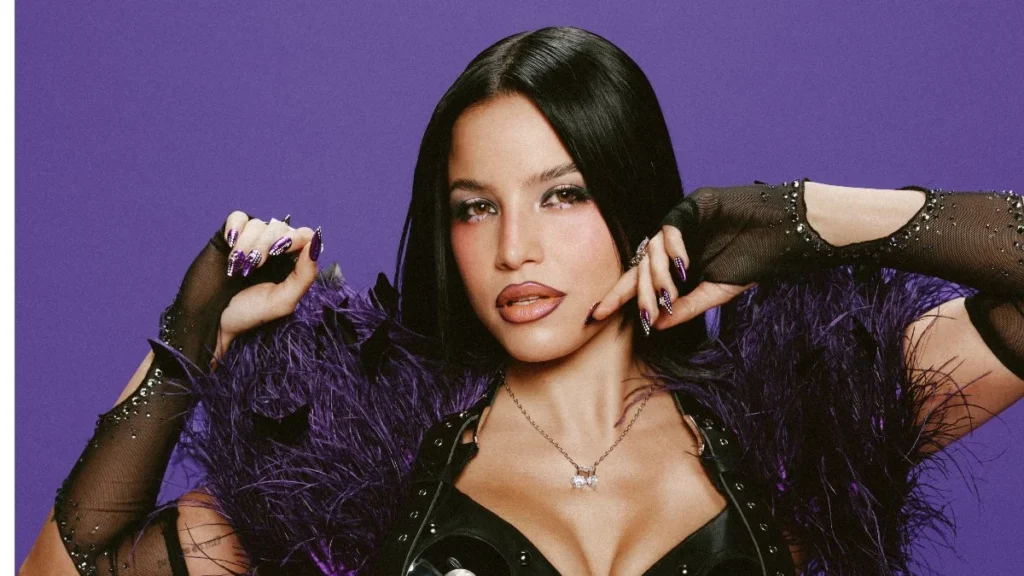

The global rise of Latin pop continues to gain momentum as Argentine sensation Emilia Mernes—known simply as Emilia—unveils her latest musical offering, "BODYPAINTING." Released to critical anticipation, the track serves as a bold pivot for the artist, blending high-concept visual storytelling with a production aesthetic that bridges European electronic influences and contemporary urban Latin rhythms. The single is not merely a standalone release but a strategic narrative device designed to herald what the singer identifies as a transformative new chapter in her professional trajectory.
The Sonic Architecture of BODYPAINTING
"BODYPAINTING" is a collaborative effort that highlights a sophisticated cross-continental production partnership. By enlisting the expertise of Swedish producer LIOHN—renowned for his work in high-energy electronic and pop landscapes—alongside the seasoned Argentine hitmaker Zecca, Emilia has crafted a soundscape that feels both expansive and intimate.
Musically, the track moves away from the traditional reggaeton tropes that dominated her earlier work, favoring a sleeker, synth-driven atmosphere that underscores the song’s themes of desire and self-actualization. Industry analysts have noted that this shift reflects a broader trend among Latin artists who are increasingly seeking to diversify their sound to appeal to a global, English-speaking audience without alienating their core Spanish-speaking fanbase. The interplay between the rhythmic pulse of the song and its lyrical focus on the physicality of flirtation creates a tension that is mirrored in the high-production music video accompanying the release.
Visual Storytelling and Artistic Evolution
The music video for "BODYPAINTING" functions as a piece of performance art, utilizing a luxurious penthouse setting as a canvas for complex, multi-layered choreography. The video’s most striking sequence features the artist entirely encased in black paint, a visual metaphor that aligns with the song’s title and emphasizes the intersection of fashion, art, and music.
Creative directors and fashion critics have pointed out that the use of monochrome aesthetics in pop music videos often serves to strip away the "noise" of commercialism, forcing the viewer to focus on the silhouette, movement, and intensity of the artist. By presenting multiple iterations of herself within the frame, Emilia utilizes the medium of video to explore the multifaceted nature of fame and the internal dialogue between the private individual and the public persona. This visual complexity is a hallmark of her recent work, suggesting that she is moving toward an era of her career where conceptual depth is as vital as chart performance.
A Chronology of Rise and Influence
Emilia’s career trajectory has been defined by a series of deliberate, high-impact milestones that have cemented her status as a powerhouse in the Latin music scene. Before the arrival of "BODYPAINTING," her path was marked by significant international collaborations and festival appearances that expanded her reach far beyond the Southern Cone.
- 2023-2024 (The Foundation): Emilia solidified her presence in the Latin pop hierarchy through a series of viral hits and the release of high-performing albums that showcased her versatility as both a vocalist and a dancer.
- Early 2025 (Cross-Cultural Integration): Her collaboration with Swedish pop star Zara Larsson on the track "Girl’s Girl," featured on the deluxe edition of the Midnight Sun album, represented a critical juncture in her career. The partnership served as a bridge between the European and Latin pop markets, proving that her appeal was not limited by language barriers.
- Spring 2025 (The Coachella Milestone): Her Coachella performance, featuring a guest appearance by Brazilian superstar Luísa Sonza, served as a global coming-out party. The set was widely lauded by critics for its precision and energy, marking the first time the artist was positioned on such a prestigious stage in the United States.
- Late 2026 (The New Chapter): The release of "BODYPAINTING" marks the current phase, characterized by a transition toward a more refined, experimental artistic identity.
Analyzing the Latin Pop Phenomenon
The success of artists like Emilia is symptomatic of the "Global Latin" movement, a shift in the music industry where Spanish-language music has become a dominant force in mainstream pop charts. According to industry data, Latin music consumption has experienced a double-digit growth rate annually for the past five years, significantly outperforming many legacy genres.
The implication of this shift is profound: record labels are increasingly investing in artists who can bridge cultural divides. Emilia’s ability to weave themes of sensuality and empowerment—universal concepts—into her music allows her to transcend the regional boundaries of her home country. Her approach to marketing, which emphasizes high-quality visual content and cross-genre production, is a blueprint for the modern pop star. By moving toward a sound that is less reliant on regional slang and more focused on international sonic trends, she is positioning herself to be a consistent presence in the global top 40.
Official Statements and Artistic Intent
In a statement accompanying the release, Emilia was clear about the intent behind the new track. "BODYPAINTING is a song that invites you to dance and embrace your sensuality," she remarked. "I wanted to explore flirtation and desire, and play with a side of me that people already know, but that comes through in a different way today."
This admission suggests a deliberate effort to reclaim her narrative. In the hyper-connected era of social media, where artists are often subject to constant scrutiny, Emilia’s pivot toward a more controlled, artistic, and "sensual" aesthetic can be viewed as an act of autonomy. By controlling the visual representation of her body—literally painting it—she is making a statement about how she chooses to be perceived by her audience.
Implications for Future Projects
As the music industry continues to favor shorter, high-impact cycles, "BODYPAINTING" acts as an anchor for a potential upcoming EP or album project. The collaboration with LIOHN and Zecca is expected to be a recurring theme if the artist continues down this sonic path. For industry insiders, the question remains whether this change in direction will be sustained across a full-length project or if it is merely a stylistic experiment.
Given the success of her previous collaborations and her growing fan base in both Europe and the Americas, the commercial prospects for her next major project appear strong. The artist’s team has hinted that this is merely the "beginning of a new chapter," suggesting that there is a broader visual and auditory narrative yet to be revealed.
Conclusion
"BODYPAINTING" stands as a testament to Emilia’s growth as an artist. By moving beyond the comfort zone of her previous hits and embracing a more avant-garde visual and auditory style, she is signaling a level of maturity that is often sought but rarely achieved by young pop stars. Her ability to synthesize the expertise of international producers with her own unique, Argentine-rooted performance style makes her one of the most compelling figures in contemporary music. As she continues to navigate the complexities of international fame, the music industry will undoubtedly be watching to see how this "new chapter" unfolds and how it continues to influence the trajectory of Latin pop on the world stage.
The video, now available for streaming, serves as the definitive document of this transition—a polished, provocative, and highly deliberate piece of work that invites the world to see Emilia not just as a singer, but as a multifaceted artist in command of her creative destiny.