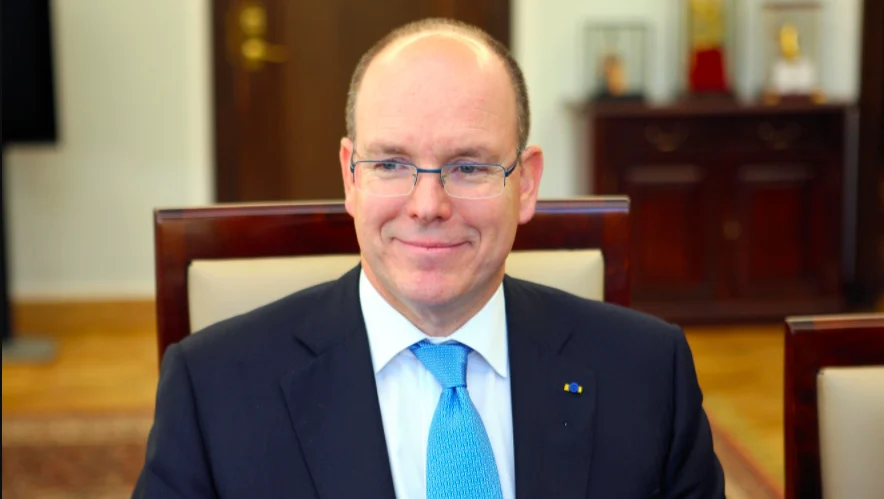

Environmental campaigners and economic justice advocates have launched an international petition urging Prince Albert II of Monaco to cancel the prestigious annual Monaco Yacht Show. The campaign, which is being spearheaded and sponsored by Inequality.org, contends that the high-profile exhibition is fundamentally irreconcilable with the sovereign’s long-standing public reputation and policy declarations as a prominent global champion for environmental protection and climate action.
The petition, directed squarely at the Prince of Monaco, focuses heavily on the immense environmental toll associated with the lifestyle and transit habits of the ultra-high-net-worth individuals who flock to the principality for the event. Organizers argue that the influx of multi-million-dollar superyachts, private jets, and commercial helicopters creates an elite carbon footprint that sharply contradicts global efforts to curb greenhouse gas emissions and combat the accelerating impacts of climate change. By spotlighting the contrast between Monaco’s luxury spectacles and the worsening reality of global weather disasters, the petition has revived a broader, contentious debate regarding the intersection of extreme wealth, heavy carbon consumption, and international climate policy.
Main Facts of the Campaign and the Monaco Yacht Show
The Monaco Yacht Show is globally recognized as one of the premier showcases for the superyacht industry, drawing shipbuilders, designers, brokers, and billionaires from every corner of the globe to Port Hercule. Established more than three decades ago, the exhibition has grown into a staggering display of maritime engineering, luxury assets, and opulent networking. However, it is precisely this concentration of excess that has drawn the ire of environmental and social inequality watchdogs.
According to data cited by the campaign and gathered by the Institute for Policy Studies, the 2025 edition of the Monaco Yacht Show was accompanied by a massive surge in private aviation traffic. Researchers recorded approximately 1,400 private jet flights arriving in and departing from the region specifically for the duration of the event. The campaign calculates that these exclusive flights alone generated a staggering 12,405 tonnes of carbon dioxide equivalent ($textCO_2texte$) emissions.
To put this figure into a relatable perspective, the organizers of the petition note that the carbon output of these few days of elite travel equals the average annual carbon emissions of roughly 2,300 ordinary European citizens. When factoring in the heavy fuel consumption, round-the-clock power generation, and operational logistics of the fleet of superyachts anchored in the harbor—many of which feature multiple decks, helipads, and energy-intensive amenities—the total environmental footprint of the event is magnified exponentially. Campaigners argue that hosting such an unabashed celebration of ultra-luxury sends a deeply hypocritical message at a time when ordinary citizens across the globe are being urged to dramatically reduce their carbon consumption, insulate their homes, and adopt sustainable transport habits.
Background Context: Prince Albert II and the "Eco-Warrior" Persona
At the heart of the petition lies a direct challenge to the personal and political brand of Prince Albert II, who has cultivated an international reputation as an environmental leader over several decades. Unlike many traditional heads of state, Prince Albert has made conservation, marine biodiversity protection, and sustainable development the cornerstone of his public service and international diplomacy.
Through the Prince Albert II of Monaco Foundation, established in 2006, the monarch has channeled millions of dollars into global initiatives aimed at addressing climate change, preserving endangered ecosystems, and managing water resources sustainably. He has traveled extensively to polar regions, witnessing firsthand the melting of glaciers in the Arctic and Antarctic, and has consistently used high-level global platforms—such as United Nations climate summits—to sound the alarm regarding ecological collapse.
This sustained dedication led The New York Times and other major international publications to frequently dub him an "eco-warrior" among royalty. The petition organizers are leveraging this exact moniker, arguing that a true advocate for the environment cannot compartmentalize their domestic economy from their global rhetoric. The campaign posits that if Prince Albert is genuinely committed to preserving the planet for future generations, his environmental advocacy must necessarily extend to the regulatory and ethical standards applied within his own borders, starting with the high-emission luxury events hosted in the principality.
Chronology and Precedents: The Pushback Against Private Aviation
The current drive against the Monaco Yacht Show does not exist in a vacuum; rather, it is part of a growing, coordinated international movement targeting the carbon footprints of the ultra-wealthy. Over the past five years, environmental groups have increasingly shifted their analytical lens from broad industrial emissions to the disproportionate impact of private aviation and luxury consumption.
Campaigners are explicitly drawing comparisons to the recent fate of the European Business Aviation Convention & Exhibition (EBACE). EBACE, a major annual trade event for the private jet industry, faced intense, sustained public pressure and direct protests over its environmental impact. Following mounting criticism from climate activists and shifting political attitudes toward high-emission luxury events, organizers and participants faced a hostile climate that ultimately led to the cancellation of the event.
Inequality.org and allied climate groups are demanding that Prince Albert follow this emerging precedent by terminating the Monaco Yacht Show. By framing the cancellation of EBACE as a viable blueprint for municipal and national decision-makers, the petitioners hope to establish a legal and cultural standard where events demonstrably incompatible with climate stability are phased out, regardless of their economic value to local tourism or luxury industries.
Supporting Data and Global Climate Context
To substantiate their demands, the campaign organizers have situated the localized emissions of the Monaco Yacht Show within the broader, catastrophic timeline of global climate change. The petition links the excess of the event to the intensifying frequency and severity of climate-driven disasters observed in recent years, including record-breaking European heatwaves, catastrophic wildfires across the Mediterranean basin, severe agricultural droughts, and violent, destructive storms.
The organizers highlight that the summer months in Europe have repeatedly broken temperature records, resulting in thousands of premature heat-related deaths, particularly among vulnerable elderly populations. Beyond Europe, the petition draws attention to profound global climate injustices, citing nations like Nepal as prime examples. Despite contributing a negligible fraction of historical global greenhouse gas emissions, populations in countries like Nepal face disproportionate devastation from glacial lake outburst floods, erratic monsoons, and systemic agricultural failures directly linked to global warming driven largely by industrialized nations and wealthy elites.
By juxtaposing the suffering of climate-vulnerable populations in the Global South with the indulgence of thousands of metric tons of carbon burned for a weekend yacht exhibition, the campaign aims to galvanize public opinion around themes of climate justice and economic inequality.
Sponsorship and the Role of Inequality.org
The petition is officially sponsored and promoted by Inequality.org, a prominent project and advocacy platform dedicated to researching and addressing economic inequality, wealth concentration, and the societal impacts of the super-rich. By embedding the climate crisis within a framework of economic disparity, Inequality.org seeks to demonstrate that ecological degradation and extreme wealth accumulation are intrinsically linked systemic issues.
The organization points out that a tiny fraction of the global population is responsible for a vastly disproportionate share of global carbon emissions, primarily through investments in fossil fuels, ownership of sprawling estates, and the frequent use of superyachts and private jets. Through this campaign, Inequality.org is inviting everyday citizens from around the world to add their names to the petition addressed directly to the Prince of Monaco, transforming a localized critique into a broad international referendum on the privileges afforded to the ultra-wealthy in an era of ecological crisis.
Fact-Based Analysis of Implications
While the petition has successfully generated international media attention and sparked vigorous online debate, the immediate practical implications for the Monaco Yacht Show remain complex. The event is a cornerstone of Monaco’s tourism economy, generating tens of millions of euros in direct revenue for local hotels, restaurants, service providers, and marine contractors. Furthermore, the principality relies heavily on its status as a global hub for high-net-worth individuals, and taking unilateral action to ban its flagship exhibition could trigger significant economic restructuring for the city-state.
Nevertheless, the campaign underscores a mounting reputational risk for Monaco and its ruling family. As public tolerance for conspicuous carbon consumption diminishes amid worsening climate impacts, institutional events that symbolize extreme inequality and high emissions will likely face escalating scrutiny, protests, and legal challenges. Whether or not Prince Albert II responds directly to the petition or chooses to implement stricter environmental offsetting and sustainability mandates for future yacht shows, the campaign has successfully reframed the glittering world of Port Hercule not merely as a celebration of maritime luxury, but as a focal point in the global struggle for climate accountability and economic justice.