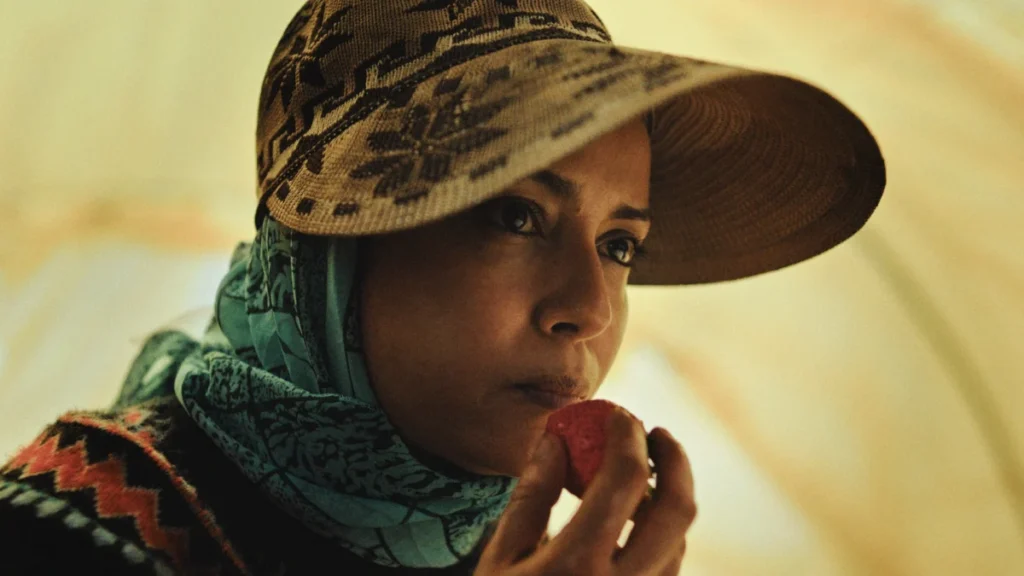

Paris-based Moroccan auteur Laïla Marrakchi is set to unveil her latest cinematic endeavor, Strawberries, originally titled La más dulce (The Sweetest), a powerful and poignant film that promises to expose the harsh realities faced by Moroccan women engaged in seasonal fruit-picking work in Spain. The film, whose very title carries an ironic duality, transitions from the initial promise of "the sweetest" opportunity to a harrowing portrayal of modern-day exploitation, human rights abuses, and shattered dreams. Strawberries is slated for its world premiere at an upcoming date in the prestigious Cannes Film Festival’s Un Certain Regard program, marking a significant moment for a narrative that demands international attention.
The narrative of Strawberries is deeply rooted in real-life cases, shedding light on the plight of countless Moroccan women who travel to Spain with the hope of earning a decent wage to improve the lives of their families back home. Their journey, however, often devolves into a nightmare characterized by substandard living conditions, wages far below what was promised, systemic exploitation, and disturbing instances of sexual harassment and forced prostitution. Marrakchi’s film serves as a critical lens through which these often-invisible struggles are brought to the forefront, challenging viewers to confront uncomfortable truths about global labor practices and human dignity.
The Unseen Struggle: Context of Seasonal Migration
The phenomenon depicted in Strawberries is a widespread and complex socio-economic issue impacting thousands of women annually. Each year, particularly during the harvesting seasons for strawberries, blueberries, and other soft fruits, a significant number of Moroccan women are recruited to work in Spain’s agricultural sector, predominantly in Andalusia. These women, often from impoverished rural areas of Morocco, are drawn by the prospect of earning significantly more than they could at home, with many seeing this seasonal migration as their only viable path to economic stability for their families.
Bilateral agreements between Spain and Morocco facilitate these circular migration programs, theoretically designed to ensure legal employment and protect workers’ rights. However, in practice, these systems are frequently undermined by unscrupulous recruiters, exploitative employers, and a lack of effective oversight. Workers often arrive in Spain with limited understanding of their contractual rights, if they have formal contracts at all, and face severe language barriers that isolate them further. The dependence on their employers for housing, transportation, and even basic necessities creates a coercive environment, making it exceedingly difficult for them to report abuses or seek redress without fear of deportation or blacklisting.
Human rights organizations, including Amnesty International and Human Rights Watch, have consistently documented cases of severe exploitation in the Spanish agricultural sector, particularly concerning migrant workers. Reports detail cramped and unsanitary living quarters, denial of medical care, confiscation of passports, excessive working hours without adequate rest, and withholding of wages. For women, the risks are compounded by vulnerability to gender-based violence, including sexual harassment and assault, often perpetrated by supervisors or fellow workers, with little recourse due to fear and systemic barriers. This systemic vulnerability forms the harrowing backdrop against which Marrakchi’s Strawberries unfolds.
Laïla Marrakchi’s Journey to the ‘Strawberry Fields’
Laïla Marrakchi’s motivation to tackle this sensitive subject matter stemmed from a profound personal encounter with the issue. As she revealed in an interview, her initial insight came through a journalist friend specializing in migration issues, who had penned an article for The New York Times on these very women. This journalistic exposure prompted Marrakchi to embark on her own investigative journey, accompanying her friend to Andalusia.
"I discovered this crazy world and met some of the Moroccan women," Marrakchi recounted, describing her initial three-day visit. She was deeply moved by the strength and resilience of these women who make the difficult decision to leave their homeland and families for months on end, all for the singular goal of securing a better life through hard work. This firsthand experience solidified her resolve: "After the three days that I spent with my friend, I decided to do more research and make a film about this situation."
The transition from journalistic reportage to cinematic narrative was deliberate. Marrakchi, known for her acclaimed features Marock (2005) and Rock the Casbah (2013), as well as her directorial work on popular TV series like the French spy thriller The Bureau and Damien Chazelle’s The Eddy, brought her seasoned storytelling acumen to Strawberries. She co-wrote the script with Delphine Agut, meticulously crafting a narrative that would not only expose the grim realities but also honor the complex humanity of the women involved. Her previous works often explore themes of identity, cultural clashes, and social dynamics within Moroccan society, making her uniquely positioned to bring authenticity and nuance to Strawberries.
A Cast of Resilient Voices and Authentic Portrayals

The ensemble cast of Strawberries features a mix of established Moroccan talent and, crucially, real-life seasonal workers, enhancing the film’s authenticity and emotional resonance. Nisrin Erradi, known for her roles in Everybody Loves Touda and Adam, leads alongside Hajar Graigaa, Hind Braik, Fatima Attif, Larbi Mohammed Ajbar, and Itsaso Arana. Marrakchi’s decision to include actual fruit pickers as extras was a conscious choice to ground the film in the lived experiences of those it portrays, lending an unparalleled layer of realism to the on-screen narrative.
Marrakchi emphasized the importance of this humanization: "It’s really important to humanize these women. We live in the Western world and sometimes don’t realize that these people can love, can be funny and can be women [just like everybody else]." She deliberately included scenes of joy, laughter, and camaraderie among the women, showing their shared communal experience and resilience amidst adversity. This artistic choice prevents the film from becoming a purely miserable depiction, instead highlighting the "empowerment of these women" as "real heroines." It acknowledges the nuanced reality that while conditions are often dire, these women maintain their spirits, forge bonds, and exhibit remarkable strength.
The film’s production brought together an international collaboration, underscoring the global relevance of its theme. Juliette Schrameck, producer of acclaimed films like The Worst Person in the World, helmed the production through her banner Lumen, alongside Morocco’s Mont Fleuri Production, Spain’s Fasten Films, and Belgium’s Mirage Films. International sales are being handled by Lucky Number, signaling the film’s potential to reach a wide global audience and catalyze broader discussions.
Unpacking the Layers of Exploitation: From Wages to Justice
Strawberries meticulously details the spectrum of abuses faced by these women. Beyond the initial lure of "the sweetest" life, the film portrays the stark discrepancy between promised wages and actual earnings, the often-deplorable living conditions in makeshift camps or overcrowded dormitories, and the pervasive lack of health support. Marrakchi’s narrative unflinchingly addresses the darkest aspects of this exploitation, including sexual harassment and forced prostitution, which many women are coerced into to survive or to avoid losing their jobs.
The film also delves into the complex and often futile attempts at seeking justice. Marrakchi acknowledged the existence of "several trials, in which the workers, the pickers, tried to speak out about what’s happened in the greenhouses and in the fincas." However, she grimly noted the lack of "good resolution," primarily because "people are afraid to speak out, and they step back because they [face] too much pressure, and this is a huge, huge industry." For these highly vulnerable Moroccan women, speaking out carries immense risks, potentially leading to the loss of their jobs, their ability to re-enter Spain, and even facing social stigma in their home country. As Marrakchi powerfully states, "Speaking out is a privilege."
This struggle for a voice is a central theme, manifesting not only in legal battles but also in the everyday interactions. The language barrier emerges as a potent symbol of disempowerment. Marrakchi deliberately crafted scenes where the audience, much like the characters, struggles to understand conversations without subtitles, immersing them in the women’s isolation. "It’s also a film about how your voice is sometimes [muted] or stolen," she explained. The challenge of translation, both linguistic and cultural, means words can be "transformed," leaving the women without the "weapons to defend yourself" due to their lack of education and language skills. This dynamic underscores the film’s critique of "new colonialism," where economic power dynamics and historical inequalities create a system ripe for the exploitation of the Global South by the Western world. It’s a multilayered commentary on racism, class, and the imbalance of power.
The Bitter Sweetness of the Title and Broader Implications
The film’s titles, Strawberries and La más dulce (The Sweetest), are imbued with profound symbolic meaning. "It’s like a tagline, a slogan," Marrakchi explained, highlighting the ironic contrast. "I like the idea of playing with these two things – the thing that is very sweet is also hard at the same time." The initial dream of a better life, sweet and hopeful, is juxtaposed with the harsh, often brutal reality of the hard work and exploitation. The "sweetest" fruit becomes a metaphor for the bitter experience.
The premiere of Strawberries at Cannes’ Un Certain Regard is poised to ignite significant international dialogue about critical issues often overlooked by mainstream media. By shining a spotlight on the exploitation of migrant women in agricultural sectors, the film contributes to a broader global conversation on human rights, ethical labor practices, and the responsibilities of developed nations towards migrant workers. It forces a reckoning with the socio-economic disparities that compel women to undertake such perilous journeys and the systemic failures that enable their exploitation.
The film’s connection to movements like #MeToo is palpable, extending the discourse on sexual harassment and abuse to a context where victims are uniquely vulnerable due to their migration status, economic dependence, and lack of legal recourse. Strawberries amplifies voices that have historically been silenced, offering an homage to the "strong and amazing" Moroccan women who are "like a rock." Marrakchi’s stated goal is to make these "often not visible" women visible, transforming them into powerful symbols of resilience and demanding recognition for their "invisible heroism." Through this film, Marrakchi not only tells a story but also issues a powerful call to action, urging the world to see, acknowledge, and ultimately address the profound injustices occurring in plain sight.