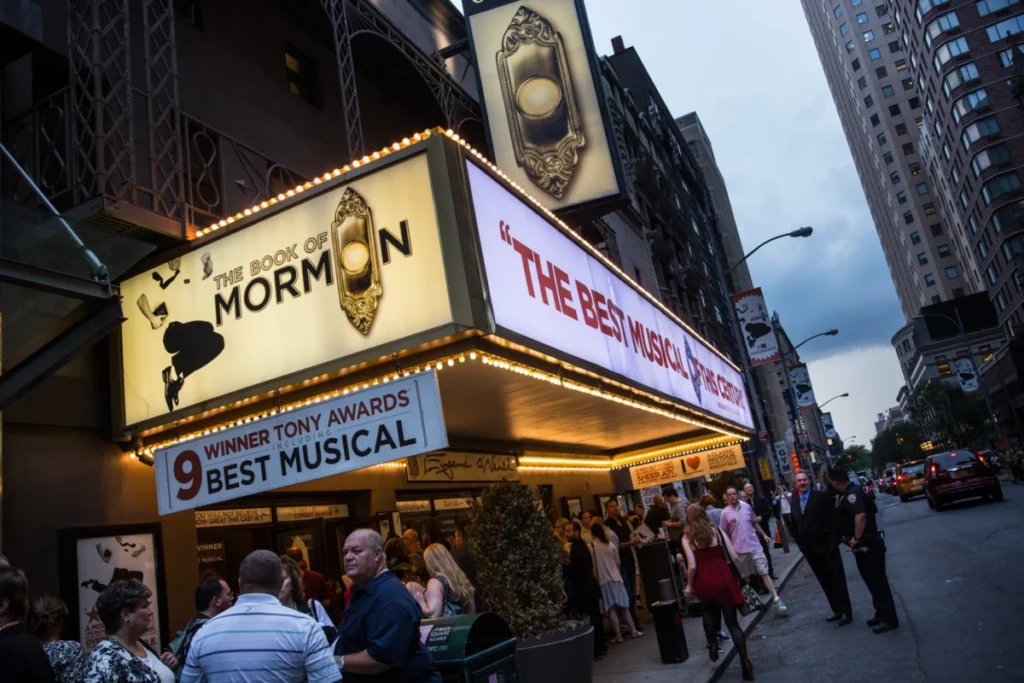

Broadway’s critically acclaimed and long-running musical, The Book of Mormon, is set to resume performances at the historic Eugene O’Neill Theatre on Thursday, May 21, following a fire incident that occurred on May 4. The unexpected blaze led to the cancellation of all performances through May 20, prompting a concerted effort by theatre management and city agencies to assess damages and ensure the venue’s safety and operational readiness. The rapid turnaround underscores the resilience of Broadway productions and the dedicated teams working behind the scenes to minimize disruption for audiences and performers alike.
The Incident: A Sudden Disruption on May 4
The fire at the Eugene O’Neill Theatre, located at 230 West 49th Street in the heart of the Broadway district, was reported on the evening of Saturday, May 4. While specific details regarding the origin and exact extent of the blaze were not immediately made public, reports from the scene indicated that the building was safely cleared of all personnel shortly after the fire was detected. The swift evacuation protocols in place at the historic venue proved effective in preventing major casualties among staff and any potential audience members who might have been present during the incident.
However, the incident was not without consequence for the emergency responders. One firefighter from the New York City Fire Department (FDNY) sustained an injury while actively engaged in combating the flames and ensuring the safety of the structure. The firefighter’s condition was not detailed in initial reports, but their prompt response was crucial in containing the situation and preventing more extensive damage to the theatre, a cherished landmark within New York City’s cultural landscape. The FDNY’s rapid deployment and professional handling of the emergency were widely commended by the theatre’s operators and the broader Broadway community for their decisive action.
Immediate Aftermath and Assessment
In the immediate wake of the fire, The Book of Mormon production team and ATG Entertainment, the owners and operators of the Eugene O’Neill Theatre, issued statements confirming the temporary cessation of performances. The decision to cancel shows through May 20 was a precautionary measure, allowing ample time for comprehensive inspections, necessary repairs, and adherence to all stringent safety regulations mandated by city authorities. This period was critical for a thorough assessment of any structural, electrical, or cosmetic damage that may have occurred, ensuring that the theatre could reopen without compromising the safety or experience of its patrons and cast members.
A spokesperson for the production conveyed gratitude to all involved in the recovery efforts. "The work inside the theatre is being completed by an extraordinary team that has made tremendous progress," the spokesperson stated. This team likely comprised a diverse group of specialists, including structural engineers, electricians, HVAC technicians, fire safety experts, and restoration professionals, all working under intense pressure to meet the ambitious timeline for reopening. The collaboration between these private contractors and city agencies was paramount to the swift resolution.
A Coordinated Effort: FDNY and Department of Buildings
The successful and expedited path to reopening was heavily reliant on the close cooperation between ATG Entertainment, The Book of Mormon production, the FDNY, and the New York City Department of Buildings (DoB). The FDNY’s role extended beyond extinguishing the fire; their post-incident investigations were crucial in determining the cause and ensuring that any immediate hazards were addressed. The Department of Buildings, as the primary regulatory body for construction and structural integrity in New York City, would have conducted rigorous inspections. These inspections would cover structural stability, electrical systems, fire suppression systems, emergency exits, and air quality, among other critical aspects, to certify the theatre’s readiness for public occupancy.
"ATG Entertainment and The Book of Mormon are extremely grateful to the FDNY and the Department of Buildings for their help and cooperation throughout the repair efforts," the production spokesperson affirmed. This sentiment highlights the indispensable role of city agencies in facilitating the safe and timely return of Broadway operations after unforeseen incidents. Their oversight provides a vital layer of public safety assurance, which is particularly critical for historic venues like the O’Neill Theatre that host thousands of patrons weekly.
The Eugene O’Neill Theatre: A Storied Broadway Landmark
The Eugene O’Neill Theatre itself is a significant piece of Broadway history, embodying the architectural grandeur and cultural legacy of New York City’s Theatre District. Opened in 1925 as the Forrest Theatre, it was designed by Herbert J. Krapp, a prolific and influential architect responsible for many iconic Broadway houses, including the Walter Kerr, the Shubert, and the Lyceum. Krapp’s designs are renowned for their elegant Beaux-Arts influence, often featuring ornate plasterwork, grand foyers, and excellent sightlines and acoustics, characteristics that define the O’Neill. Renamed in 1959 to honor America’s only Nobel Prize-winning playwright, Eugene O’Neill, the theatre has hosted a remarkable array of productions, from classic dramas to groundbreaking musicals, cementing its place in theatrical annals.
With a seating capacity of approximately 1,108, the O’Neill is considered a medium-sized Broadway house, offering an intimate yet grand theatrical experience. Its prime location in the bustling Theatre District makes it a top destination for both New Yorkers and tourists from around the globe. The preservation of such historic venues is a continuous effort, requiring meticulous maintenance and adherence to modern safety standards while retaining their invaluable architectural integrity. The recent fire underscored the inherent challenges and significant responsibilities associated with managing these irreplaceable cultural assets within a densely populated urban environment.
The Book of Mormon: A Broadway Phenomenon
The Book of Mormon has been a cornerstone of the Eugene O’Neill Theatre’s programming since its Broadway premiere in March 2011. Created by Trey Parker and Matt Stone (the masterminds behind South Park) and Robert Lopez (the acclaimed co-creator of Avenue Q and Frozen), the satirical musical quickly ascended to the status of a cultural phenomenon. It tells the irreverent yet surprisingly heartfelt story of two young Mormon missionaries dispatched to a remote village in Uganda, where they encounter a world vastly different from their sheltered upbringing. The show’s distinctive blend of sharp wit, irreverent humor, and underlying sincerity has resonated profoundly with millions globally.
Its critical success was immediate and overwhelming, culminating in a staggering nine Tony Awards in 2011, including the highly coveted Best Musical. The original Broadway cast, featuring Andrew Rannells as Elder Price and Josh Gad as Elder Cunningham, became overnight Broadway stars, their performances contributing significantly to the show’s initial buzz and enduring popularity. The production has maintained its immense popularity for well over a decade, consistently selling out performances and ranking among Broadway’s top-grossing productions, a testament to its enduring appeal and its ability to attract both seasoned theatre aficionados and those new to the Broadway experience.
The current cast members, including Kevin Clay as Elder Price, Diego Enrico as Elder Cunningham, Sydney Quildon as Nabulungi, Charlie Franklin as Elder McKinley, and Jacques C. Smith as Mafala Hatimbi, continue to deliver the vibrant and energetic performances that audiences have come to expect. The seamless transition of casts over its long run highlights the robustness of the production and its ability to train new talent to maintain its consistently high artistic and performance standards.
Economic and Logistical Implications of the Hiatus
The two-week hiatus for The Book of Mormon undoubtedly carried significant economic implications for the production and the wider Broadway ecosystem. A major Broadway show like The Book of Mormon can generate hundreds of thousands, if not millions, of dollars in ticket sales per week. While the exact financial loss from the canceled performances was not publicly disclosed, it represents a substantial impact on revenue, affecting producers, investors, and potentially the livelihoods of cast and crew members who might be paid per performance.
Beyond direct ticket sales, cancellations trigger a ripple effect throughout the intricate network of Broadway operations. Refunds and exchanges for pre-purchased tickets require significant administrative effort, often managed by dedicated customer service teams. Furthermore, the disruption impacts ancillary businesses in the Theatre District, such as restaurants, hotels, souvenir shops, and parking garages, which rely heavily on the consistent flow of theatregoers for their daily operations. Broadway is a significant economic engine for New York City, contributing billions of dollars annually and supporting tens of thousands of jobs across various sectors. Any interruption, even a temporary one, underscores the intricate dependencies within this vibrant industry.
From a logistical standpoint, rescheduling performances and coordinating repair efforts within such a tight timeframe presented considerable operational challenges. This involved managing contractor schedules, obtaining necessary permits from city agencies, and ensuring that all technical aspects of the show, from complex lighting and sound systems to intricate stage machinery, were fully operational, inspected, and safe for use. The "extraordinary team" mentioned by the spokesperson faced a complex task of rapid assessment, repair, and certification under immense pressure.
Broadway’s Resilience and Safety Commitments
The swift resolution and announced return of The Book of Mormon serve as a powerful testament to the inherent resilience of the Broadway community. The industry, having navigated the unprecedented challenges of the COVID-19 pandemic and its extended shutdown, has consistently demonstrated an unwavering commitment to overcoming obstacles and returning to live performances. This incident, while localized, reflects the broader industry’s remarkable capacity for crisis management and its unwavering dedication to audience safety.
Broadway theaters, many of which are historic structures with unique architectural features, operate under stringent safety regulations enforced rigorously by the FDNY and the Department of Buildings. These regulations cover every aspect of public safety, from advanced fire suppression systems and emergency lighting to structural integrity, occupant capacity, and accessibility. Regular inspections, comprehensive maintenance schedules, and mandatory drills are integral components of theatre operations, ensuring that venues are prepared for various contingencies. The quick and professional response to the O’Neill fire and the systematic approach to its reopening reinforce public confidence in these robust safety measures.
The incident also highlights the strong communal spirit within the Broadway world. When one production faces a challenge, there is often an outpouring of support from other shows, theatre owners, and industry organizations like The Broadway League. This collective spirit helps to ensure that Broadway remains a robust, attractive, and secure destination for world-class entertainment.
Celebrating 15 Years: A Resilient Anniversary
Adding another layer of significance to the rapid reopening is The Book of Mormon‘s upcoming 15th anniversary. To celebrate this remarkable milestone, the Eugene O’Neill Theatre box office is scheduled to reopen to the public on May 15 at 10:00 a.m., even before performances officially resume. This event is particularly anticipated as the production has planned a special promotional offer: the first 50 people in line will have the exclusive opportunity to purchase up to two $15 tickets each for select performances throughout the summer. This promotional offer, originally designed to thank loyal fans and attract new audiences, now also symbolizes the show’s resilience and its triumphant return in the face of recent adversity.
The timing of the box office reopening, just days before the show’s return to the stage, allows the production to maintain its celebratory plans while simultaneously assuring the public of its operational readiness. It transforms a moment of potential setback into an affirmation of the show’s enduring popularity and its unwavering commitment to its audience. The special ticket offer, originally conceived as a festive gesture, now also serves as an optimistic invitation for theatregoers to experience a show that has, quite literally, risen from the ashes of a temporary closure, demonstrating the enduring spirit of live theatre.
Looking Ahead: Continued Vigilance
As The Book of Mormon prepares for its highly anticipated return on May 21, ATG Entertainment and the production team have indicated that they will "keep audiences updated should anything change in the coming days." This statement reflects an ongoing commitment to transparency and vigilance, acknowledging that complex repair and restoration efforts in historic buildings sometimes encounter unforeseen issues, necessitating continued monitoring. However, the current timeline suggests a high degree of confidence in the progress made and the thoroughness of the safety certifications.
The incident at the Eugene O’Neill Theatre serves as a poignant reminder of the inherent risks in operating any public venue, particularly those with a century of history and intricate infrastructure. Yet, it also stands as a powerful testament to the dedication of theatre professionals, emergency services, and regulatory bodies who work tirelessly and collaboratively to ensure that the magic of Broadway can continue to shine brightly, even after the lights dim unexpectedly. The swift and successful return of The Book of Mormon is not merely the reopening of a show; it is a profound reaffirmation of Broadway’s indomitable spirit and its vital place in the cultural fabric of New York City and beyond.