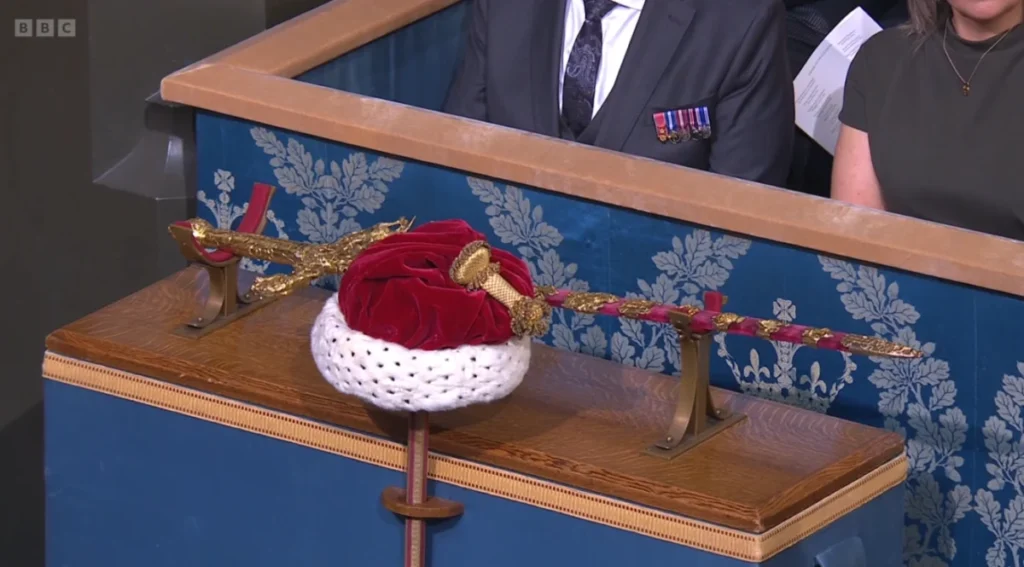

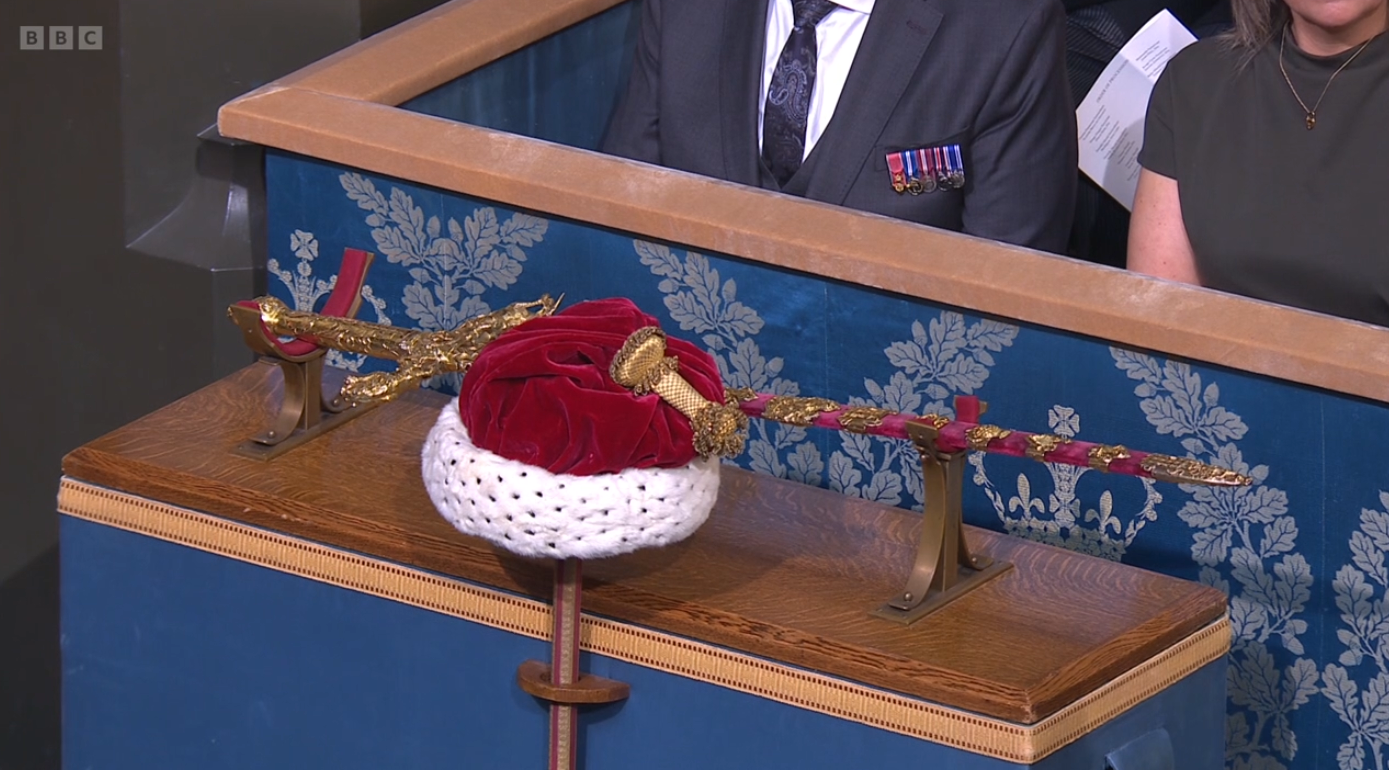
As the United Kingdom gears up for the annual State Opening of Parliament, a spectacle steeped in centuries of tradition and symbolism, the nation’s attention often gravitously fixates on the dazzling brilliance of the Imperial State Crown. However, beyond this iconic symbol of sovereign power, two other ancient and profoundly significant pieces of royal insignia will command the spotlight during this pivotal constitutional ceremony: the Great Sword of State and the Cap of Maintenance. These venerable artefacts, representing the enduring legacy of the British monarchy, are not mere decorative elements; they are potent embodiments of royal authority, historical continuity, and the intricate tapestry of Britain’s constitutional heritage.
A Legacy Carried Forward: The Great Sword of State
The Great Sword of State, perhaps the more readily recognisable of the two in recent memory, serves as a powerful testament to the sovereign’s role as the ultimate fount of justice and military power. Its prominence was notably amplified during the Coronation of His Majesty King Charles III in 2023, when then-Leader of the House of Commons, Penny Mordaunt, undertook the arduous task of carrying the immense ceremonial sword for an extended period within the hallowed confines of Westminster Abbey. This act, while drawing widespread public attention to the sword itself, also underscored the physical and symbolic weight of royal office.
While Ms. Mordaunt, a former Conservative Member of Parliament for Portsmouth North who subsequently lost her seat in the 2024 General Election, will not be participating in this year’s State Opening, the Great Sword of State’s significance remains undiminished. It stands as one of the most prized and historically resonant items within the revered Crown Jewels collection, a collection meticulously guarded and occasionally displayed at the Tower of London, drawing millions of visitors annually who seek a glimpse into the grandeur of the British monarchy.
According to official accounts from the Royal Family, the Sword of State is intrinsically linked to the sovereign’s royal authority, a tangible representation of their power and responsibility. For centuries, it has played a pivotal role in coronations, state ceremonies, and other significant occasions that mark the evolution and continuity of the British constitution. The current iteration of the Great Sword of State, a magnificent piece of craftsmanship, first graced a coronation procession in 1685, during the investiture of James II. Its inaugural appearance was part of the grand procession into Westminster Hall, a ceremonial prelude to the coronation itself, accompanied by the full panoply of coronation regalia. Since that momentous occasion, it has become an indelible feature of Britain’s most significant royal events, a silent witness to the changing tides of history and the enduring presence of the Crown.
The Pope’s Gift: The Cap of Maintenance
Complementing the imposing presence of the Sword of State is the Cap of Maintenance, an item of regal regalia whose origins stretch back to the medieval era. Positioned directly before the monarch during the State Opening of Parliament, the Cap of Maintenance is not merely an accessory; it is a historical artefact that speaks to a period when papal authority held significant sway in European affairs.
Traditionally, the Cap of Maintenance was a prestigious gift bestowed upon monarchs by the Pope himself. This act was a profound mark of papal favour and recognition, signifying a monarch’s standing and legitimacy in the eyes of the Catholic Church. Receiving such a cap was once considered a singular privilege, a potent symbol of ecclesiastical endorsement that could bolster a ruler’s claim to power and influence.
Historical records reveal that two of England’s most formidable monarchs, Henry VII and Henry VIII, were recipients of the Cap of Maintenance during their respective reigns. These powerful rulers, acutely aware of the symbolic capital such an honour represented, did not merely accept the gift privately. Instead, they proudly displayed these ornate caps publicly, parading them through the streets of London. This public demonstration served a crucial purpose: to reinforce the monarchy’s power, underscore its legitimacy, and subtly project its influence on a national and international stage. It was a calculated display of divinely sanctioned authority, amplified by papal blessing.
The State Opening of Parliament: A Modern Manifestation of Ancient Traditions
The State Opening of Parliament, an event that formally marks the commencement of the parliamentary year, is a ceremony steeped in centuries of tradition, royal symbolism, and constitutional practice. While the modern parliament operates as the democratically elected legislative body of the United Kingdom, the State Opening serves as a crucial link to the historical foundations of British governance, where the monarch, as Head of State, plays a symbolic yet vital role.
The ceremony’s origins can be traced back to the medieval period, evolving over centuries into the elaborate spectacle witnessed today. The monarch’s procession to the Palace of Westminster, accompanied by the regalia, is a visual narrative of the Crown’s historical authority and its enduring relationship with Parliament. The reading of the "King’s Speech" (or "Queen’s Speech" depending on the reigning monarch) by the sovereign outlines the government’s legislative agenda for the upcoming parliamentary session. This speech, though drafted by the government of the day, is delivered by the monarch, reinforcing the constitutional principle that the government governs in the name of the Crown.
The presence of the Great Sword of State and the Cap of Maintenance within this grand procession is far more than ceremonial flourish. The Sword of State, as previously noted, represents the sovereign’s power to enforce law and order, and to act as the ultimate defender of the realm. The Cap of Maintenance, with its historical papal connotations, speaks to a time when the legitimacy of earthly rulers was often intertwined with divine and ecclesiastical sanction. Together, they symbolise the multifaceted nature of royal authority: temporal and spiritual, martial and judicial, historical and contemporary.
Supporting Data and Historical Context
The Crown Jewels, of which the Sword of State and Cap of Maintenance are integral parts, are not merely historical artefacts; they are tangible assets with immense cultural and historical value. While a precise monetary valuation is rarely, if ever, publicly disclosed due to their priceless historical significance, their importance to the nation’s heritage is immeasurable. The collection is maintained by the Royal Household and is primarily located in the Jewel House at the Tower of London.
Timeline of Significance:
- Medieval Period: Origins of the Cap of Maintenance as a papal gift, signifying favour and recognition.
- 1685: The current Great Sword of State is first used at the Coronation of James II, marking its integration into key royal ceremonies.
- Reigns of Henry VII and Henry VIII: Public display of the Cap of Maintenance, reinforcing royal power and legitimacy.
- Ongoing: Continuous use of both the Sword of State and the Cap of Maintenance in significant royal and state occasions, including coronations and the State Opening of Parliament, underscoring their enduring symbolic relevance.
- 2023: Penny Mordaunt’s carrying of the Great Sword of State at King Charles III’s Coronation draws significant public attention to the regalia.
- 2024: Continued prominence of these ancient symbols at the State Opening of Parliament, highlighting their persistent role in British constitutional pageantry.
Broader Impact and Implications
The continued use of such ancient regalia in a modern democratic state prompts reflection on the unique nature of the British constitution. The unwritten nature of the UK’s constitution allows for the seamless integration of historical traditions and modern governance. The State Opening of Parliament, with its attendant pageantry, serves to connect the present-day government with the historical lineage of British sovereignty, providing a sense of continuity and stability.
The symbolic power of these objects extends beyond mere historical curiosity. They serve as constant reminders of the responsibilities and historical weight borne by the monarch and, by extension, the government that derives its authority from the Crown. In an era of rapid change and evolving political landscapes, these enduring symbols offer a sense of grounding and historical perspective.
The careful preservation and presentation of the Crown Jewels, including the Great Sword of State and the Cap of Maintenance, also contribute significantly to the United Kingdom’s cultural tourism industry. Millions visit the Tower of London annually, drawn by the allure of royal history and the tangible artefacts that represent it. This economic benefit, while secondary to their constitutional and historical importance, is a notable aspect of their broader impact.
In conclusion, as the State Opening of Parliament unfolds, the Imperial State Crown will undoubtedly capture the public’s imagination. Yet, the Great Sword of State and the Cap of Maintenance, though perhaps less ostentatious, carry with them a profound historical narrative. They are not simply relics of the past; they are active participants in the ongoing story of British governance, embodying centuries of tradition, authority, and the enduring legacy of the Crown. Their continued presence in such a significant ceremony underscores the intricate and often symbolic relationship between the monarchy and Parliament, a cornerstone of the United Kingdom’s unique constitutional framework.