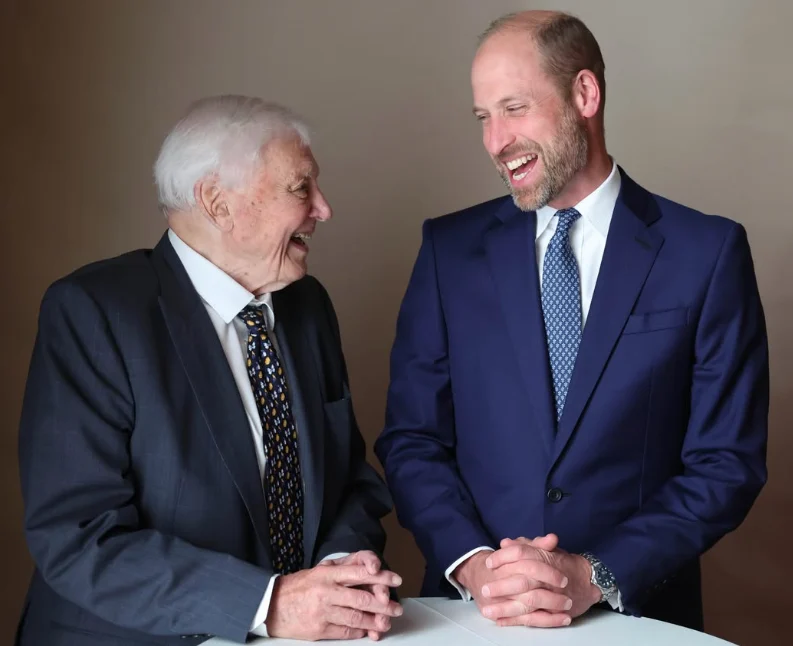

The United Kingdom marked a momentous occasion on May 8th, celebrating the 100th birthday of Sir David Attenborough, the revered naturalist, broadcaster, and environmental advocate. The nation’s most prominent royals, King Charles III and His Royal Highness Prince William, the Prince of Wales, joined forces to express their profound admiration and gratitude for Sir David’s unparalleled contributions to understanding and protecting the natural world. Their tributes, delivered at a special celebratory event held at the iconic Royal Albert Hall and through a specially produced film, underscored the enduring impact of Sir David’s work on public consciousness and governmental policy alike.
A Royal Salute at the Royal Albert Hall
The heart of the celebrations unfolded at the Royal Albert Hall, a venue synonymous with significant cultural and national events. Prince William, representing the Royal Family, was a distinguished guest in the royal box, a position of honour befitting the occasion. During a poignant speech delivered from the stage, the Prince of Wales eloquently articulated the depth of Sir David’s influence. He lauded Sir David’s "boundless curiosity, gentle wisdom, and unwavering dedication," acknowledging how these qualities have "opened our eyes to the beauty of our planet, and to its fragility, reminding us of our collective responsibility to protect it."
Prince William further emphasized Sir David’s pioneering role in environmental advocacy, stating, "You have been a guiding light in the work we now undertake to safeguard the natural world. Long before many of us found our voice on the challenges we face, you were speaking with clarity, urgency, and optimism. And it is that sense of urgent optimism that has made all the difference." This sentiment resonated deeply, highlighting Sir David’s prescience and his consistent ability to communicate the urgent need for environmental action with both authority and hope.
The Prince’s address also touched upon the profound psychological and emotional impact of Sir David’s documentaries. "One of the greatest gifts you have given us, David, is more than just an understanding of what is at risk. You have given us belief that positive change is still possible," Prince William remarked. This statement is particularly significant, as it addresses a crucial aspect of environmentalism: maintaining hope and motivation in the face of overwhelming challenges. Sir David’s ability to inspire action, rather than despair, has been a cornerstone of his enduring legacy.
King Charles’s Personal Tribute from the Highlands
Adding another layer of royal endorsement, King Charles III contributed his own heartfelt tribute through a specially commissioned film. Filmed amidst the majestic landscapes of the Scottish Highlands, the King was depicted in a deeply personal setting, writing a letter to Sir David, a man he has known and admired for over six decades. This extended period of acquaintance speaks volumes about the long-standing relationship and mutual respect between the two figures.
The King’s message, conveyed in his characteristic thoughtful and earnest manner, praised Sir David’s lifelong commitment to protecting the planet and its diverse inhabitants. The film’s narrative creatively depicted the journey of this important letter, adding a touch of whimsical charm to the solemn occasion. The letter was shown being transported from Balmoral, initially presented on a silver platter, then conveyed by jeep. The journey encountered an unexpected obstacle: a fallen tree. This natural impediment necessitated a creative solution, with a loyal collie dog tasked with carrying the letter in its mouth. The chain of animal helpers continued, with a hedgehog, a squirrel, and a flock of swans playing their part in ensuring the letter’s safe, albeit somewhat muddied, arrival. This charming sequence served as a lighthearted yet effective metaphor for the interconnectedness of nature and the often-unseen efforts that contribute to a common goal.
Upon its eventual delivery to Sir David at the Royal Albert Hall, the King’s letter was proudly held aloft, allowing the assembled audience and the wider public watching the broadcast to witness this unique expression of royal appreciation. The letter’s pristine condition, despite its adventurous journey, symbolized the resilience and enduring importance of its message.
A Legacy of Environmental Enlightenment
Sir David Attenborough’s career, spanning over seven decades, has fundamentally reshaped humanity’s relationship with the natural world. His groundbreaking television and radio programs, beginning with "Zoo Quest" in the 1950s and culminating in landmark series like "Life on Earth," "The Blue Planet," and "Our Planet," have brought the wonders of the planet into living rooms across the globe. Through his distinctive voice, captivating narration, and unparalleled expertise, he has educated, inspired, and instilled a sense of awe for biodiversity and ecological systems.
His work has consistently highlighted the beauty, complexity, and interconnectedness of life on Earth, while also unflinchingly documenting the devastating impact of human activities on the environment. From the intricate social structures of ants to the majestic migrations of whales, Sir David has illuminated the most remote corners of the planet, fostering a deep appreciation for the natural heritage we share. His documentaries have not merely been informative; they have been calls to action, urging viewers to recognize their role as stewards of the planet.
Historical Context and Chronology of Impact
The roots of this royal tribute can be traced back to the long-standing engagement of the British Royal Family with environmental issues. King Charles III, in particular, has been a vocal advocate for conservation and sustainable practices for decades, predating widespread public concern. His early involvement with organizations like the Prince’s Trust and his consistent advocacy for organic farming and environmental protection have established him as a significant figure in the global environmental movement.
Sir David Attenborough’s own journey began at a time when environmentalism was a nascent concept. His early broadcasts in the mid-20th century were instrumental in bringing natural history to a mass audience, subtly introducing themes of conservation and the impact of human actions. The 1970s and 1980s saw a significant rise in global environmental awareness, partly fueled by scientific reports and public campaigns. Sir David’s subsequent series, such as "Life on Earth" (1979), coincided with and amplified these growing concerns, providing compelling visual evidence of the planet’s wonders and vulnerabilities.
The 21st century has witnessed an intensification of the climate crisis and biodiversity loss, making Sir David’s continued voice more critical than ever. His more recent work, such as "Our Planet" (2019) and the film "David Attenborough: A Life on Our Planet" (2020), have adopted a more urgent tone, directly addressing the existential threats facing the planet and offering tangible solutions. The timing of his 100th birthday, therefore, serves as a powerful moment to reflect on a century of environmental challenges and the indispensable role Sir David has played in shaping our understanding and response.
Supporting Data and the Urgency of Conservation
The environmental challenges Sir David Attenborough has consistently highlighted are supported by a growing body of scientific data. The Intergovernmental Panel on Climate Change (IPCC) reports consistently detail accelerating global warming, with rising sea levels, extreme weather events, and widespread ecosystem disruption. The Intergovernmental Science-Policy Platform on Biodiversity and Ecosystem Services (IPBES) has warned that around one million animal and plant species are now threatened with extinction, many within decades, more than ever before in human history.
Sir David’s work has often served as the visual narrative for these scientific findings, making complex data accessible and emotionally resonant. His documentaries have showcased the devastating effects of plastic pollution on marine life, the impact of deforestation on primate habitats, and the vulnerability of Arctic ecosystems to rising temperatures. This ability to translate scientific evidence into compelling visual storytelling has been crucial in galvanizing public support for conservation efforts and policy changes.
Broader Impact and Implications
The joint tribute from King Charles and Prince William signifies the enduring importance of environmental stewardship at the highest levels of British society. It underscores a commitment that transcends political cycles and reflects a deep-seated understanding of the planet’s ecological imperative. The Royal Family’s public endorsement of Sir David’s legacy lends significant weight to environmental causes, potentially influencing public opinion and inspiring greater engagement with conservation initiatives.
The celebration also serves as a powerful reminder of the intergenerational transfer of responsibility for environmental protection. Prince William’s role in the tribute highlights his own commitment to these issues, following in the footsteps of his father and grandfather. As the Prince of Wales, he is increasingly a prominent voice for environmental action, particularly through his Earthshot Prize, which aims to find and fund solutions to the world’s greatest environmental challenges.
Furthermore, the broadcast of the celebratory event on BBC One ensured a wide national and international audience, amplifying the message of appreciation for Sir David and the critical importance of environmental conservation. In an era of rapid technological advancement and global interconnectedness, Sir David Attenborough’s legacy reminds us of our fundamental connection to the natural world and our shared responsibility to protect it for future generations. His 100th birthday is not merely a personal milestone but a global recognition of a lifetime dedicated to fostering a deeper understanding and a greater love for the planet we call home.