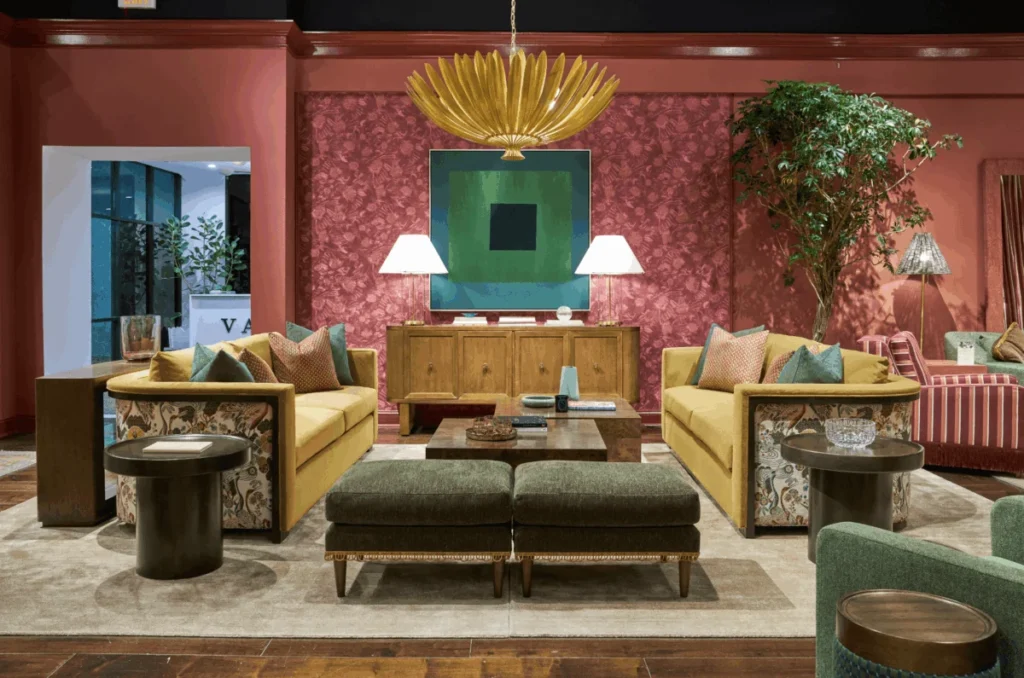

The furniture and home decor industry recently converged on High Point, North Carolina, for the bi-annual High Point Market, North America’s largest and most influential furniture fair. Spanning more than 11.5 million square feet of showroom space and attracting approximately 75,000 attendees from across the globe, the event serves as a bellwether for the aesthetic and functional shifts that will define residential and commercial interiors in the coming years. This season’s presentations, led by industry titans and independent designers alike, revealed a definitive pivot away from the stark, sterile minimalism of the previous decade toward a more tactile, expressive, and human-centric design philosophy. From the technical mastery of "wood drapery" to the complete blurring of the line between indoor and outdoor living, the takeaways from High Point Market 2024 reflect a consumer base that is increasingly prioritizing comfort, heritage, and "maximalist" self-expression.

Technical Mastery: The Undulation of Rigid Materials
One of the most visually arresting trends observed during the fair was the transformation of rigid materials—namely wood and metal—into forms that mimic the softness and fluidity of textiles. This "trompe l’oeil" approach to furniture design requires exceptional craftsmanship and technical precision. A primary example of this movement was found at Abner Henry, where designer Nikki Levy’s "Draped Desk" garnered significant attention. The piece features undulating wooden supports that replicate the appearance of heavy curtains, available in ten different wood species.
The trend extended into kitchen and utility design as well. Thompson Traders, a family-operated firm specializing in luxury metalwork, showcased a sculptural copper range hood named "Seda." The hood’s flounced, skirt-like form challenged the traditional industrial geometry of kitchen appliances. Similarly, Vanguard Furniture introduced the "Jazz Chest," a maplewood piece with a facade carved to resemble flowing drapery. Industry analysts suggest that these "curvilinear" forms serve a psychological purpose, softening rooms dominated by the straight lines and hard angles of modern architecture. The tactile nature of these pieces—nearly impossible for showroom visitors to resist touching—underscores a broader market demand for furniture that feels artisanal and bespoke rather than mass-produced.

The Indoor-Outdoor Convergence: Fully Upholstered Landscapes
The distinction between patio furniture and interior lounge seating has reached a point of near-total obsolescence. Historically, outdoor furniture was defined by cast iron or teak frames topped with thin, utilitarian cushions. However, at High Point Market, manufacturers including Harbor, Century, Four Hands, and Bernhardt showcased three- and four-seater sectionals that were visually indistinguishable from high-end indoor sofas.
This shift is driven largely by advancements in performance textile technology. Brands like Sunbrella have moved beyond basic weatherproofing to create fabrics with the hand-feel of velvet, linen, and chenille. Sunbrella’s collaboration with Kelly Ventura highlighted this evolution, featuring muted botanical prints and heathered geometric patterns that evoke an English cottage aesthetic. Furthermore, the introduction of performance-grade passementerie—decorative trims and fringes—from houses like Thibaut and Kravet allows designers to apply "maximalist" detailing to outdoor environments. As homeowners continue to view outdoor spaces as true extensions of the home’s square footage, the demand for "all-weather luxury" is expected to see a compound annual growth rate (CAGR) of over 5% through 2030, according to industry reports.

The Return of Expressive Maximalism and Passementerie
After years of "soulful minimalism" and neutral palettes, High Point Market 2024 signaled a triumphant return to ornamentation. This trend, often referred to as "Grandmillennial" or "New Maximalism," was most evident in the resurgence of passementerie—fringes, tassels, and intricate braids. Vanguard Furniture led this charge, displaying sofas and ottomans adorned with triple-decker silk fringe in palettes of silver, marigold, and terracotta.
Laura White, Vice President of Marketing and Creative at Vanguard, noted that in an increasingly digital and sterile world, consumers are "craving rooms that feel warmly human again." This sentiment was echoed in the 10th-anniversary collection by Barrie Benson for Highland House. Drawing inspiration from legendary maximalists like Renzo Mongiardino and Madeleine Castaing, Benson utilized exuberant stripes, floral patterns, and skirted seating to create a sense of historical depth. This movement represents a broader cultural shift toward "cluttercore" and "personality-driven" design, where the home serves as a curated gallery of the owner’s life and travels rather than a showroom of anonymous trends.

Southwestern Roots and Earthy Artisanship
The American Southwest emerged as a major stylistic frontier this season, with designers drawing heavily from Native American, Spanish, and Mexican cultural motifs. This trend is characterized by a "sun-bleached" palette and the use of time-worn, organic materials. Alfredo Paredes’ "Cocuyo" collection for Kravet Couture exemplified this, particularly through the "Yacuma" textile—a patchwork of tonal ikat stripes that suggests a well-traveled, global sensibility.
In the realm of wallcoverings, Harlequin introduced "Saltillo," an abstract desert scenic inspired by Mexican landscapes. The pattern, available in "daylight" and "nightfall" palettes, reflects a growing interest in "transitional" spaces—interiors that can shift mood from a bright morning breakfast room to a moody, evening cocktail lounge. Additionally, Amber Lewis’s lighting debut for Four Hands incorporated wrought iron and leather fringe, grounding the collection in the rugged yet refined aesthetic of the high desert.

The "Suiting" Trend: Menswear Fabrics in the Home
A sophisticated "sperimentation" with menswear-inspired upholstery was another dominant theme. Many brands turned to classic suiting staples—tartans, tattersalls, and glen plaids—to dress up their latest seating collections. This trend aligns with the ongoing popularity of chocolate brown and deep ochre interiors, providing a sense of "tailored" permanence.
Universal Furniture’s "Fenwick" collection utilized sophisticated plaids to convey a sense of traditional luxury, while the newly launched "House of Duval" by designer Duval Reynolds focused on "New American Heritage." Reynolds’ "Javon" bench, upholstered in a plum and pale blue plaid with brass-mounted legs, highlighted how traditional masculine tailoring can be softened for the contemporary bedroom or living space. Market experts suggest that these fabrics appeal to a "flight to quality," where buyers seek out patterns and materials that feel timeless and durable amidst a sea of fast-fashion home decor.

The "Quest for Bigger": Scaling Up for Modern Living
While the kitchen and bath industry has recently seen a trend toward "slimification" or space-saving designs, the furniture sector at High Point is moving in the opposite direction. The consensus among manufacturers is that "bigger is better." This scale-up is particularly evident in vanities, dining tables, and lighting fixtures.
James Martin Vanities expanded its "XL" offerings to include 120-inch styles, citing a growing demand for wider, double-vanity setups in primary suites. In the lighting category, Arteriors and Corbett Lighting showcased "supersized" versions of their most popular fixtures. Designer Noz Nozawa’s "Hoshi" pendant for Corbett Lighting—a nearly 29-inch square silk-shade fixture inspired by the Japanese process of drying persimmons—demonstrated how large-scale sculptural lighting can act as the primary architectural anchor for a room. This shift toward larger scales is partly attributed to the "great room" architectural trend, where high ceilings and open floor plans require substantial pieces to maintain visual proportion.

Nostalgia Palettes and the Return of the ’90s
In a panel discussion hosted by AD PRO, designers and color experts discussed the "Power of Palette," revealing that "nostalgia" is now a primary driver in color selection. Sue Wadden of Sherwin-Williams and designer Ashley Gilbreath noted that clients are increasingly requesting palettes that evoke childhood memories, such as the pale blue and coral combinations popular in the 1980s and early ’90s.
Furthermore, the "dark wood kitchen" and stained cabinetry—once considered relics of the 1990s—are making a definitive comeback. This return to darker, richer wood tones is a direct reaction to the "all-white" kitchen trend that dominated the last decade. Industry data indicates that searches for "dark wood interiors" have increased by over 35% in the last year, signaling a shift toward warmer, more grounded living environments.

Broader Impact and Industry Implications
The trends observed at High Point Market 2024 carry significant implications for the global supply chain and retail landscape. The emphasis on "performance" fabrics and "artisanal" wood carving suggests that manufacturers are investing more in R&D and skilled labor to meet consumer expectations for longevity and uniqueness.
From an economic perspective, the furniture industry is navigating a complex period of fluctuating housing starts and interest rates. However, the high-end "designer" segment remains robust, as affluent consumers continue to invest in home renovations and "legacy" furniture pieces. The move toward "maximalism" and "customization" also provides a competitive advantage to traditional brick-and-mortar showrooms and professional interior designers, who can offer the tactile experience and bespoke sourcing that e-commerce platforms often struggle to replicate.

As the industry looks toward 2025 and 2026, the High Point Market serves as a reminder that the home remains a deeply personal sanctuary. The "emerging trends" of today—the undulation of wood, the durability of outdoor upholstery, and the nostalgia of a ’90s palette—are all facets of a single, overarching desire: to create spaces that are as resilient as they are beautiful, and as expressive as the people who inhabit them.