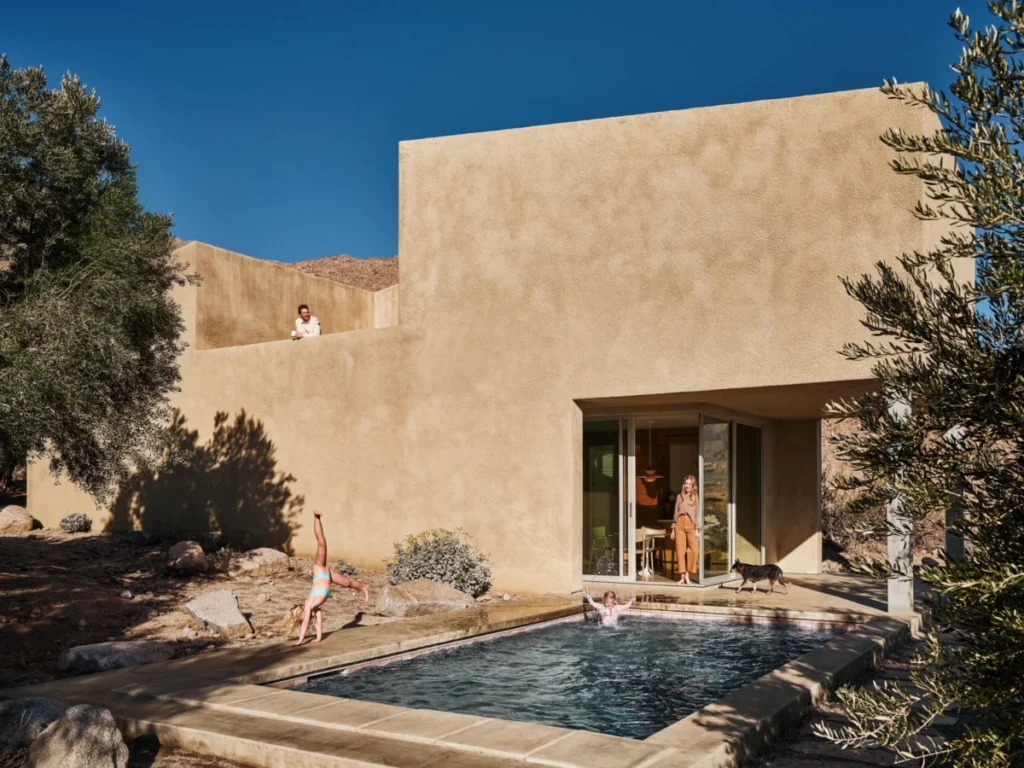

The completion of a new residential retreat at the base of the San Jacinto Mountains marks a significant addition to the architectural landscape of the California desert. Finished in 2024, the home of psychotherapist Sonny Granade and artist Rives Granade represents a complex negotiation between the aesthetic demands of a starkly beautiful environment and the practical necessities of providing shelter against the region’s extreme elements. Situated just outside Palm Springs, the project serves as a masterclass in how modern architecture can harmonize with a sensitive ecological site while honoring a deep-seated familial and artistic legacy.

The San Jacinto Mountains provide more than just a backdrop for the residence; they dictate the very terms of its existence. In this arid corridor, architects must balance the desire for expansive views with the defensive requirements needed to combat high-velocity winds and an unforgiving solar index. For the Granade family, this tension was resolved through a collaboration with Aaron Schiller, founder of the New York-based firm Schiller Projects. The resulting structure is a solar-powered, off-grid sanctuary that sits at the intersection of avant-garde design and historical preservation.
The Chronology of Site and Vision
The genesis of the project is rooted in the personal history of Sonny Granade. As the daughter of Ed Ruscha, the iconic American artist known for his depictions of the Western landscape and typography, Sonny’s relationship with the California desert began in childhood. She spent her formative years traveling between the urban density of Los Angeles and the sparse, atmospheric cabins her parents maintained in the high desert. This early immersion fostered an intimacy with the arid topography that would eventually define her vision for a family home.

Architectural influence also played a pivotal role in the project’s development. Sonny Granade grew up in a residence in Venice, California, designed by the Pritzker Prize-winning Japanese architect Arata Isozaki. This upbringing in a space where architecture was treated as a high art form instilled a desire for a home that was both functional for a young family and rigorous in its design execution.
The timeline for the current project accelerated when the couple acquired a unique parcel of land. The property is characterized by two defining features: a mature grove of 44 olive trees, believed to have been planted by Italian immigrants over a century ago, and its proximity to federally protected terrain. This location ensures that the views of the mountains and the desert floor will remain unobstructed by future development, effectively placing the home in a permanent dialogue with the local wildlife and flora.

Architectural Philosophy: Carved by the Wind
When Aaron Schiller was commissioned for the project, he faced the logistical challenge of designing a desert home from a base in Manhattan. However, his approach to the site—one of reverence and "architectural archaeology"—secured the couple’s confidence. Rather than clearing the historic olive grove to make way for a traditional building footprint, Schiller and Rives Granade worked to integrate the structure into the existing environment.
The design strategy involved pushing the residence into the corner of the property, allowing the "nose of the house" to be enveloped by the canopy of the olive trees. This placement not only preserved the century-old grove but also provided natural shading and a sense of psychological enclosure.

Schiller’s design philosophy for the home treats the building not as a static object, but as a geological formation. He describes the structure as being "carved by the wind," a nod to the aeolian processes that shape the surrounding desert. The exterior walls are finished with a specialized plaster tinted with pigments that mirror the local soil and the aesthetic palette of Frank Lloyd Wright’s Taliesin West. By using plant-based materials and earth-toned finishes, the building appears to emerge organically from the desert floor, blurring the line between the man-made and the natural.
Structural Innovation and Environmental Defense
One of the most striking features of the residence is its defensive posture toward the sun. The southern façade is entirely solid, featuring no windows or openings. This architectural choice is a direct response to the brutal solar rays of the California desert, creating a thermal mass that protects the interior climate.

Conversely, the home utilizes a sophisticated system of skylights and strategic openings to manage light and air. In the kitchen, circular skylights allow the sun to track across the central island throughout the day, providing a dynamic sense of time. These skylights also serve as a playful interaction point for the family; the couple’s daughters are known to peer down through the glass from the roof-deck above.
The material palette inside the home continues the theme of site-specific integration. Schiller opted for built-in furniture that emerges from the walls like rock outcroppings, minimizing the need for external decor and emphasizing the spatial experience of the architecture itself. This approach ensures that every movement through the house—from the "compression" of the entryways to the "release" of the double-height living room—is felt as a deliberate architectural event.

Internal Mythology and Artistic Integration
As a residence for an artist and the daughter of an artist, the home is naturally infused with creative expression. Rives Granade contributed significantly to the interior’s "mythology." In the kitchen, he executed a mural that serves as an abstracted map of the local wind patterns and terrain. This work incorporates drawings by his daughters, featuring local iconography such as cacti, quail, and coyotes, alongside the family’s swing set and firepit.
The furniture and private quarters also reflect a hands-on artistic approach. Rives handcrafted the beds for the second floor, which is dedicated to the quieter rhythms of family life. In the primary bedroom, the inclusion of a Joan Miró lithograph connects the home to the broader history of 20th-century modernism.

The living room is anchored by a sunken conversation pit, a classic mid-century modern architectural feature reimagined for the 21st century. Upholstered in a paprika-hued fabric—a color choice that references the carpets at the Yale School of Architecture—the pit offers a communal space that looks out toward the olive grove, grounding the family in the landscape even while indoors.
Sustainability and Off-Grid Infrastructure
In an era of increasing environmental awareness, the Granade residence stands as a model for self-sufficient luxury. The home operates entirely off the grid, a feat made possible by a robust solar array concealed behind the roof’s parapets. This system provides all the energy necessary for the home’s modern conveniences, including a full suite of high-end appliances.

Water management is equally innovative. The property draws its water from snowmelt, a precious resource in the arid West. By utilizing these natural cycles, the home reduces its impact on the local municipal infrastructure and demonstrates the viability of sustainable living in extreme environments.
The commitment to the land extends to the family’s lifestyle. Every November, the Granades participate in the harvest of the olive grove, pitting and curing the fruit in a tradition that links them to the Italian immigrants who first worked the land. This ritualistic connection to the property’s history reinforces the home’s identity not just as a structure, but as a functioning part of the ecosystem.

Broader Impact and Architectural Significance
The Granade residence arrives at a time when Palm Springs and its environs are seeing a resurgence in "Desert Modernism." However, while many new builds in the area rely on the glass-and-steel tropes of the 1950s, the Schiller Projects design offers a more grounded, tactile alternative. By prioritizing plant-based materials, thermal mass, and site preservation, the project suggests a new path forward for desert architecture—one that is as much about protection and sustainability as it is about aesthetics.
Architectural analysts suggest that the home’s success lies in its ability to be both a "sanctuary" and a "sculpture." It avoids the pitfalls of over-exposure common in desert homes, instead offering a sequence of intimate spaces that respond to the specific movements of light and air. Sonny Granade’s reflection that the home is a "little sister" to her childhood Isozaki house highlights the successful transmission of architectural values across generations.

In conclusion, the home at the base of the San Jacinto Mountains is a testament to the power of place-based design. It is a structure that does not merely sit on the land but is rooted in it. Through its off-grid capabilities, its preservation of the historic olive grove, and its sophisticated architectural language, the residence provides a definitive answer to the paradox of desert living: it offers a total refuge that simultaneously celebrates the wild, unforgiving beauty of the California wilderness.