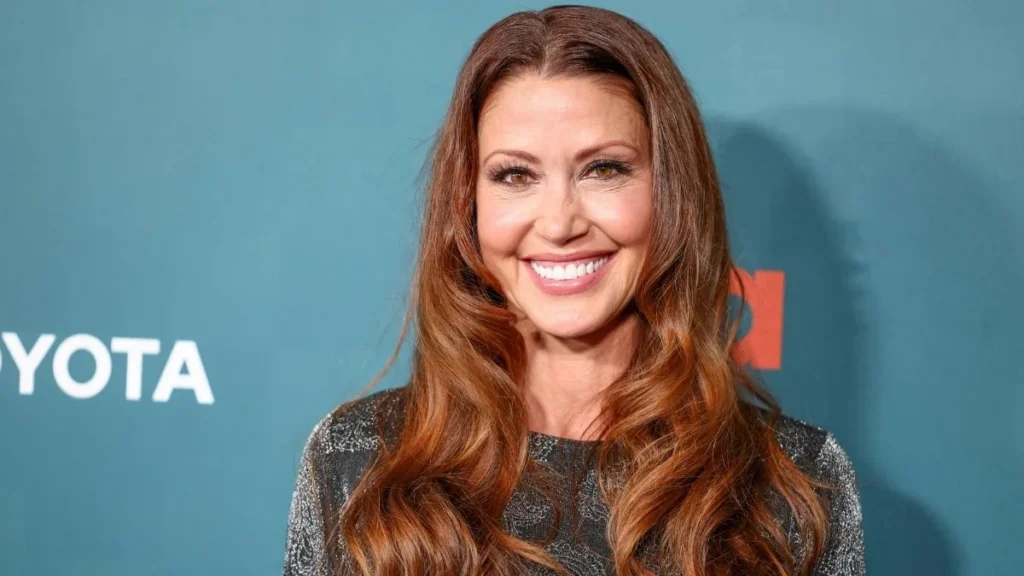

Shannon Elizabeth, the actress who rose to international prominence through her roles in the American Pie and Scary Movie franchises, has achieved a significant financial milestone following her recent transition into the digital creator space. Reports confirmed by industry sources indicate that Elizabeth generated over seven figures in revenue within the first week of launching her profile on OnlyFans, a subscription-based social media platform. The account, which officially went live on April 16, 2026, represents a major pivot for the 52-year-old actress, who has spent the better part of three decades navigating the traditional Hollywood studio system. This move places her among a growing cohort of established celebrities who are leveraging their existing fan bases to bypass traditional media gatekeepers in favor of direct-to-consumer monetization.
The financial success of Elizabeth’s debut on the platform is being viewed by industry analysts as a testament to the enduring power of her brand, which was solidified in the late 1990s and early 2000s. According to reports first published by People, the actress’s earnings exceeded the one-million-dollar mark in a matter of days, a feat that only a small percentage of creators on the platform ever achieve. This surge in revenue is attributed to a combination of high-profile media coverage and the nostalgia of a demographic that grew up during her peak years in cinema. Despite the platform’s reputation for hosting adult content, insiders have noted that Elizabeth’s initial offerings have focused on glamour and fan engagement rather than explicit nudity, aligning her strategy with other high-profile figures who use the site for exclusive, "behind-the-scenes" style content.
Reclaiming Artistic and Personal Autonomy
The decision to join OnlyFans appears to be rooted in a desire for greater professional and personal agency. Elizabeth has been vocal about her experiences in the entertainment industry, specifically regarding the lack of control actors often have over their public personas and career trajectories. In a statement provided to the media, Elizabeth noted that for the duration of her career, Hollywood executives and production houses controlled the narrative and the financial outcomes of her work. By moving to a platform where she owns the content and dictates the terms of engagement, she is effectively removing the intermediaries that have historically defined her public image.
This shift comes at a pivotal moment in Elizabeth’s personal life. Reports indicate that she has quietly filed for divorce from Simon Borchert, her husband since 2021. Sources close to the actress suggest that the end of her marriage has served as a catalyst for her to explore new avenues of self-expression and financial independence. The sentiment expressed by those in her inner circle is that Elizabeth is entering a phase of "freedom," seeking to embrace a bolder, more uninhibited version of herself that was perhaps suppressed during her years as a traditional leading lady. This narrative of empowerment is a common theme among veteran actresses who find themselves pigeonholed by the industry as they age, choosing instead to pivot toward platforms where age is less of a barrier to earning potential.
A Career Defined by Cultural Milestones
To understand the magnitude of Elizabeth’s current success, one must look back at her career trajectory. Born in Houston, Texas, Elizabeth began her career as a model before landing the role that would change her life: Nadia in the 1999 teen comedy American Pie. The film was a cultural phenomenon, grossing over $235 million worldwide and spawning a multi-film franchise. As Nadia, Elizabeth became an instant sex symbol of the millennium era, a label that brought both immense fame and the challenges of typecasting.
Following the success of American Pie, she appeared in the 2000 parody film Scary Movie, which further cemented her status as a household name. Throughout the early 2000s, she maintained a steady presence in film and television, with roles in Jay and Silent Bob Strike Back, Thirteen Ghosts, and a recurring stint on That ’70s Show. However, as the industry shifted and the roles for women in her age bracket became more limited, Elizabeth began to diversify her interests. She became a professional poker player, competing in the World Series of Poker, and moved to South Africa to focus on animal conservation through the Shannon Elizabeth Foundation. This multifaceted background has provided her with a diverse and loyal fan base that spans different interests and generations, contributing to her rapid success in her latest venture.
The Economics of Celebrity on Subscription Platforms
The "seven-figure week" reported for Shannon Elizabeth is part of a broader trend where established celebrities utilize subscription models to monetize their fame. The economics of OnlyFans are particularly attractive for high-profile individuals; the platform typically takes a 20% commission, leaving creators with 80% of their gross earnings. For an actress like Elizabeth, whose career was built on films where she was paid a flat fee or a small percentage of profits, the ability to earn millions directly from subscribers represents a fundamental shift in the wealth-building potential of a celebrity brand.
Data from the platform suggests that the most successful celebrity creators rely on three main revenue streams: monthly subscription fees, pay-per-view (PPV) messages, and direct "tips" from fans. By offering a "more sexy side" that was previously mediated by film directors and editors, Elizabeth is tapping into a market of fans willing to pay a premium for perceived intimacy and exclusivity. This model also allows for a more consistent revenue stream compared to the "feast or famine" nature of acting contracts, which are often subject to the whims of casting directors and production schedules.
Comparative Analysis and Industry Impact
Elizabeth’s success mirrors that of other celebrities who have made similar transitions. In 2020, Bella Thorne famously earned $1 million in her first 24 hours on the platform, leading to significant discourse regarding the platform’s impact on traditional sex workers. Other figures such as Denise Richards, Carmen Electra, and Cardi B have also utilized the platform to varying degrees of financial success. Elizabeth’s entry into this space, particularly at the age of 52, highlights a growing trend of "reclamation," where women who were once marketed as sex symbols by the male-dominated Hollywood machine take back ownership of that sexuality in their later years.
The implications for the entertainment industry are notable. As more talent realizes they can earn more in a single week on a private platform than they can from an entire season of a television show or an independent film, the leverage in contract negotiations may shift. Studios may find it increasingly difficult to secure talent for mid-budget projects if the financial incentives of self-distribution continue to climb. Furthermore, this trend challenges the traditional "retirement" age for actresses, proving that there is a massive, untapped market for content featuring veteran stars.
Recent Projects and Future Outlook
While her digital presence is currently the focus of media attention, Elizabeth has not completely abandoned her acting roots. In 2024, she appeared in the film Plan B, marking a return to the screen after a period of focus on her conservation efforts. Looking ahead, she is slated to appear in the upcoming project First Witch (2026). Although details regarding the plot and her specific role remain guarded, the project is expected to benefit from the renewed public interest in her career.
The timeline of her recent activities suggests a highly calculated rebranding effort. The sequence of events—returning to film in 2024, filing for divorce in late 2025/early 2026, and launching a high-earning digital platform in April 2026—points to a strategic move toward total independence. By diversifying her income and maintaining a presence in both traditional film and new media, Elizabeth is effectively future-proofing her career against the volatility of the entertainment market.
Conclusion and Broader Implications
The news of Shannon Elizabeth’s seven-figure debut on OnlyFans serves as a significant case study in the evolution of celebrity branding in the 2020s. It underscores a shift away from the traditional "star system" toward a decentralized model where the individual holds the power. For Elizabeth, this is more than a financial windfall; it is a declaration of autonomy. As she continues to navigate this new chapter, her success will likely serve as a blueprint for other veteran actors seeking to reclaim their narratives and secure their financial futures outside of the studio system.
The broader impact on the digital economy is equally profound. Elizabeth’s success reinforces the platform’s viability as a mainstream business tool for celebrities, further blurring the lines between traditional entertainment and creator-driven content. As the narrative around these platforms continues to evolve from controversial to commercially essential, the "Shannon Elizabeth model" of high-engagement, non-explicit but provocative content may become the standard for public figures looking to monetize their legacy in an increasingly digital world. For now, Elizabeth remains a singular figure of her generation—one who was able to translate 1990s stardom into a 2026 digital empire with unprecedented speed and efficiency.