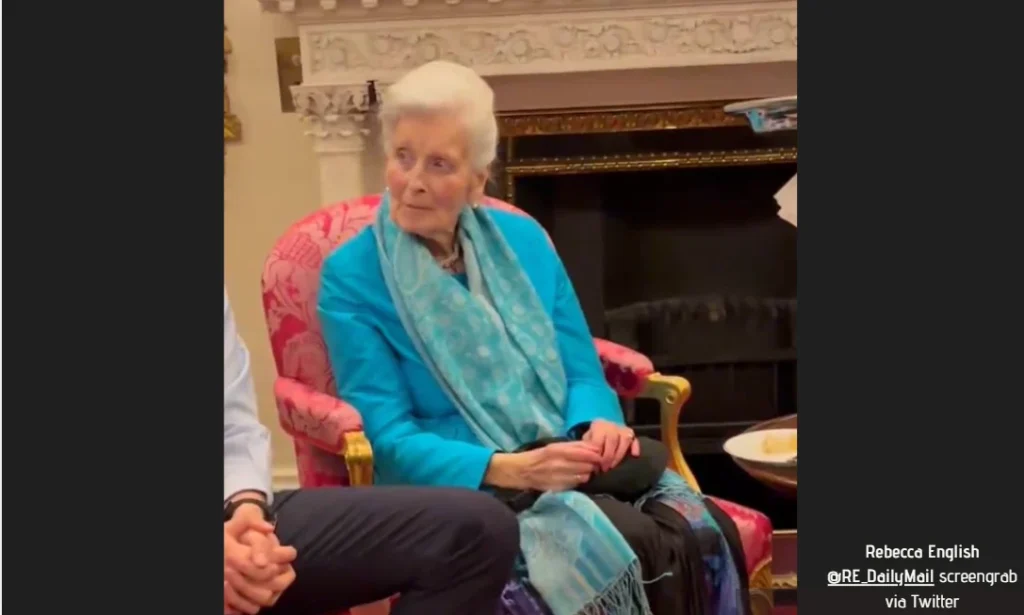

Princess Alexandra, the 89-year-old cousin of the late Queen Elizabeth II, made a rare and significant public appearance alongside a full contingent of the Royal Family at Buckingham Palace yesterday. The occasion marked the late sovereign’s 100th birthday, a milestone that brought together senior royals to honour her enduring legacy and profound impact on Britain and the Commonwealth. The presence of Princess Alexandra, whose public engagements have become increasingly infrequent in recent years, underscored the deep familial bonds and shared respect for the late monarch.
The special reception, held in the opulent Marble Hall of Buckingham Palace, was a carefully curated event designed to celebrate Queen Elizabeth II’s seven-decade reign. King Charles III, leading the tributes, was joined by Queen Camilla, the Prince and Princess of Wales, the Princess Royal, the Duke and Duchess of Edinburgh, the Duke and Duchess of Gloucester, and the Duke of Kent, among others. This comprehensive family turnout highlighted the collective remembrance and admiration for the longest-reigning monarch in British history.
A Multifaceted Celebration of a Remarkable Life
The event at Buckingham Palace served a dual purpose: honouring Queen Elizabeth II and acknowledging other centenarians who share the distinction of reaching a significant milestone birthday. Guests included individuals celebrating their own 100th birthdays, a testament to longevity and lived experience that resonated with the spirit of the day. In addition, representatives from numerous organisations that had a close association with Queen Elizabeth II throughout her reign were present. These included esteemed bodies such as Cancer Research UK, the British Red Cross, The Jockey Club, The Kennel Club, and the Army Benevolent Fund, each representing a facet of the late Queen’s diverse patronages and interests.
King Charles III, in a deeply personal gesture, presented commemorative centenary cards to those marking their 100th birthdays. This act underscored his commitment to continuing the traditions of his mother and acknowledging the passing of time and the accumulation of life experience within his subjects. A specially commissioned birthday cake, adorned with symbols befitting the occasion, was also served, offering a tangible and celebratory element to the solemn remembrance.
Princess Alexandra’s Return to the Public Eye
Princess Alexandra’s attendance was a focal point for royal observers. As the Queen’s cousin and a dedicated working royal for many decades, her more recent diminished public profile had led to speculation about her future role. While she has never formally announced retirement, her appearances have become notably infrequent, leading many to believe she had quietly stepped back from the demands of public duty. Her presence at such a significant and emotionally charged event was therefore viewed as particularly symbolic. It signalled not only her enduring loyalty to the Crown but also her deep personal connection to Queen Elizabeth II, with whom she shared a lifelong bond and served as a trusted confidante.
The Princess, known for her grace and dignity, has been a constant presence in the royal family for over six decades, undertaking a vast array of engagements and representing the Queen both at home and abroad. Her unwavering dedication throughout her public life has earned her widespread respect and affection. Yesterday’s appearance served as a reminder of her continued commitment to the institution, even as her public duties have become less frequent.
Broader Commemorative Activities and Future Plans
The day’s commemorations began earlier with King Charles III and Queen Camilla visiting the British Museum. Their visit was focused on viewing designs for the forthcoming national memorial to Queen Elizabeth II. This ambitious project, expected to be completed in 2028, is intended to serve as a lasting tribute to the late monarch’s unparalleled service and dedication. The selection and development of such a significant memorial are crucial in shaping the public’s memory and understanding of Queen Elizabeth II’s reign for future generations.
Adding a deeply personal dimension to the day’s tributes, Buckingham Palace released a poignant recorded message from King Charles III. Filmed at Balmoral Castle, a location steeped in personal and familial history for the Royal Family, the King reflected on "the life and loss of a Sovereign who meant so much to us all." His words conveyed a profound sense of grief, admiration, and enduring love for his mother. The message concluded with the deeply touching sentiment: "God bless you, darling Mama; you remain forever in our hearts and prayers." This personal reflection offered a glimpse into the private grief of a son mourning his mother, interwoven with the public duty of a monarch honouring his predecessor.
Contextualizing Queen Elizabeth II’s 100th Birthday
The 100th birthday of Queen Elizabeth II, had she lived, would have been a monumental occasion, marking a century since her birth on April 21, 1926. Her reign, which spanned 70 years and 214 days, remains the longest of any British monarch. During this unparalleled period, she navigated immense social, political, and technological changes, providing a constant symbol of stability and continuity for the nation and the Commonwealth.
Born Elizabeth Alexandra Mary Windsor, she ascended to the throne on February 6, 1952, following the death of her father, King George VI. Her coronation, held on June 2, 1953, was a grand spectacle, broadcast live and watched by millions around the world, signalling the dawn of a new era. Throughout her reign, Queen Elizabeth II undertook an estimated 21,000 engagements, travelled to over 100 countries, and held weekly audiences with 15 different Prime Ministers, demonstrating an extraordinary level of dedication and commitment to her role. Her public service was characterized by a profound sense of duty, discretion, and an unwavering devotion to her constitutional responsibilities.
The Royal Family’s Enduring Role
The gathering at Buckingham Palace served as a powerful reminder of the Royal Family’s enduring role in national life. In an era of rapid societal change, the monarchy, personified by Queen Elizabeth II for so long, has striven to adapt while maintaining its traditions. The presence of multiple generations of royals, from the King and Queen to younger members of the family, illustrates the continuity of this institution and the ongoing commitment of its members to public service.
Princess Alexandra’s participation, in particular, highlights the historical depth of the Royal Family and the personal connections that underpin its public persona. Her long association with the Queen, stretching back to their childhood, adds a layer of poignancy to any event commemorating the late monarch. It signifies a shared history and a mutual understanding that transcends the formal duties of their royal roles.
The Significance of Memorials and Commemorations
The planning and execution of memorials and commemorative events are crucial for national identity and collective memory. The forthcoming national memorial to Queen Elizabeth II, coupled with events like the reception at Buckingham Palace, serve to solidify her place in history and provide focal points for public reflection and remembrance. These occasions allow the nation to collectively process loss, celebrate achievement, and reaffirm the values that the late Queen represented.
The involvement of charities and organisations that Queen Elizabeth II championed further emphasizes the multifaceted nature of her legacy. Her patronage extended across a wide spectrum of societal interests, from healthcare and welfare to sport and the arts, reflecting her commitment to the well-being of her people and the promotion of national institutions.
Analysis of Implications: Continuity and Evolution
The event on Queen Elizabeth II’s 100th birthday has several implications for the future of the monarchy. Firstly, it demonstrates the strength and unity of the Royal Family in the face of loss and transition. King Charles III’s leadership in spearheading these tributes signals his readiness to embrace his role as the head of the family and the nation.
Secondly, the inclusion of Princess Alexandra, despite her reduced public profile, speaks to the enduring importance of familial bonds and the recognition of long-standing service. It suggests that while the nature of royal duties may evolve, the appreciation for past contributions remains steadfast. This can be seen as a strategic move to reinforce the sense of continuity and history that the monarchy embodies.
Thirdly, the focus on a national memorial and the King’s personal reflections underscore the deliberate efforts being made to shape the narrative of Queen Elizabeth II’s reign and her place in history. This is crucial for maintaining public engagement and understanding of the monarchy’s relevance in the 21st century.
Finally, the presence of representatives from various charitable organisations highlights the ongoing commitment to public service and the continuation of the Queen’s philanthropic work through her patronages. This demonstrates that the monarchy’s influence extends beyond ceremonial duties to tangible support for societal causes.
In conclusion, the poignant commemoration of Queen Elizabeth II’s 100th birthday, marked by the significant presence of Princess Alexandra and a united Royal Family, served as a powerful testament to the late Queen’s extraordinary life and enduring legacy. It was an occasion of reflection, remembrance, and a reaffirmation of the continuity and evolving role of the British monarchy. The day’s events, from the reception at Buckingham Palace to the King’s personal message and the planning of a national memorial, collectively painted a picture of a nation honouring its most devoted servant and a family cherishing the memory of a beloved matriarch.