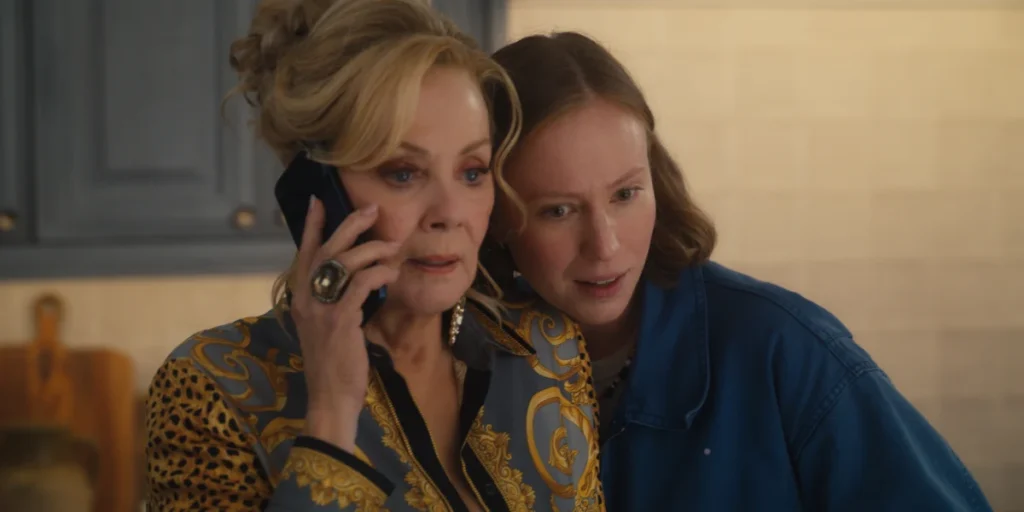

The acclaimed HBO comedy Hacks, celebrated for its incisive wit and surprisingly tender exploration of an unlikely mentorship, is set to conclude with its fifth season, a decision long-planned by its co-creators and stars. While Jean Smart and Hannah Einbinder have captivated audiences as the sharpest, and arguably most odd, couple on television, co-creator and star Paul W. Downs reveals that the final chapter, despite its inherent emotional weight, will strike a surprisingly lighter, even "sexier and juicier" tone. This deliberate ending marks a significant moment for a series that quickly became a critical darling and a cultural touchstone since its debut in 2021.
A Carefully Orchestrated Farewell: The Creative Vision Behind the Ending
Hacks‘ journey to its conclusion is not one of abrupt cancellation or premature finale, but rather a meticulously crafted narrative arc. Downs, alongside co-creators Jen Statsky and Lucia Aniello, envisioned the show’s ending long before its premiere. The trio, the architects of the series’ entire world, famously pitched the final episode to HBO back in 2019, even before the pilot was greenlit. This foresight allowed for a consistent thematic development and character evolution, a rarity in the often-unpredictable landscape of television production.
"There’s always a question of, like, ‘could we do more?’" Downs shared in a recent interview, acknowledging the creative team’s ongoing discussions. He admitted that, creatively, the answer was often yes, with episodes and ideas that never quite found their fit. However, stretching the narrative beyond its intended scope would have come at a significant cost to the show’s unique flavor. "Once we got them to the point that we wanted in the finale, it would have been a little bit like treading water… it would have changed, I think, the flavor of the show."
This distinction is crucial to understanding Hacks‘ artistic integrity. Unlike traditional sitcoms, which often rely on static character dynamics and episodic resolutions, Hacks has always championed evolution. Its characters, Deborah Vance (Smart) and Ava Daniels (Einbinder), make decisions that carry weight, leading to lasting consequences and complex relational shifts. Prolonging the series beyond its natural lifespan, the creators reasoned, risked diluting its impactful storytelling, transforming it into something safer, flatter, and ultimately, less authentic to its original vision. "And for that reason, we wanted to really leave people laughing and want to go out before we overstay our welcome," Downs elaborated.
The decision to conclude a critically and commercially successful show voluntarily is a challenging one for any creative team. "It’s really hard to voluntarily say goodbye to a show that people watch, because it is very hard, especially in comedy, to break through," Downs reflected. The temptation to capitalize on momentum and continued viewership was undoubtedly present. "So, it was certainly something every day we were like, ‘should we be stopping?’ Because we’ve created a family, and we love everybody that we work with, and would work with any of them in a heartbeat again. So, there was always a, ‘is this nuts, you know?’" This sentiment underscores the deep personal connection the cast and crew developed, making the decision to part ways a bittersweet one, albeit rooted in artistic principle.

A Groundbreaking Dynamic: The Evolution of Deborah Vance and Ava Daniels
From its inception, Hacks captivated audiences and critics alike, earning widespread acclaim for its sharp writing, compelling characters, and stellar performances. The show’s premise, a deceptively glossy comedy about two women – one a legendary comedian clinging to relevance, the other a canceled young writer navigating professional exile – forced into an unlikely professional and personal orbit, resonated deeply. It masterfully revitalized the familiar "odd couple" trope, infusing it with contemporary relevance and balancing brutal one-liners with an unexpected undercurrent of tenderness.
The critical reception was immediate and overwhelmingly positive. Hacks garnered near-perfect reviews, with its first season scoring a remarkable 100% on Rotten Tomatoes and an 82 on Metacritic, cementing its status as a critical darling. This critical success translated into a cascade of accolades, including multiple Primetime Emmy Awards and Golden Globe Awards. Jean Smart, in particular, received widespread praise for her nuanced portrayal of Deborah Vance, earning consecutive Emmy Awards for Outstanding Lead Actress in a Comedy Series. Hannah Einbinder’s breakout performance as Ava Daniels also garnered significant attention and nominations, propelling both actresses, and indeed the entire cast, into a new league of recognition. The show itself won the Emmy for Outstanding Comedy Series in its inaugural year, a testament to its immediate impact.
The friction between Deborah Vance, a Joan Rivers-esque figure of comedic resilience, and Ava Daniels, a millennial writer whose career was derailed by an ill-advised online misstep, formed the show’s beating heart. Their initial adversarial relationship gradually blossomed into something far more intricate: collaborators, rivals, and ultimately, mirrors reflecting each other’s vulnerabilities and strengths. This dynamic, expertly navigated by Smart and Einbinder, allowed Hacks to explore themes of ambition, mentorship, intergenerational divides, and the ever-shifting landscape of comedic expression.
While the relationship was largely one of profound connection, it was not without its tumultuous moments. The third season, for instance, introduced a storyline where Ava blackmailed Deborah, a narrative choice that divided audiences and pushed their dynamic from toxic-comic into more uncomfortable, ethically ambiguous territory. Yet, even this challenging turn now appears as an integral part of a larger, deliberate arc, showcasing the creators’ commitment to complex character development. If Hacks has consistently explored any central theme, it is the often-brutal collision of ambition with the harsh realities of the entertainment industry and personal integrity.
Behind the Brilliance: The Creators’ Journey and Show’s Development
The origins of Hacks stretch back more than a decade, a testament to the long-term vision of its creators. Paul W. Downs, Jen Statsky, and Lucia Aniello first crossed paths and honed their comedic craft at the Upright Citizens Brigade (UCB), the legendary improvisational comedy theatre that has served as a breeding ground for a generation of American comedy talent, including Amy Poehler, Kate McKinnon, and Donald Glover. It was at UCB that Downs met his wife, Lucia Aniello, forming a creative partnership that would eventually birth Hacks.

Their collaboration first gained widespread recognition through their work on the critically acclaimed Comedy Central series Broad City, where Aniello served as a director and executive producer, and Downs as a writer, executive producer, and recurring actor (playing the character Trey Pucker). During their years working on Broad City, the trio quietly developed the nascent idea for Hacks on the side. This extensive incubation period, spanning four years by the time Broad City concluded, allowed them to meticulously shape the concept, refine the characters, and solidify the show’s unique tone. This dedicated development time is evident in Hacks‘ debut, which felt unusually assured from its very first episode – packed with razor-sharp jokes, yet profoundly anchored by a relationship that deepened with each passing season.
Downs, who not only co-created and co-wrote the series but also stars as Jimmy LuSaque Jr., Deborah Vance’s increasingly frazzled agent, is intrinsically woven into the fabric of Hacks. His on-screen portrayal of Jimmy, often caught between Deborah and Ava’s clashing egos and career demands, provides a relatable, albeit hilarious, counterpoint to the central dynamic. Off-screen, his role as one of the show’s primary architects highlights the multifaceted talent behind its success.
Thematic Depth and Societal Relevance: A Prescient Mirror
Beyond its comedic brilliance, Hacks has consistently engaged with significant thematic depth, often mirroring contemporary societal anxieties and industry shifts. Storylines around censorship, cancel culture, and the evolving landscape of late-night television, initially heightened for comedic effect, have often proven eerily prescient. Deborah’s own political controversy, which saw her forced off air after refusing to cut a joke about a major actor tied to her network, no longer feels like a far-fetched satirical scenario but a plausible reality within the cutthroat entertainment world.
In the years since Hacks premiered, real-life late-night television has indeed begun to fracture. Programs like The Late Late Show have disappeared from major networks, while established hosts have faced various challenges. The article mentions Stephen Colbert preparing to step down for "financial reasons," though industry whispers suggest deeper political undercurrents. What once read as sharp satire in Hacks now reflects a broader, tangible shift, as networks grow increasingly cautious and the very shape of late-night and mainstream comedic platforms continues to transform.
Downs insists that this prescience isn’t intentional but rather a byproduct of their commitment to writing truthfully about the entertainment business. "I think sometimes we try and reflect culture and use the humour to open people’s way of thinking about things to get going," he shares. "And it wasn’t something we were like, ‘oh, let’s explore that’. It was like, ‘oh, let’s just write the story’ — and weirdly, some of those things happen, which is very bizarre." This organic reflection of culture is a hallmark of truly insightful comedy, allowing Hacks to resonate beyond simple laughs.
If previous seasons leaned into the tension of success’s cost and reputation’s fragility, the final outing, according to Downs, moves in a different, more celebratory direction. While still promising to be emotional, he describes it as "the sexiest and juiciest season" they’ve had – a victory lap that nonetheless remains true to the show’s foundational strengths.

The Final Act: A Joyful Conclusion and Enduring Legacy
As Hacks prepares for its final bow, the creators are keenly aware of the expectations from its devoted fanbase. "I think people are going to be really happy," Downs assures, with a knowing nod to the fervent discussions and "ships" (relationships fans root for) that have emerged around Deborah and Ava, as well as Jimmy and his assistant Kayla (Megan Stalter). He adds a philosophical note: "You don’t always get what you want, but you get what you need." This statement, while perhaps playfully hinting at character arcs, also lands more broadly, reinforcing the idea that at its core, Hacks has always been a love story – not necessarily in a traditional romantic sense, but in the profound, complicated way all great buddy comedies are. "Buddy comedies are love stories, you know? It is a love story," he affirms.
This central idea of love, mentorship, and chosen family carries through to the final season. Deborah, facing the repercussions of prioritizing artistic integrity over corporate opportunity, navigates a career setback that forces her back into scrappier, less glamorous territory. This reinvention includes workaround gigs, publicity stunts, and moments of both humiliation and profound personal growth. This narrative turn promises a looser, sillier, and, crucially, more joyful tone for the concluding episodes, offering a refreshing perspective on resilience and reinvention in the face of adversity.
The question of Hacks’ lasting legacy is one that Downs and the creative team have pondered extensively. "We thought a lot about what, what the legacy of the show would be and what it would leave behind," he shares. He hopes the show’s primary legacy will be its spotlight on both emerging comedic talent and established icons like Hannah Einbinder and Jean Smart. Hacks has indeed served as a powerful platform, introducing new voices such as Megan Stalter and Robby Hoffman to a wider audience, while simultaneously providing seasoned actors with unprecedented space to explore unexpected dimensions of their craft.
Beyond awards and critical acclaim, Downs articulates a more intimate hope for the show’s impact: "For me, there are comedies that when I move through my day and I live my life, I’ll pass something, or I’ll experience something, and it’ll bring me back to that one line in that show," he says. "So I hope that Hacks does that for people, that it gives them a little bright spot in their day." This desire for the show to leave behind memorable moments and enduring jokes, providing small moments of joy and recognition, speaks to the profound, subtle power of well-crafted comedy.
Perhaps the most significant legacy Hacks leaves behind is its groundbreaking portrayal of women over 60. The series courageously placed a complex, difficult, brilliant woman at its center, challenging ageist stereotypes prevalent in Hollywood. "There should be 10 times as many characters over 60 that are leading shows," Downs asserts. This commitment to diverse representation, particularly for older women, resonated deeply with audiences. He recounts a particularly poignant piece of feedback: someone once told Aniello that Hacks had made their daughter think her grandmother was cool. For Downs, this epitomizes the show’s broader impact. "What a great thing to give to young women and men," he reflects. "There’s a lot of life out there beyond what you maybe see portrayed on the day to day." Hacks thus not only entertained but also subtly shifted perceptions, advocating for a richer, more inclusive narrative landscape in television.
The fifth and final season of Hacks is poised to deliver a fitting conclusion to a series that redefined the comedy genre, offering both laughter and profound insight. Fans in the UK can tune in as the season airs weekly on Sky and NOW, starting at 9pm from Friday, 17 April.