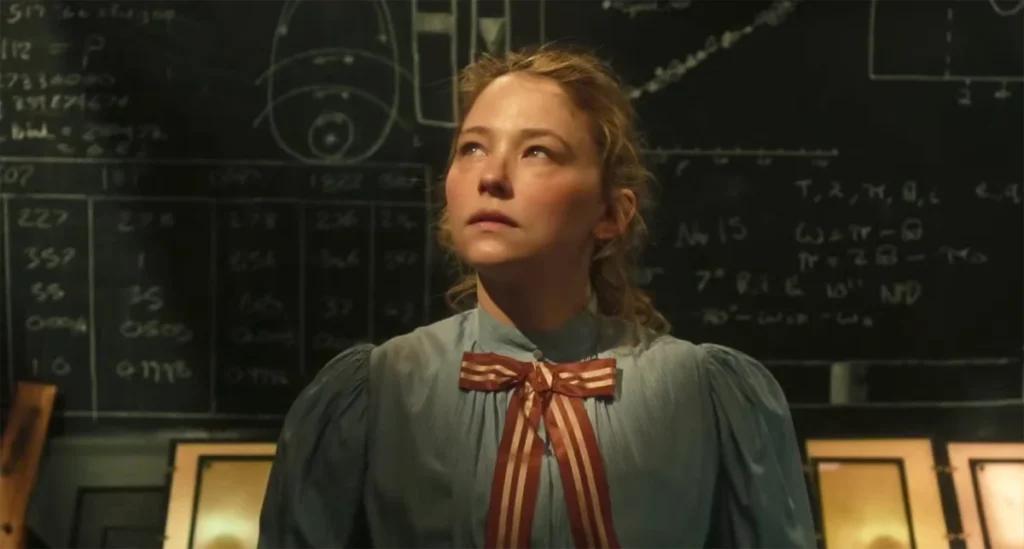

West End Films has unveiled the official trailer for Virginia Woolf’s Night & Day, a new cinematic adaptation of Virginia Woolf’s seminal 1919 novel, set to premiere in UK theaters on June 19, 2026. This "un-romantic comedy," as described by its distributors, centers on Katharine Hilbery, a passionate astronomer in early 20th-century Britain who actively eschews romantic entanglements and marriage in favor of her scientific pursuits. The film promises a fresh, modern interpretation of Woolf’s witty narrative, highlighting a woman’s struggle against the patriarchal norms of her era.
A Celestial Pursuit: The Premise of Virginia Woolf’s Night & Day
The film’s narrative unfolds in the Edwardian era, a period characterized by significant social and technological advancements, yet still deeply entrenched in traditional gender roles. At its heart is Katharine Hilbery, portrayed by Haley Bennett, a brilliant astronomer whose focus is solely on the cosmos. Her dedication to her work places her at odds with societal expectations, which predominantly dictate that women of her standing should be preparing for marriage and domestic life. The trailer hints at Katharine’s determined efforts to maintain her independence, treating romance as an unwelcome distraction, much like an inconvenient celestial event she prefers not to observe.
The story explores Katharine’s internal conflict as romantic loyalties within her social circle begin to shift. This personal upheaval forces her to re-examine her deeply held beliefs about love, ambition, and her rightful place in a world that seeks to confine her. The adaptation is helmed by international filmmaker Tina Gharavi, known for her previous works such as I Am Nasrine and Tribalism Is Killing Us. The screenplay, penned by Justine Waddell, aims to capture the spirit and intellectual wit of Woolf’s original novel.

The Cast and Creative Team
The ensemble cast brings together a notable group of actors to populate the world of Virginia Woolf’s Night & Day. Haley Bennett leads the charge as the independent-minded Katharine. She is joined by Elyas M’Barek, a German actor recognized for his roles in European cinema, whose part in the film is yet to be fully detailed but suggests a significant presence in Katharine’s evolving romantic landscape.
Further bolstering the cast are British stalwarts Jennifer Saunders and Timothy Spall. Saunders, celebrated for her comedic prowess, particularly in Absolutely Fabulous, is expected to bring her characteristic sharp wit to the film. Timothy Spall, a veteran actor with a distinguished career in films like the Harry Potter series and The King’s Speech, will portray Katharine’s father, likely embodying the traditional patriarchal figure against whom Katharine is rebelling. Jack Whitehall, a popular comedian and actor, is cast as William, hinting at a potential romantic interest or a key figure in Katharine’s social circle. Lily Allen, the acclaimed singer-songwriter, also makes an appearance, adding another layer of recognized talent to the production.
The film is produced by a team including Christopher Figg, Julie Link, Philipp G. Steffens, Meg Thomson, and Justine Waddell, who also contributed to the screenplay. This collaborative effort behind the scenes aims to translate Woolf’s intricate literary world into a compelling visual experience.
Historical Context: Virginia Woolf and the Edwardian Era
Virginia Woolf, born in 1882, was a pivotal figure in modernist literature. Her novels, often characterized by their stream-of-consciousness technique and exploration of psychological depth, challenged conventional narrative structures and societal norms. Night and Day, first published in 1919, predates some of her more experimental works but already showcases her keen observation of social dynamics and the inner lives of her characters.

The novel and its adaptation are set against the backdrop of the Edwardian era (1901-1910), a period of relative peace and prosperity in Britain following the long Victorian age. However, it was also a time of significant social upheaval. The burgeoning women’s suffrage movement was gaining momentum, challenging established patriarchal structures and advocating for greater rights and opportunities for women. Scientific advancements, particularly in fields like astronomy, were also capturing public imagination, offering new perspectives on the universe and humanity’s place within it.
Katharine Hilbery’s character can be seen as a reflection of the changing tides of the era. Her dedication to a scientific field, traditionally dominated by men, and her resistance to marriage embody the spirit of a new generation of women who were beginning to question and redefine their roles in society. The film’s setting allows for a visual exploration of the opulent yet restrictive social milieu of the time, contrasting it with Katharine’s intellectual and personal aspirations.
Distribution and Release
Virginia Woolf’s Night & Day is being distributed by Vue Lumiere and West End Films, with a planned release in UK cinemas on June 19, 2026. This summer release positions the film as a potential contender for audiences seeking sophisticated, character-driven cinema. The trailer, released via YouTube, offers a glimpse into the film’s visual aesthetic and thematic concerns, aiming to generate anticipation among Woolf enthusiasts and general moviegoers alike. The source of the trailer’s release, YouTube, highlights the contemporary distribution strategies employed by film studios to reach a global audience.
Analysis and Implications
The adaptation of a classic novel like Woolf’s Night and Day carries inherent weight and expectation. The success of such a project often hinges on its ability to resonate with contemporary audiences while remaining faithful to the spirit of the source material. The film’s classification as an "un-romantic comedy" suggests an intention to subvert traditional romantic tropes, offering a more nuanced and perhaps feminist perspective on love and relationships.

The casting of Haley Bennett as Katharine is significant. Bennett has a history of portraying strong, complex female characters, and her involvement indicates a commitment to developing Katharine as a compelling protagonist. The inclusion of international talent like Elyas M’Barek also suggests a broader appeal beyond the UK market.
The film’s exploration of a female astronomer grappling with societal expectations in the early 20th century is particularly relevant in today’s context, where discussions around gender equality in STEM fields and the challenges faced by women in pursuing ambitious careers continue. Virginia Woolf’s Night & Day has the potential to spark conversations about historical progress, ongoing societal challenges, and the enduring relevance of Woolf’s insights into human nature and social dynamics.
The choice to adapt a novel that is considered one of Woolf’s more accessible works, yet still rich in intellectual and emotional complexity, could attract a wide demographic. The blend of period drama, intellectual themes, and comedic elements, as suggested by the trailer, positions the film as a potentially engaging and thought-provoking cinematic experience. The success of such an adaptation will likely be measured not only by box office returns but also by its critical reception and its ability to engage audiences with Woolf’s timeless themes. The film’s release in the summer of 2026 will provide a definitive answer to its reception within the cinematic landscape.