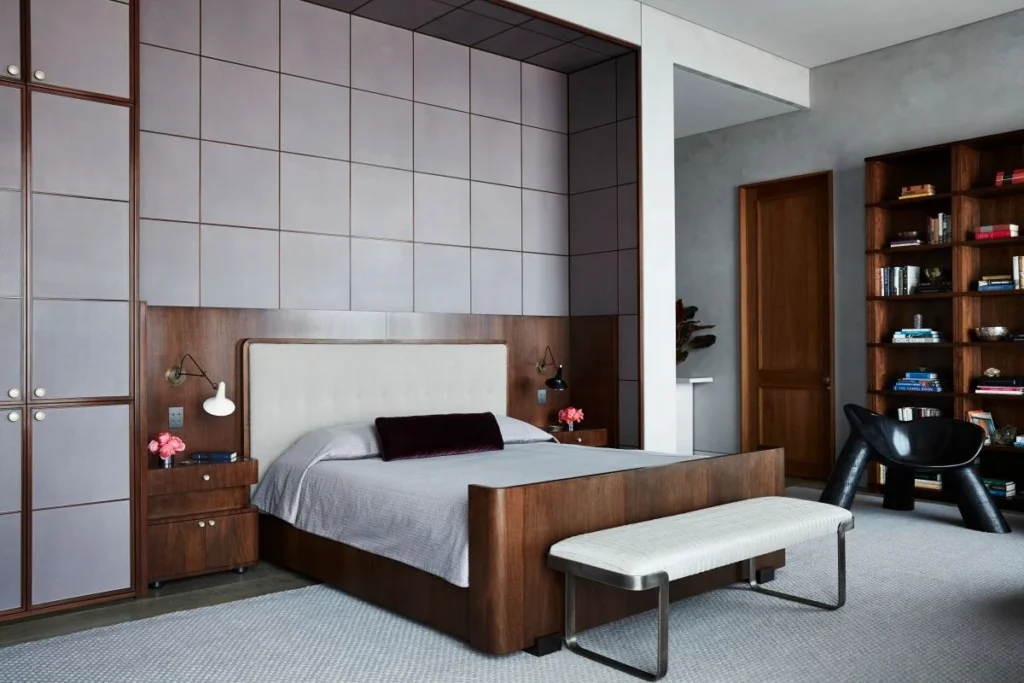

The modern residential landscape is undergoing a significant transformation as urban density increases and living spaces simultaneously contract. This shift has necessitated a fundamental reimagining of interior design, moving away from purely aesthetic considerations toward a philosophy of maximized utility. Central to this evolution is the rise of multifunctional furniture, specifically the storage bed, which has transitioned from a niche organizational tool to a cornerstone of contemporary bedroom architecture. As consumers navigate the challenges of "micro-living" and limited square footage, the demand for high-capacity, durable, and aesthetically versatile furniture has reached an all-time high. A recent evaluation by Julia Harrison, a shopping writer for Architectural Digest, provides a critical look into the practicalities of these units, highlighting the intersection of material science, assembly logistics, and the burgeoning secondary furniture market.
The Intersection of Utility and Aesthetic in Small-Space Living
For many urban dwellers, the primary challenge of interior design is the reconciliation of a personal aesthetic with the harsh realities of limited storage. Harrison’s experience reflects a broader demographic trend: the need to accommodate an ever-growing collection of personal effects—ranging from seasonal wardrobes to sentimental archives—within a footprint that offers little in the way of traditional closet space. In her review of a queen-sized storage bed, Harrison identifies the "Bohemian-Bauhaus" aesthetic of her room, a hybrid style that demands both the organic warmth of bohemian textures and the functional, geometric rigor of the Bauhaus movement.
The storage bed serves as a "sturdy backdrop" in this environment. While it may not always be the centerpiece of a design scheme, its value lies in its ability to facilitate the minimalist "look" by concealing the clutter that typically disrupts small spaces. This reflects a broader shift in consumer behavior where the "invisible" functionality of furniture is valued as much as its outward appearance.
Material Science and Structural Integrity: Particleboard vs. Sustainable Alternatives
One of the most critical aspects of the storage bed market is the choice of materials, which directly impacts price, durability, and consumer trust. Harrison’s review highlights a common industry tension: the use of particleboard versus solid wood or sustainable alternatives like bamboo. Particleboard, an engineered wood product manufactured from wood chips and a synthetic resin, is often viewed with skepticism due to concerns over its long-term resilience. However, in the context of high-capacity storage beds, its weight and cost-effectiveness make it a dominant material in the "flat-pack" furniture sector.
Harrison rated the sturdiness of her particleboard frame an eight out of ten, noting that while she had initial reservations, the frame exceeded her expectations by remaining intact under a heavy load. This stands in contrast to her experiences with bamboo frames, which she noted had failed to meet basic durability standards in the past. This observation aligns with engineering data suggesting that while bamboo is highly sustainable and has a high tensile strength, it can be prone to splitting or warping if not treated or joined correctly in furniture applications. Particleboard, despite its reputation as a "budget" material, offers a level of dimensional stability that is crucial for furniture housing heavy drawers and integrated storage systems.
The Logistics of Assembly and the Rise of the Circular Economy
The acquisition of furniture has been revolutionized by the "circular economy," facilitated by platforms such as Facebook Marketplace. Harrison’s decision to source her bed frame through a secondary market highlights a growing trend among millennials and Gen Z consumers who prioritize sustainability and cost-savings over brand-new retail experiences. However, this method of acquisition introduces unique logistical challenges, particularly regarding delivery and assembly.
Unlike "white glove" delivery services offered by high-end retailers—where professional movers deliver, unpack, and assemble the unit—the secondary market requires consumers to manage the "last mile" of logistics themselves. Harrison described the assembly of the storage bed as a "two-person job" and "slightly challenging," a common refrain in the world of integrated storage furniture. The complexity of these units often stems from the need to align heavy side rails with internal support slats and drawer tracks. Interestingly, Harrison noted that the drawers in her specific model were "super easy" because they utilized a floor-sliding mechanism rather than traditional mounted glides. This design choice reduces mechanical complexity and potential points of failure, though it requires a level floor surface to function optimally.
Market Trends: The Quantitative Growth of Storage Furniture
The global storage furniture market is currently experiencing a period of robust growth. According to recent market analysis reports, the sector is expected to expand at a compound annual growth rate (CAGR) of approximately 5.8% over the next five years. This growth is driven by several factors:
- Urbanization: By 2050, it is estimated that 68% of the world’s population will live in urban areas. This concentration of people in cities leads to smaller average apartment sizes, making storage-integrated furniture a necessity rather than a luxury.
- The "Clutter Awareness" Movement: Popularized by figures like Marie Kondo, there is a heightened cultural awareness regarding the psychological benefits of an organized home. Storage beds provide a "hidden" solution for items that do not spark immediate joy but are essential for daily life.
- The Rise of E-commerce: The ability to ship flat-pack storage beds directly to consumers has lowered the barrier to entry for many homeowners, though it has increased the burden of assembly on the end-user.
In response to these trends, publications like Architectural Digest have standardized their testing protocols for storage beds. These protocols now include rigorous assessments of delivery windows, assembly difficulty, material durability, and the "opening clearance" required for drawers or hydraulic lifts—a critical measurement for consumers living in tight quarters.
Technical Analysis of Storage Mechanisms: Drawers vs. Hydraulics
When selecting a storage bed, consumers generally choose between two primary mechanisms: pull-out drawers and hydraulic (Ottoman-style) lifts. Each system offers distinct advantages and drawbacks that impact the utility of the bedroom.
- Pull-Out Drawers: As seen in the unit reviewed by Harrison, drawers provide segmented storage that is easily accessible. They are ideal for frequently used items like clothing or linens. However, they require significant "clearance space" on either side of the bed. In a small room, a nightstand or a nearby wall can easily obstruct a drawer, rendering the storage useless.
- Hydraulic Lifts: These systems allow the entire mattress platform to be lifted, revealing a cavernous storage area underneath. This is superior for storing bulky, infrequently used items like suitcases or winter coats. Because the bed lifts vertically, it does not require side clearance, making it the preferred choice for extremely narrow rooms. The downside is the physical effort required to lift the mattress, although gas-lift pistons have significantly mitigated this issue.
Harrison’s preference for drawers for her "out-of-season wardrobe" and "childhood notebooks" suggests that for many users, the ease of access provided by drawers outweighs the potential space-saving benefits of a hydraulic system.
Implications for the Future of Interior Design
The integration of high-capacity storage into primary furniture pieces signifies a move toward "architectural furniture." In this paradigm, furniture is no longer just an object placed within a room; it becomes an extension of the room’s architecture, performing the duties that built-in closets once did. As Julia Harrison concluded in her assessment, while a storage bed may not always be the most "design-forward" choice, its utility is undeniable.
The future of this sector likely lies in the refinement of materials and the simplification of the assembly process. We can expect to see an increase in "tool-less" assembly designs and the use of more sustainable, high-strength composites that bridge the gap between the affordability of particleboard and the prestige of solid wood. Furthermore, as the secondary market continues to thrive, the "re-assembly" durability of these pieces will become a key selling point. Furniture that can be taken apart and put back together multiple times without losing structural integrity will hold its value longer in the circular economy.
Ultimately, the storage bed represents a pragmatic response to the spatial constraints of the 21st century. By turning the "dead space" beneath the mattress into a functional warehouse for personal history and daily essentials, these pieces of furniture are helping residents reclaim their living environments. Whether sourced from a high-end showroom with white-glove service or salvaged from Facebook Marketplace and carried up the stairs piece by piece, the storage bed has firmly established itself as an essential tool for modern life.