
Justin Bieber made a highly anticipated return to the global stage, headlining the Coachella Valley Music and Arts Festival on Saturday night with a performance that was remarkably intimate and deeply personal, marking his biggest concert appearance in several years. Eschewing the elaborate productions typically associated with major festival headliners, Bieber delivered a set that leaned heavily into his "Swag" era, taking fans on a journey through his formative years by literally mining old YouTube clips on his laptop, a move that proved both compelling and, at times, unconventional for such a prominent platform.
The Evolution of a Pop Icon: A Contextual Overview
Justin Bieber’s appearance at Coachella was more than just another festival set; it represented a significant chapter in the ongoing evolution of one of the 21st century’s most defining pop artists. His career, launched from YouTube virality in the late 2000s, has been a public spectacle, charting his rise from a teen idol phenomenon to a mature artist grappling with immense fame, personal challenges, and professional shifts. This performance arrived after a period of profound transformation in Bieber’s life, both personally and professionally. In recent years, the global superstar had faced significant health issues, most notably his public battle with Ramsay Hunt syndrome, which led to the cancellation of numerous tour dates on his "Justice World Tour." This health crisis forced him to step back from the relentless touring schedule that had defined much of his adult life, prompting a period of reflection and recovery.
Beyond health, Bieber navigated substantial professional changes, including the highly publicized sale of his music publishing catalog for an estimated $200 million. This strategic business move, a growing trend among established artists, underscored a desire for financial autonomy and control over his legacy. Concurrently, he parted ways with his longtime manager, Scooter Braun, a figure instrumental in his initial discovery and meteoric rise. This separation signaled a new era of self-management and potentially a re-evaluation of his artistic direction. On the personal front, Bieber embraced fatherhood, a milestone that, alongside his marriage to Hailey Bieber, has consistently been cited by the artist as a source of profound stability and inspiration. These multifaceted changes set the backdrop for his Coachella return, imbuing the performance with layers of personal significance and public curiosity. His artistic output also saw a resurgence, with the release of his first album in four years last year, titled Swag, and its deluxe counterpart, Swag II, which notably earned a Grammy nomination for Album of the Year, signaling his renewed creative vigor and critical acclaim.
Coachella’s Stage: A Departure from Grandeur
Coachella, renowned globally as a crucible for iconic musical moments and extravagant stage productions, has hosted some of the most memorable and visually spectacular performances in recent memory. From Beyoncé’s history-making "Beychella" in 2018, replete with a full marching band and intricate choreography, to Daft Punk’s pyramid stage in 2006, and more recently, Blackpink’s explosive 2023 spectacle, the festival grounds have traditionally been a canvas for artistic maximalism. Against this backdrop, Bieber’s decision to deliver a "stripped-back" show stood in stark contrast.
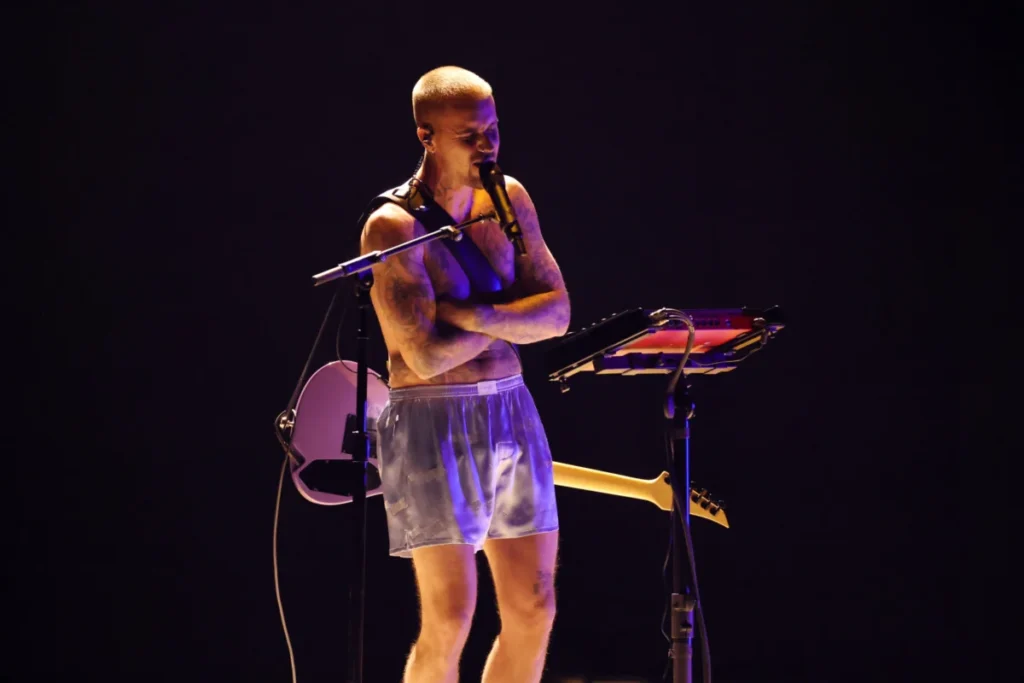
The night prior, fellow pop sensation Sabrina Carpenter had commanded the stage with a grandiose headlining set, characterized by elaborate staging, multiple costume changes, and dynamic choreography. Bieber’s performance, however, presented an almost antithetical vision. For the majority of his set, the pop star was largely on his own, navigating a stage dominated by a singular, halfpipe-looking structure. The deliberate absence of backup dancers, intricate stage props, and theatrical outfit or stage design changes underscored a clear artistic intention: to strip away the external embellishments and place the focus squarely on Bieber himself, his voice, and his connection with the audience. The only deviations from this minimalist approach were the brief appearances of a couple of guitarists for a few tracks and the introduction of a select group of special guests. This conscious choice transformed what could have been a standard festival spectacle into an intimate concert experience, emphasizing raw talent and personal storytelling over elaborate theatrics.
The "Intimate Spectacle": A Deep Dive into the Performance
Kicking off at approximately 11:30 p.m., Bieber’s set immediately established its unique tone. Dressed in a hooded ensemble, the artist greeted the massive Coachella crowd with a sense of genuine gratitude and vulnerability. "Wow wow wow, to be up close and personal with you guys, this is special," he told the audience, continuing, "This is a night I dreamed about for a long time, so to be here is amazing." This sentiment set the stage for a performance that prioritized connection over grandiosity.
The initial segment of his set was a deliberate immersion into his "Swag" era, focusing on tracks from his latest reported album, Swag. He opened with "All I Can Take," a track that set a reflective yet confident mood, before flowing into "Speed Demon," "First Place," and "Go Baby." These selections from his recent work established a contemporary feel, showcasing his current artistic direction. The atmosphere shifted dramatically with the arrival of his first surprise guest, The Kid Laroi, who joined Bieber to perform their hugely successful 2021 collaboration, "Stay." The infectious energy of the track and the palpable chemistry between the two artists ignited the crowd, serving as a powerful bridge between Bieber’s newer material and his broader catalogue of hits.
The middle portion of the set ventured into an even more unconventional territory, morphing into what could only be described as a public karaoke party, or a communal trip down memory lane. Bieber, seated at a laptop connected to the massive screens behind him, began to pull up YouTube links to his childhood hits. "Tonight is such a special night, but I feel like we’ve gotta take you guys on a bit of a journey," he explained, as the audience watched him type "Baby" into the search bar, eliciting a collective roar of recognition and excitement.
This segment saw Bieber singing quick snippets alongside the original recordings of his oldest classics, including "Beauty and a Beat," "Never Say Never," and "Confident." The visual juxtaposition of a baby-faced Bieber on screen with the fully grown, tattooed artist singing live was a potent reminder of his remarkable longevity and the sheer scale of his career. While some observers noted that this "YouTube karaoke" felt low-effort compared to a more involved production, it undeniably created a compelling visual and an authentic, shared experience with his long-time fans. It humanized the global superstar, allowing him to reminisce publicly alongside his audience. However, the improvised nature of the segment was not without its minor technical challenges; a momentary buffering issue with the "Sorry" video prompted a chuckle from the crowd and a good-natured jab from Bieber: "Wi-Fi, come on man." This candid interaction further underscored the raw, unpolished feel of the performance.
As the nostalgia trip continued, it momentarily veered into a curious detour into millennial internet culture, with Bieber pulling up classic YouTube memes like "Deez Nuts" and "Double Rainbow." Acknowledging the diversion, he quipped about "getting pulled into the deep dark web" and swiftly pivoted back to his music, launching into "Yukon." This unexpected interlude, while brief, showcased a playful and unscripted side of the artist, further reinforcing the intimate and spontaneous nature of the evening.
The latter part of the set featured a series of carefully chosen guest collaborations that added texture and diversity to the performance. Dijon, who had performed at the festival the day prior, joined Bieber for "Devotion," creating a moment of subtle musical synergy. Next, Tems, the Grammy-nominated Nigerian singer, shared the stage for a duet on "I Think You’re Special," a collaboration that highlighted their vocal harmonies and cross-genre appeal. The international flavor continued with Wizkid, another acclaimed Nigerian artist, who performed a cover of his global hit "Essence," a surprising and well-received addition that showcased Bieber’s appreciation for contemporary Afrobeats.
Bieber concluded his set with "Daisies," a track that brought co-producer Mk.gee to the stage for the finale, underscoring the collaborative spirit of his recent work. As fireworks erupted behind him, Bieber reiterated his love for the crowd before quickly exiting the stage, leaving the audience to process a performance that was as unconventional as it was memorable. The swift exit, characteristic of the intimate, no-frills approach, left anticipation for his second headlining set the following Saturday.
Broader Implications and Future Outlook
Justin Bieber’s Coachella performance was more than just a concert; it was a carefully curated statement about his current artistic philosophy and personal journey. The stripped-back nature of the show, in an environment typically defined by excess, suggests a deliberate move towards authenticity and vulnerability. This approach could signify a new chapter for Bieber, one where he prioritizes genuine connection with his audience and artistic integrity over commercial spectacle. For an artist who has lived so much of his life under the intense glare of the public eye, this intimate format allowed him to reclaim his narrative, presenting himself not just as a global pop star, but as a seasoned musician reflecting on his past while embracing his present.
The choice to leverage YouTube nostalgia, despite its "low-effort" perception, served as a powerful tool for fan engagement. It resonated deeply with his long-time supporters, who have followed his career since its nascent stages on the very platform he was showcasing. This meta-commentary on his origins, juxtaposing his youthful self with his current persona, offered a unique form of self-reflection rarely seen on such a grand stage. It underscored his comfort with his past and his willingness to engage with his own history in a playful, unvarnished manner.
From an industry perspective, Bieber’s minimalist approach at Coachella could prompt discussions about the evolving expectations for festival headliners. In an era where visual extravagance often dominates, his performance offered a compelling argument for the power of raw talent and personal narrative. It challenged the notion that a headlining slot necessitates an arsenal of special effects, proving that a strong artistic vision and genuine connection can be equally, if not more, impactful.
The performance also sets a fascinating precedent for his next headlining set. Will he refine the YouTube segment, perhaps integrating live elements more seamlessly? Or will he lean further into the spontaneous, unpolished charm that defined his first weekend? The questions surrounding his future artistic direction, potential new music beyond Swag and Swag II, and a possible return to touring after his health battles, are now framed by this distinct and personal Coachella showing. The concert served as a powerful testament to Bieber’s resilience, his artistic maturity, and his enduring ability to captivate an audience, signaling a nuanced and intriguing path forward for the global icon.