

The highly anticipated fifth season of the hit Prime Video series, The Boys, has kicked off with a visceral bang, launching its initial two episodes with a dramatic death and a confounding revival that promises to reshape the trajectory of its central conflict. As viewers were plunged back into the morally ambiguous world of vigilantes and corrupt superheroes, the closing moments of the premiere episode, "Teenage Kix," delivered a pivotal twist that has thrown Butcher’s (Karl Urban) desperate mission into uncharted territory. This development, coupled with a series of other significant reveals, has set a volatile tone for the remainder of the season, as confirmed by showrunner Eric Kripke in a recent interview.
A Grim Opening: A-Train’s Unexpected Demise
The season’s opening salvo was marked by the abrupt and brutal death of A-Train (Jessie T. Usher), a Super with supersonic abilities and a complex, often self-serving, moral compass. Kripke acknowledged the difficult nature of this decision, stating, "I hated that call." He elaborated on the emotional toll of writing out a character who had become an integral part of the series’ fabric, noting the difficulty in delivering the news to the actor. "It’s so hard because you really come to think of everyone as family, and so it’s just such a tough conversation, but he was amazing about it, and then proceeded to show up and absolutely crush it."
The writers’ room, according to Kripke, played a crucial role in advocating for an early, high-impact death. "The writers really campaigned successfully with me, they said, ‘You keep saying nobody’s safe, put your money where your mouth is, you have to drop someone big in the first episode, so then for the rest of the season, the audience just never knows what to expect, and they know anyone is in danger of getting killed, and they’re right.’" This strategic decision was intended to immediately re-establish the series’ commitment to unpredictability and the perilous stakes faced by all characters, reinforcing the notion that no one is truly safe in The Boys‘ universe.
Kripke detailed the efforts made to ensure A-Train’s exit felt earned and impactful, rather than a mere shock tactic. "We really have to make the page count, and give us story space so that we can really give him his proper due, really make it one of the prime storylines of the opener." This included crafting a narrative arc that allowed A-Train a semblance of closure, exploring his reconciliation with his brother and the validation of his mother’s pride. The showrunner highlighted A-Train’s final moments, describing his confrontation with Homelander as a moment of realization rather than fear. "He’s running scared from Homelander; he’s been running scared since the end of last season, and then finally like stops running and faces Homelander to see that Homelander’s not scary at all, he’s just pathetic." Kripke also pointed to A-Train’s characteristic agility, noting how his attempt to dodge a woman ultimately led to his downfall, serving as a poignant callback to his initial introduction and illustrating his character’s evolution.
Soldier Boy’s Unforeseen Resilience: A Virus’s Failure and a New Race
The season’s most significant and potentially game-changing development arrived with the unexpected survival of Soldier Boy (Jensen Ackles). Homelander, increasingly unstable and consolidating power, had dispatched Soldier Boy to hunt down Butcher and his vigilante crew. Soldier Boy became an unwitting test subject for a potent virus developed by Butcher’s team, designed to eradicate all Supes. The virus, released by Hughie (Jack Quaid) and Frenchie (Tomer Capone) within the confined space of the Teenage Kix team’s basement, appeared to be devastatingly effective. Soldier Boy was seemingly incapacitated and packed into a body bag.

However, in a shocking turn of events, Soldier Boy awakens, demonstrating a perplexing immunity to the supe-killing pathogen. This survival has profound implications for Butcher’s overarching mission. Kripke explained, "Yes, it is true that Soldier Boy is not dead, and the reasons that he’s seemingly immune to this virus are what really set up the primary MacGuffin of the season. It really turns everything on its head."
The implications are manifold. If Soldier Boy can withstand the virus, it suggests a potential cure or, at the very least, a way for individuals to survive its effects. This revelation immediately transforms the conflict into a desperate race. "Suddenly, there is a way to survive the virus, and so it becomes a race of who acquires it," Kripke stated. The stakes are astronomically high: "If Homelander acquires it, it’s game over. If The Boys acquire it, then maybe the people that they love can survive, and so everyone’s battling for the future." This newfound hope, however grim, injects a fresh urgency into the narrative, shifting the focus from eradication to acquisition and survival, and setting the stage for intense confrontations over the virus’s control.
The timeline of events leading to this point is crucial. Soldier Boy was thawed from his cryogenic stasis by Homelander, who sought to leverage his power and legacy. This alliance, however, proved fraught with tension, as Soldier Boy harbored his own resentments and a desire for revenge. The virus, a product of Butcher’s increasingly desperate and ethically compromised pursuit of vengeance, was designed as a last resort against the overwhelming power of Supes. The unexpected resilience of Soldier Boy, a figure with a complicated past and a volatile present, presents a significant scientific and tactical hurdle for both sides.
Homelander’s Divine Delusions: A Descent into Christian Nationalism
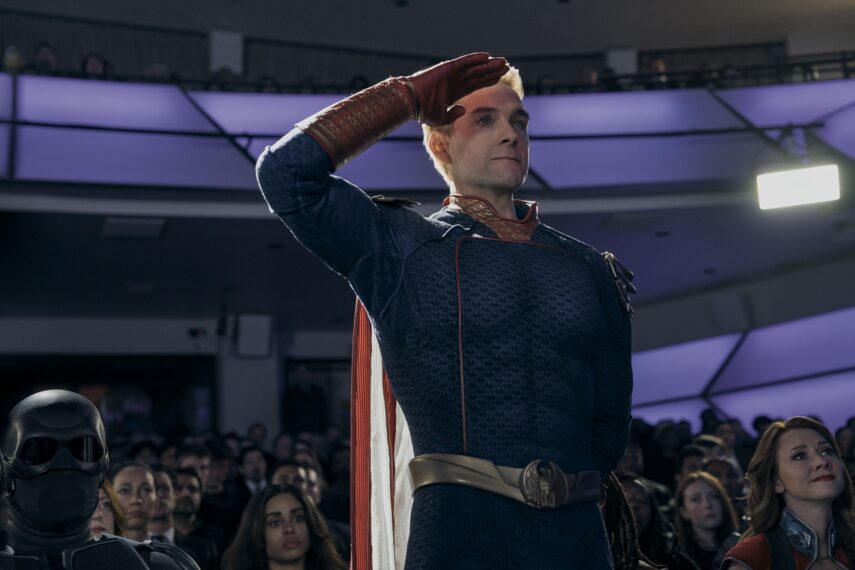
Meanwhile, Homelander’s trajectory takes a decidedly religious turn. Increasingly isolated and seeking validation, he begins to interpret external events as divine signs, embracing a distorted form of Christian nationalism. Kripke elaborated on Homelander’s psychological state: "Whatever power you accrue, it’s still not going to make you happy. And so we find Homelander begin the season, having achieved the upper echelon of power. There’s no more powerful person on the planet than what this guy has achieved, and he’s still miserable."
Homelander’s pursuit of happiness through power has consistently proven futile. This season, he fixates on achieving a god-like status, a natural progression for a character who has long viewed himself as superior to mere mortals. "The next step of power is as some kind of deity, and that really gets fleshed out in upcoming episodes," Kripke explained.
The series intends to critically examine Christian nationalism, a political ideology that conflates Christian identity with American national identity and often advocates for policies aligned with conservative Christian values. "Season 5, we are taking quite a big fat shot at Christian nationalism, and this idea that Christianity should make you supportive of violent and occasionally racist policies, which run against everything that Christianity stands for," Kripke stated. The show aims to highlight the hypocrisy and dangerous implications of using faith to justify political agendas, particularly when those agendas are characterized by aggression and intolerance. The visual of politicians invoking divine blessing for what are arguably morally reprehensible actions serves as a potent critique.
Ashley’s Internal Struggle: A Conscience Given Voice
In parallel, the character of Ashley Barrett (Colby Minifie), the beleaguered Vought executive, undergoes a significant internal transformation. Following an injection of Compound V, Ashley gains the ability to read minds and hears an inner voice, which the showrunners have playfully nicknamed "Bashley." This new power is not merely a plot device but a metaphorical representation of Ashley’s ongoing struggle with her own conscience.
"The thing I love about that power, beyond the fact that it’s just gross and silly and absurd, is that the best powers are metaphors for what that particular character is going through," Kripke noted. Ashley has previously shown flashes of moral compunction, but has consistently suppressed them in favor of self-preservation and loyalty to Vought. "What we wanted to do with Ashley this season is she’s demonstrated on several occasions that she has a spark of a conscience and will she ever listen to it or will she keep subsuming it?"
Bashley represents the moral compass Ashley has been ignoring, embodying the person she once was or could be. This creates a "bizarre buddy movie" dynamic, as Ashley is forced to contend with her own inner voice, a constant reminder of the ethical choices she faces. The narrative arc for Ashley this season will revolve around whether she can finally heed this internal guidance or continue to be a "bootlicker," a term reflecting her past complicity. This internal conflict offers a nuanced exploration of morality within the series, showcasing that even within the corrupted world of The Boys, characters can still grapple with the fundamental question of doing what is right.
Broader Implications and Future Trajectories
The opening episodes of The Boys Season 5 have not only delivered the expected visceral action and dark humor but have also strategically laid the groundwork for a season defined by shifting power dynamics and existential threats. The survival of Soldier Boy introduces a critical variable into the equation of supe eradication, potentially opening avenues for negotiation, exploitation, or even a new form of supe warfare. The virus, once a tool of destruction, may now become a beacon of hope or a weapon of ultimate control.
Homelander’s embrace of religious fervor, coupled with his immense power, presents a terrifying prospect. The series’ critique of Christian nationalism suggests a potential exploration of how faith can be weaponized to justify authoritarianism and societal division, mirroring real-world concerns. Ashley’s internal struggle, meanwhile, offers a more grounded, character-driven arc, exploring the possibility of redemption and the power of individual conscience in the face of overwhelming corruption.
As The Boys enters its final chapter, the creators have signaled a commitment to pushing boundaries and confronting complex societal issues with their characteristic blend of satire and violence. The events of the premiere episodes have irrevocably altered the landscape, ensuring that the remaining episodes will be a must-watch for fans eager to see how these intricate plotlines converge and what final, devastating conclusions await the characters and the world they inhabit. The season promises to be a volatile and thought-provoking exploration of power, faith, and the enduring struggle for morality in a world gone mad.