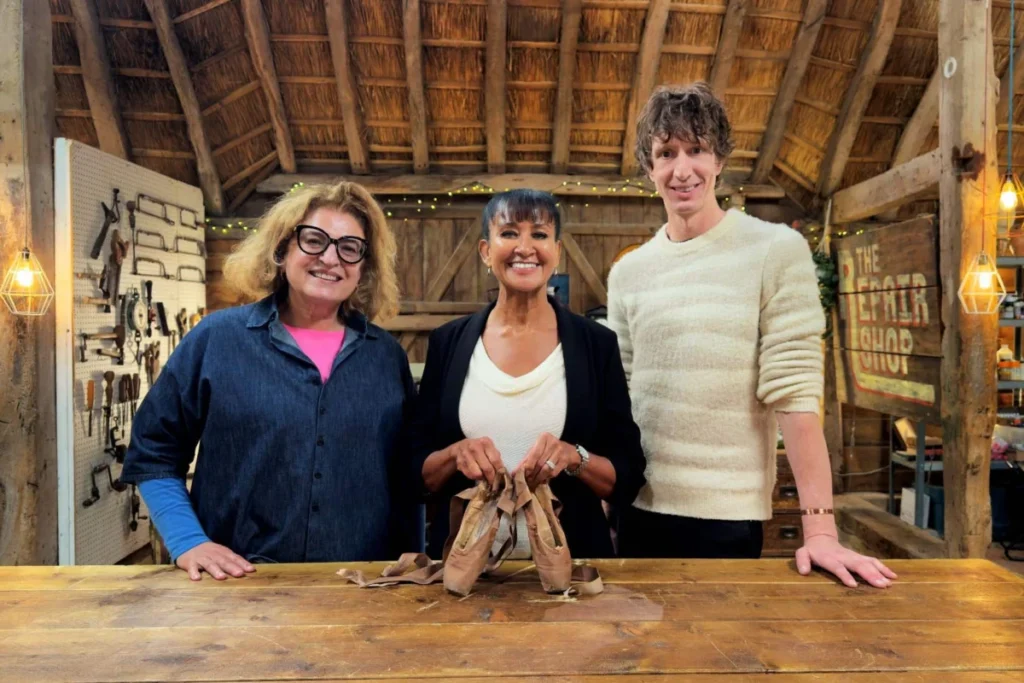

Britain’s first professional black ballerina, Julie Felix, expressed profound emotion, describing herself as "winded" and "breathless" upon witnessing the meticulous restoration of her cherished pointe shoes on the popular BBC reality programme, "The Repair Shop." These shoes are not merely footwear; they are tangible emblems of a groundbreaking career, representing Felix’s arduous journey, her triumphs over racial discrimination, and the unwavering support of her mother. The highly anticipated episode, which aired recently, brought to light a powerful narrative of resilience and the enduring legacy of a trailblazing artist.
A Symbol Restored: The Emotional Impact of Preservation
The moment of unveiling the restored pointe shoes proved deeply moving for Felix, who had brought them to the "Repair Shop" team hoping they could revive the delicate footwear she wore for her first professional solo performance four decades ago. The experts, specialising in the preservation of cherished heirlooms, understood the immense historical and personal value imbued within the satin and leather. For Felix, seeing them meticulously returned to their former glory triggered a cascade of memories and emotions. "I was winded, almost. I felt like somebody had just kicked me in the stomach. I was breathless for a few seconds," she recounted, visibly moved. "It was genuine tears, it really was. Even now when I’m talking about it, I’m getting a lump in my throat, any time I talk about my mum. I knew that these would be absolutely what she had wanted." This powerful reaction underscored the shoes’ status as a direct link to her past, her struggles, and most importantly, her mother’s enduring belief in her talent.
A Journey Forged in Adversity: Felix’s Early Career and Discrimination
Born in London of Caribbean heritage, Julie Felix’s path to becoming a professional ballerina was fraught with significant challenges, particularly the pervasive racial discrimination prevalent in the ballet world of the 1970s. Classical ballet, with its deeply ingrained European aesthetic and tradition, historically presented formidable barriers to dancers of colour. The idealised image of the "white swan" often meant that black dancers were systematically excluded, deemed not to fit the prescribed visual uniformity of a corps de ballet.

The British Ballet Landscape of the 1970s
During this era, British ballet companies were overwhelmingly white, and opportunities for black dancers were virtually non-existent. The few black dancers who pursued classical training often found themselves facing explicit and implicit biases. Felix vividly recalled a devastating encounter with a London ballet company that outright rejected her based on her ethnicity. She was told, with startling frankness, "we can’t have a brown ballet dancer in the line-up of the swans." This statement encapsulates the systemic racism that prevented countless talented individuals from pursuing their dreams and profoundly illustrates the hostile environment Felix navigated. Such rejections were not isolated incidents but were commonplace for aspiring dancers of colour globally, forcing many to either abandon their aspirations or seek opportunities abroad.
Seeking Opportunity with Dance Theatre of Harlem
Undeterred by the blatant discrimination she faced in her home country, Felix was compelled to seek opportunities overseas. This led her to the United States, a pivotal move that would redefine her career. In the 1970s, the Dance Theatre of Harlem (DTH) stood as a beacon of hope and excellence for black classical dancers. Founded in 1969 by Arthur Mitchell, the first African American male dancer to become a permanent member of the New York City Ballet, DTH was established in the wake of Dr. Martin Luther King Jr.’s assassination. Mitchell’s vision was to create a world-class ballet company and school that would provide opportunities for dancers of colour and challenge the conventional norms of classical ballet. DTH quickly gained international acclaim, not only for its artistic brilliance but also for its groundbreaking commitment to diversity and inclusion. For Felix, joining DTH, a New York-based, all-black ballet company, offered not just a contract but a sanctuary where her talent was celebrated, not scrutinised based on her skin colour. This move was a testament to her tenacity and a critical turning point in her professional life, allowing her to hone her craft in an environment that nurtured her potential.
Triumphant Return: Royal Opera House Debut and Mother’s Legacy
After seven years of dedicated training and performance with Dance Theatre of Harlem, Julie Felix’s journey came full circle in a profoundly symbolic way. The company embarked on a tour that brought them to London, culminating in a historic performance at the prestigious Royal Opera House. For Felix, this was not just another venue; it was a return to the city that had once rejected her, a chance to perform on one of the world’s most revered stages. It was during this momentous occasion that she was offered her first solo role, a significant milestone in any ballerina’s career, but particularly poignant for Felix given her past experiences.
The Significance of "Tan-Coloured" Pointe Shoes
For this pivotal performance, Felix took to the stage in "tan-coloured" pointe shoes. This detail, seemingly minor, carries immense significance. Traditionally, pointe shoes were exclusively available in shades of pink, forcing dancers of colour to "pancake" or dye their shoes to match their skin tone – a laborious and often imperfect process. Felix’s specifically dyed tan shoes represented a deliberate act of self-representation and a subtle defiance of ballet’s rigid aesthetic norms. They were an extension of her identity, allowing her to perform authentically.

The performance at the Royal Opera House was a culmination of years of hard work, perseverance, and sacrifice. It was a moment of profound personal validation, made even more special by the presence of her parents in the audience. Felix recalled the emotional weight of that night: "These were the shoes that I wore when mum and dad came to see me perform on the stage of the Royal Opera House. And I said, ‘mum, you were right. I’ve made it, and I’m here.’ Right here on this table, these symbolise all the work, effort, love and devotion from my mother." Her mother, as Felix often recounts, was her staunchest supporter, a source of unwavering encouragement through every setback and triumph. This performance was not just for herself, but a profound tribute to her mother’s belief in her dreams, a testament to the power of familial support in overcoming seemingly insurmountable obstacles.
The Emotional Unveiling on The Repair Shop
The narrative of Julie Felix’s pointe shoes reached its poignant peak on "The Repair Shop." The show, renowned for its delicate balance of craftsmanship and emotional storytelling, provided the perfect platform for this historical artefact to be given a new lease of life. Experts Lucia Scalisi, the painting conservator often involved with delicate fabrics, and Dean Westmoreland, the leather specialist, were entrusted with the challenging task of restoring the decades-old shoes. Their work went beyond mere repair; it was an act of reverence for an item laden with personal and historical significance.
The Craftsmanship of Scalisi and Westmoreland
The condition of the pointe shoes, having been worn during a professional performance 40 years prior, would have presented considerable challenges. Pointe shoes are inherently fragile, designed for intense, temporary use. Over time, the satin exterior can fray, the internal ‘box’ (made of layers of fabric, paper, and glue) can weaken, and the leather sole can become brittle. Scalisi and Westmoreland likely employed a combination of delicate cleaning techniques, re-stitching, and reinforcement to stabilise the structure without compromising its original integrity. Their expertise lies not just in technical skill, but in understanding the narrative embedded within each object, ensuring that the restoration honours its history. The experts, knowing the story behind the shoes, would have approached the task with an acute awareness of its emotional resonance for Felix and its broader significance for ballet history.
A Mother’s Lasting Wish
The emotional impact of the restored shoes on Felix was palpable, extending beyond mere nostalgia. It was a direct connection to her mother’s wishes. Felix shared a deeply personal anecdote: "She asked me, ‘Julie, when you’re finished with these shoes, please can you get them fixed in such a way that I can put them on a display somewhere in the house as memory of my coming to see you perform at the Royal Opera House’." This request from her mother, years prior, elevated the restoration from a personal desire to a sacred duty. The completion of this task brought a profound sense of closure and honour to her mother’s memory. "That really choked me up because I just put my heart on my chest the way I did when I stood on the stage when she was alive. I looked up at the seats in the Gods, and I just said, ‘mum, I’m here, I’ve done it’ and it took me back." The shoes, now beautifully preserved, stand as a permanent tribute to her mother’s unwavering support and vision. They are now proudly displayed in Felix’s home, a daily reminder of her journey and her mother’s love. "I see them every day, when I’m home all the time, and it doesn’t take much for my eye to catch them. And I just think, ‘mum, look at these’. That’s what she wanted, and she wanted them in her house so she could see them every day. So, thank you The Repair Shop."

A Legacy Beyond the Stage: Advocacy and Recognition
Julie Felix’s impact extends far beyond her groundbreaking performances as Britain’s first professional black ballerina. Her decades-long career has been characterised by a steadfast dedication to promoting diversity and inclusion within the arts, particularly for black individuals aspiring to careers in dance. Her personal experiences with discrimination ignited a passion for advocacy, leading her to become a dancer, teacher, coach, and author, all with the overarching goal of dismantling barriers and creating more equitable opportunities.
Promoting Diversity in Dance
Felix’s work in dance education has been instrumental in inspiring and mentoring countless young dancers of colour. She has actively worked to demystify the ballet world, making it more accessible and inclusive. Her efforts have involved advocating for changes in training methodologies, promoting diverse repertoire, and challenging the Eurocentric aesthetic that has historically dominated classical ballet. By sharing her story and offering practical guidance, she has empowered a new generation to pursue their artistic ambitions without being limited by their background or skin colour. Her legacy is not just in her own achievements but in the pathways she has helped forge for others. In an era where discussions about diversity, equity, and inclusion are more prominent than ever, Felix’s lifelong commitment stands as a powerful example of sustained activism.
The 2024 MBE Honour
In recognition of her profound contributions to the world of dance and her tireless efforts in dance education, Julie Felix was deservedly made an MBE (Member of the Order of the British Empire) in 2024. This prestigious honour from the British Crown signifies the national acknowledgment of her pioneering role and her enduring influence. The MBE not only celebrates her personal accomplishments as a ballerina but also validates her vital work in fostering a more inclusive and representative dance community. It underscores the importance of acknowledging and celebrating individuals who break barriers and dedicate their lives to social progress through art.
Broader Implications: Representation and the Evolving Face of Ballet
Julie Felix’s story, amplified by "The Repair Shop," holds significant broader implications for the arts, society, and the ongoing conversation about representation. Her journey serves as a powerful reminder of the historical injustices faced by black artists and the resilience required to overcome them.

The Enduring Power of The Repair Shop
"The Repair Shop" has carved out a unique niche in television, becoming more than just a programme about fixing old items. It is a show about human connection, memory, and the stories that objects carry. By featuring items like Julie Felix’s pointe shoes, it brings to the mainstream a diverse range of historical narratives that might otherwise remain untold. The emotional investment of both the experts and the viewers in these personal histories creates a bridge between individual experiences and collective understanding. In Felix’s case, the show provided a platform to illuminate the struggles of black dancers in a predominantly white art form and to celebrate the quiet heroism of those who persisted. This amplifies the message of diversity and highlights the importance of preserving personal histories that contribute to a richer, more inclusive national story.
The ballet world, while still facing challenges, has made strides in recent years towards greater diversity. Dancers like Misty Copeland, the first African American female principal dancer with American Ballet Theatre, have become global icons, inspiring millions and demonstrating that talent knows no racial bounds. However, the path laid by pioneers like Julie Felix was crucial in paving the way for these contemporary successes. Her experiences underscore the long and arduous battle for acceptance and equal opportunity, and her story remains a vital touchstone in the ongoing dialogue about systemic change within classical arts. The emotional response to her story on "The Repair Shop" reflects a societal yearning to acknowledge past injustices and celebrate the trailblazers who defied them.
Conclusion: An Inspiration for Future Generations
Julie Felix’s appearance on "The Repair Shop" is far more than a television segment; it is a profound historical moment, encapsulating a lifetime of dedication, struggle, and triumph. Her restored pointe shoes are now not only a cherished family heirloom but a symbol for countless aspiring dancers of colour – a tangible representation of perseverance, the breaking of barriers, and the enduring power of dreams. Her story reminds us that art, at its best, reflects the full spectrum of human experience, and that true progress lies in embracing and celebrating every voice. By honouring her past, Felix continues to inspire future generations to pursue their passions, knowing that their contributions are invaluable and their stories deserve to be told and preserved.