
Windsor Castle was abuzz with a sense of occasion and familial unity as members of the Royal Family gathered for the traditional Easter Sunday service at St. George’s Chapel. Among them, royal bride-to-be Harriet Sperling made a notable appearance, offering a glimpse into the burgeoning integration of her family into royal life just weeks before her wedding to Peter Phillips, the King’s nephew. This significant public outing, attended by key members of the monarchy, underscored the approaching milestone in the lives of Sperling and Phillips, who recently announced their wedding date, signalling a new chapter for the extended royal family.
A Pre-Wedding Debut at a Royal Tradition
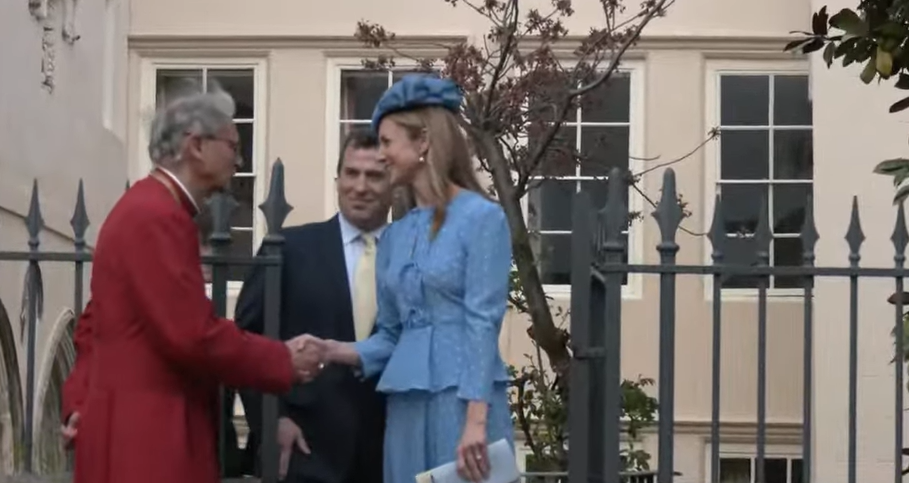
Harriet Sperling, radiating quiet elegance in a blue ensemble, walked alongside Peter Phillips and his daughters, Savannah (15) and Isla (14), down the historic hill from Windsor Castle to St. George’s Chapel. This procession, a cherished annual tradition for the Royal Family, provided a poignant backdrop for Sperling’s public engagement as a future member. Her presence signifies a warm embrace from the family, particularly as she spent time with her soon-to-be mother-in-law, Princess Anne, and her husband, Sir Tim Laurence, who also attended the service. The inclusion of Sperling’s teenage daughter further highlighted the blended family dynamic that will soon be formalised through marriage.
The Easter service at St. George’s Chapel, a venue steeped in royal history and often the site of significant royal events, including weddings and christenings, provided a solemn yet joyful setting. Historically, Easter has been a time for the Royal Family to come together, reflecting on the religious significance of the day while also engaging with the public. This year’s attendance was closely watched, particularly given recent events and the ongoing presence of King Charles III and Queen Camilla, who are continuing their public duties following a period of reduced engagements.
Key Royal Attendees and Notable Absences
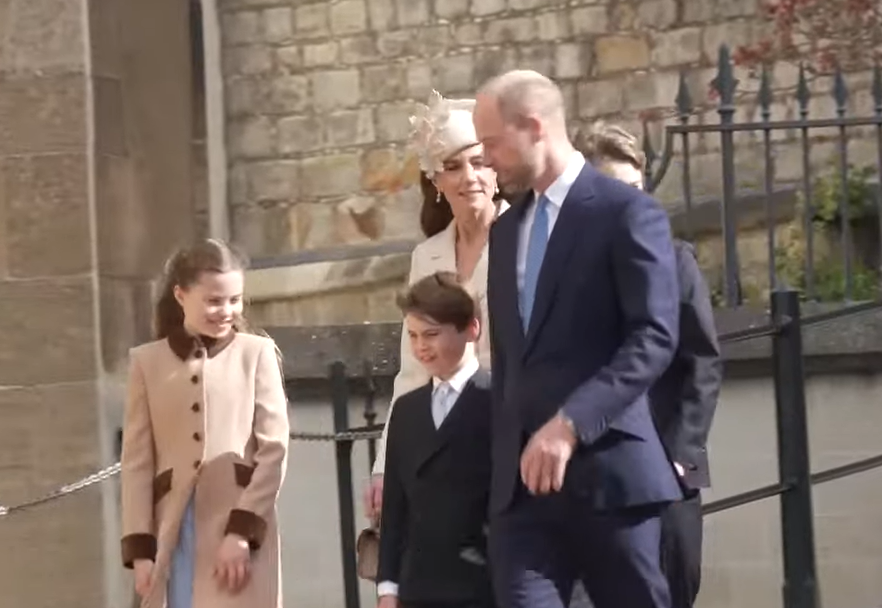
The congregation at St. George’s Chapel was a testament to the enduring importance of tradition within the monarchy. Leading the procession were the Prince and Princess of Wales, accompanied by their children, Prince George and Princess Charlotte, who looked after her younger brother, Prince Louis. The interaction between Prince Louis and his grandfather, King Charles, was a particularly heartwarming moment. As the King made his way into the chapel, he paused to bestow a gentle pat on seven-year-old Louis, a public display of the strong familial bond. This affectionate gesture recalled earlier public moments of tenderness between the King and his grandson, such as Louis famously sitting on his grandfather’s lap during the Platinum Jubilee concert in June 2022, underscoring their close relationship.
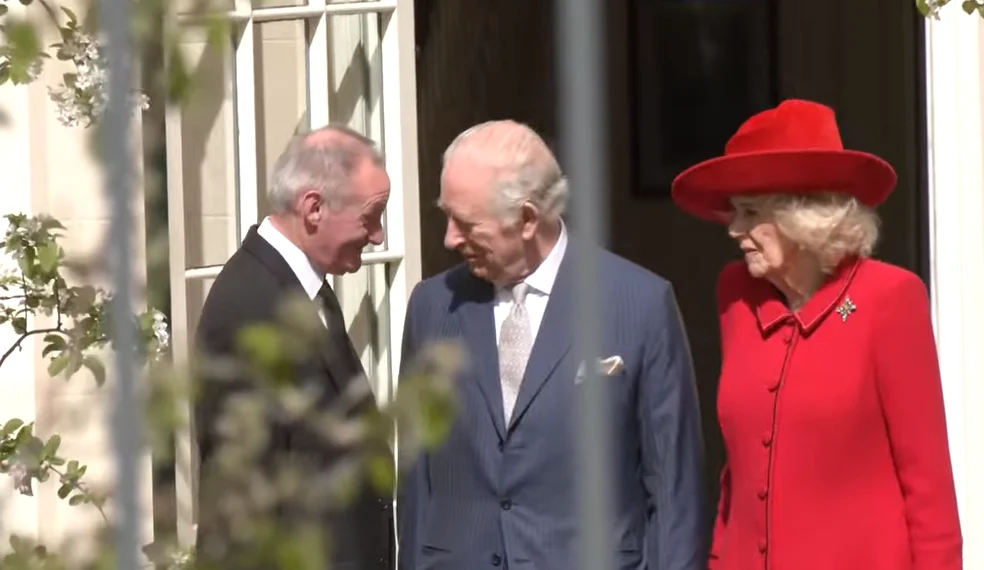
King Charles and Queen Camilla arrived at the chapel by car, leading the rest of the Royal Family into the service. Their attendance, following a period of convalescence for the King, was a significant public statement of their continued commitment to their royal duties and their presence at key national and religious events. Following the service, the King and Queen emerged to greet a crowd of well-wishers gathered outside. Queen Camilla, graciously accepting a bouquet of spring flowers, extended Easter greetings before embarking on a walkabout, a customary engagement that allows the monarch to connect with the public. The King and Queen then returned to the castle by car, while other members of the Royal Family, including Sperling and Phillips, made their way back on foot, offering a more relaxed and informal moment for observers.
While the gathering showcased a strong turnout, a few absences were noted. Zara Tindall, Princess Anne’s daughter and Peter Phillips’ sister, along with her family, were not present for this year’s Easter celebrations. Additionally, the Duchess of Edinburgh, Sophie, was understood to be unwell, leading to her absence. Her husband, Prince Edward, the Duke of Edinburgh, and their son, James, Earl of Wessex, did attend. However, their daughter, Lady Louise Windsor, was unable to join as she is reportedly focused on her final studies at St. Andrew’s University. These absences, while noted, did not detract from the overall sense of unity and continuity presented by the attending members of the Royal Family.
A Glimpse into the Wedding Preparations
The Easter service served not only as a religious observance but also as a visible marker of the approaching wedding of Harriet Sperling and Peter Phillips. The couple, who officially announced their wedding date just days prior, are set to tie the knot on June 6th at All Saints Church in Kemble, a village near Cirencester in Gloucestershire. This location holds particular significance as it is close to Gatcombe Park, the country estate of Princess Anne, where both Peter Phillips and his sister, Zara Tindall, also reside. The choice of venue underscores a desire for a wedding that is both meaningful to the couple and situated within their familial and personal landscape.
The announcement of their wedding date, following a period of speculation, has generated considerable interest. Peter Phillips, the elder son of Princess Anne and her former husband Captain Mark Phillips, is 18th in line to the throne. His marriage to Sperling, a background that differs from previous royal spouses, has been met with public interest and anticipation. The couple’s engagement was announced in December, and the subsequent wedding plans are now firmly in motion. The Easter service provided a valuable opportunity for Sperling to solidify her presence within the royal fold, observed by the public and her future in-laws alike, as the countdown to her wedding intensifies.
Supporting Data and Context
The Royal Family’s participation in Easter services at St. George’s Chapel dates back many decades, symbolising continuity and the enduring importance of faith in the monarchy. St. George’s Chapel itself, founded in 1348 by King Edward III, is a Grade I listed building and the spiritual home of the Order of the Garter. Its historical significance amplifies the weight of royal ceremonies held within its walls. The chapel has hosted numerous royal weddings, including those of Prince Harry and Meghan Markle, and Princess Eugenie and Jack Brooksbank, as well as many royal funerals and christenings.
Peter Phillips, born in 1977, is the eldest grandchild of Queen Elizabeth II. He and his ex-wife, Autumn Kelly, have two daughters, Savannah and Isla, who are Princess Anne’s granddaughters. Savannah, born in 2010, is currently 16th in line to the throne, and Isla, born in 2012, is 17th. Harriet Sperling’s own background, while not extensively detailed in public, is understood to be outside the direct line of royal or aristocratic heritage, reflecting a modern trend within the monarchy towards greater diversity in its familial connections.
Analysis of Implications
Harriet Sperling’s prominent inclusion in the Royal Family’s Easter celebrations suggests a deliberate effort to integrate her into the public eye and the familial structure. This early and visible acceptance by senior royals, particularly Princess Anne and King Charles, signals a positive and supportive environment as the wedding approaches. For Peter Phillips, this marks a significant personal transition, moving from a more private life to one that is increasingly intertwined with the public duties and traditions of the monarchy.
The timing of the wedding, in early summer, positions it as one of the significant royal events of the year, following the recent Coronation of King Charles III and Queen Camilla. While not a direct line to the throne, Peter Phillips’ position as the eldest grandchild of the late Queen Elizabeth II and the son of Princess Anne gives his marriage a notable place within the broader royal narrative. The choice of a church in Gloucestershire, near Gatcombe Park, suggests a preference for a more intimate and family-centric ceremony, away from the grandeur of London, perhaps echoing the more private nature of some recent royal weddings.
The presence of younger royals, such as the Prince and Princess of Wales’ children, at the Easter service also highlights the future of the monarchy. The interactions between the children and their parents and grandparents offer glimpses into the upbringing and values being instilled in the next generation. The visible affection between King Charles and Prince Louis, for instance, serves as a gentle reminder of the personal bonds that underpin the institution, even amidst its public and ceremonial duties.
In conclusion, Harriet Sperling’s appearance at Windsor for the Easter service was more than just a personal milestone; it was a carefully orchestrated step in her integration into the Royal Family. It provided a public preview of the new union and a reaffirmation of traditional royal observances, set against the backdrop of an evolving monarchy. As the wedding date draws nearer, these moments of public togetherness will undoubtedly continue to shape the narrative surrounding this upcoming royal marriage.