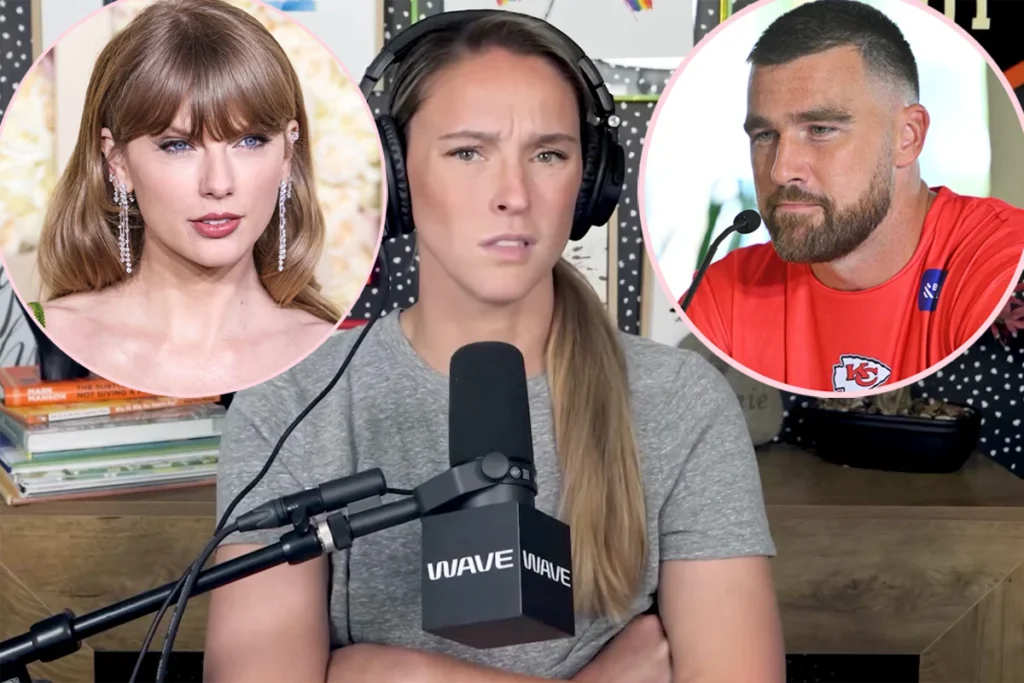

The digital sphere has erupted in debate following comments made by Kylie Kelce, wife of recently retired NFL star Jason Kelce, regarding persistent inquiries about the rumored wedding between her brother-in-law, Travis Kelce, and pop superstar Taylor Swift. Speaking on her podcast, Not Gonna Lie, Kylie expressed palpable frustration over the constant barrage of questions directed at her and her mother-in-law, Donna Kelce, about the high-profile couple’s potential nuptials. Her candid remarks, which included a blunt dismissal of any future inquiries, have ignited a firestorm of reactions across social media, polarizing audiences between those who empathize with her plea for privacy and those who criticize what they perceive as hypocrisy given the family’s increased public visibility.
The Genesis of Frustration: Kylie Kelce’s Candid Podcast Remarks
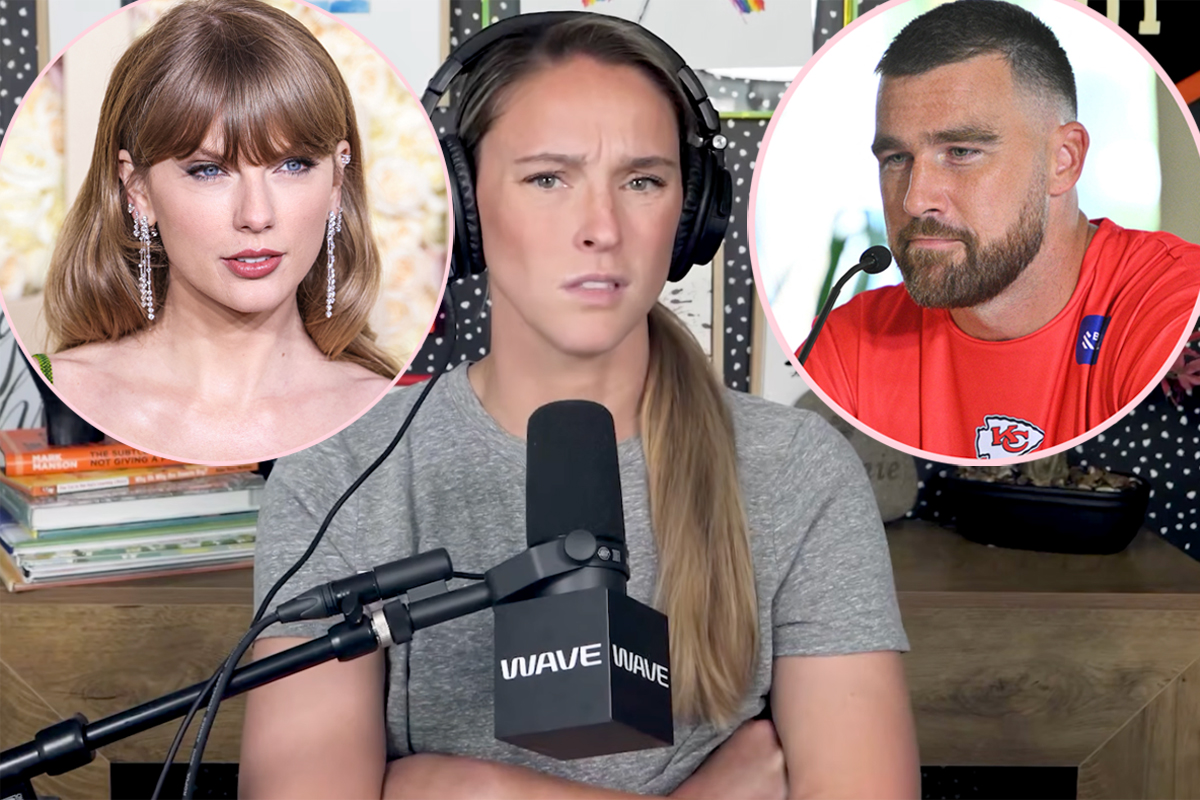
During a recent episode of Not Gonna Lie, Kylie Kelce addressed listeners directly, asserting her exasperation with the relentless questioning surrounding Taylor Swift and Travis Kelce’s romantic future. "Before I get into the questions I will answer, I just wanna say to literally everybody – I know it usually comes from a good place, not always – but quit asking me and my mother-in-law about upcoming nuptials," she stated emphatically. Her statement underscored a clear boundary, emphasizing that even if she possessed private information, she would not disclose it. "Nobody’s f**king telling you anything! Stop f*ing asking me. Stop asking my mother-in-law. … Here’s the deal: Even if I did have any information, I’m not fking telling you. That’s private information, if I had it. Private information between family." To further punctuate her point, Kylie humorously, yet pointedly, suggested her new standard response to such questions would be, "Suck my ass." This explicit expression of annoyance quickly became a focal point for public discussion, spreading rapidly across various online platforms.
The comments, delivered with a mix of humor and genuine irritation, highlighted the immense pressure and scrutiny the Kelce family has faced since the relationship between Travis Kelce, a tight end for the Kansas City Chiefs, and Taylor Swift, one of the world’s most influential cultural figures, became public in late 2023. What began as a widely celebrated sports-meets-pop culture romance swiftly transformed the Kelce family, already well-known in sports circles due to Jason and Travis’s NFL careers and their popular New Heights podcast, into global celebrities.
The Swift-Kelce Effect: A Family Thrust Into the Global Spotlight
The relationship between Taylor Swift and Travis Kelce has undoubtedly been one of the most talked-about cultural phenomena of the past year. Their romance garnered unprecedented media attention, merging the colossal fan bases of the NFL and Swift’s ‘Swifties.’ This union catapulted the entire Kelce family, including Jason, Kylie, and their mother Donna, into an entirely new dimension of public scrutiny. Previously, the Kelce brothers were celebrated athletes, known for their on-field prowess and the engaging dynamic of their New Heights podcast, which offered a glimpse into their sibling rivalry and professional lives. Donna Kelce had become a beloved figure, often referred to as "Mama Kelce," for her unwavering support of both sons. Kylie, as Jason’s wife, maintained a more private, yet still visible, profile, often appearing at games and supporting her husband’s endeavors.
The "Swift-Kelce effect" dramatically amplified their exposure. Attendance at Chiefs games by Taylor Swift, often accompanied by Donna Kelce and sometimes Kylie, became global news, generating immense social media buzz and driving record viewership for NFL broadcasts. This sudden surge in fame had a direct impact on their public platforms. The New Heights podcast, already successful, saw its listenership skyrocket, attracting millions of new fans eager for any tidbit about Travis’s personal life or simply drawn to the family’s authentic dynamic. This increased visibility also paved the way for Kylie Kelce to launch her own podcast, Not Gonna Lie, providing her with an independent platform to share her perspectives.
The timing of Kylie’s podcast launch and its premise—offering candid takes—placed her squarely in the intersection of her family’s burgeoning celebrity status and her own desire for a voice. However, this proximity to one of the world’s most famous relationships also meant inheriting the relentless public curiosity that accompanies it. While the family has largely embraced their newfound fame, appearing in commercials, interviews, and documentaries, the boundary between public persona and private life has become increasingly blurred, leading to the kind of exasperation Kylie expressed.
Public Reaction: Criticism and Support Divide the Internet
Kylie Kelce’s outspoken comments triggered a swift and multifaceted response across social media platforms, highlighting the complex relationship between celebrity, privacy, and public expectation in the digital age. A significant portion of online commentators reacted critically, accusing Kylie of hypocrisy given her family’s perceived embrace of their elevated public profile.
Many critics pointed to the undeniable correlation between the Kelce family’s increased popularity and the Swift-Kelce romance. Comments such as, "‘New Heights’ was an average podcast. Sort of amateurish. It didn’t get popular until Travis started dating Taylor. Kylie used that to leverage her own podcast. The only reason anyone listens to Kylie is Taylor Swift. The ego here is incredible," resonated with a segment of the audience. Others echoed this sentiment, stating, "No one would listen to her if Travis wasn’t marrying Taylor, no one was begging for Kylie content before," and "I mean come on the only reason she is behind a mic is cuz of that relationship." These criticisms underscore the perception that the Kelce family, including Kylie, has benefited immensely from their association with Taylor Swift, and therefore, should anticipate and perhaps tolerate the public’s corresponding interest.
One particularly cutting remark drew a parallel to a widely known pop culture reference: "Kylie Kelce telling people to stop asking her about Taylor Swift and Travis Kelce’s wedding on the podcast she started for the sole purpose of monetizing her relationship/proximity to Taylor Swift and Travis Kelce," accompanied by a GIF mocking Prince Harry and Meghan Markle’s "Worldwide Privacy Tour" from South Park. This comparison, while satirical, effectively encapsulated the sentiment that Kylie’s plea for privacy was contradictory to her chosen public platform and its perceived origins. The implication was that by leveraging the family’s fame for her own ventures, she had implicitly agreed to a certain level of public inquiry, even into private family matters.
Conversely, a substantial number of social media users rallied in support of Kylie Kelce, applauding her for setting clear boundaries and advocating for personal space. Supporters argued that regardless of how one gains public visibility, the right to privacy, especially concerning sensitive family matters like weddings, remains paramount. Comments such as, "SAY IT LOUDER FOR THE PEOPLE IN THE BACK. Queen Kylie… go off!" and "Love her SO MUCH. She truly is a real one," demonstrated a strong sense of solidarity. Many users expressed understanding for her frustration, recognizing the overwhelming nature of constant public intrusion. "Good for her for telling them off," and "100%. Leave Momma Kelce alone," were common sentiments, emphasizing the perceived invasiveness of the questions directed not just at Kylie but also at Donna Kelce.
This dichotomy in public reaction highlights a broader societal debate about the responsibilities and expectations placed upon public figures and their families. While some believe that celebrity status inherently comes with a loss of certain privacy rights, others champion the right of individuals, regardless of their public profile, to protect their personal lives from undue scrutiny.
The Broader Implications: Navigating Privacy in the Digital Age
Kylie Kelce’s experience is emblematic of the challenges faced by individuals, particularly those connected to mega-celebrities, in navigating the complexities of public life in the digital age. The internet, while offering unparalleled platforms for connection and self-expression, also serves as an insatiable engine for information, often blurring the lines between public interest and private intrusion.
The expectation that public figures, or those closely associated with them, should tolerate relentless questioning about their personal lives stems from a long-standing tradition of celebrity journalism. However, the advent of social media has democratized this inquiry, allowing anyone with an internet connection to directly engage with, or comment on, the lives of public figures. This creates an environment where boundaries are constantly tested and often breached.
For individuals like Kylie Kelce, who gain prominence through their association with highly famous relatives, the situation is particularly nuanced. While the "Swift-Kelce effect" has undoubtedly opened doors and amplified platforms, it also comes with the burden of public ownership over aspects of their lives. Media analysts often discuss the "double-edged sword" of celebrity: the benefits of exposure and opportunity are often inextricably linked to a loss of privacy and intense scrutiny.
Public relations experts frequently advise celebrities and their families on strategies to manage public interest while safeguarding personal boundaries. These strategies often include carefully curated social media presences, selective engagement with media, and, at times, direct statements like Kylie’s. The effectiveness of such direct appeals, however, is often debated. While they can resonate with sympathetic audiences, they can also inadvertently fuel further speculation or draw more attention to the very topic the individual wishes to avoid, as some critics of Kylie’s remarks suggested.
Furthermore, the public’s fascination with celebrity relationships, particularly those involving figures as iconic as Taylor Swift, is a powerful force. This fascination is driven by a blend of aspirational fantasy, voyeuristic curiosity, and a sense of connection to figures who often feel larger than life. For fans, every detail, from concert appearances to potential wedding plans, becomes part of a collective narrative they feel invested in. This collective investment, while harmless in many respects, can translate into an overwhelming demand for information, placing immense pressure on those within the celebrity’s orbit.
The Kelce family, in particular, has managed to cultivate an image of authenticity and relatability, which has only intensified public affection and, consequently, public curiosity. Their willingness to share aspects of their lives, particularly through the New Heights podcast, has created a bond with fans that, while valuable, also makes it more challenging to draw clear lines when private matters are involved.
A Continuous Tug-of-War: The Future of Celebrity Privacy
As the relationship between Taylor Swift and Travis Kelce continues to unfold, and as the Kelce family maintains its significant public profile, the tension between public interest and private life is likely to persist. Kylie Kelce’s passionate plea on her podcast is not an isolated incident but rather a symptom of a larger, ongoing struggle faced by public figures in an increasingly interconnected and information-hungry world.
The debate sparked by her comments serves as a valuable reminder of the evolving dynamics of celebrity culture. It prompts questions about the ethical responsibilities of media outlets, the role of social media in shaping public discourse, and the fundamental right to privacy that individuals, regardless of their fame, are entitled to. While the public’s desire for details about a high-profile wedding is understandable, Kylie Kelce’s firm stance underscores that even those closest to the spotlight have a right to protect their personal moments and maintain boundaries within their family. Whether her direct approach will deter future inquiries or inadvertently invite more remains to be seen, but it has certainly ignited a crucial conversation about the price of fame in the modern era. The "Suck my ass" retort, while crude to some, is a clear and unequivocal statement that the private lives of public figures are not always open for public consumption, no matter the level of fascination.