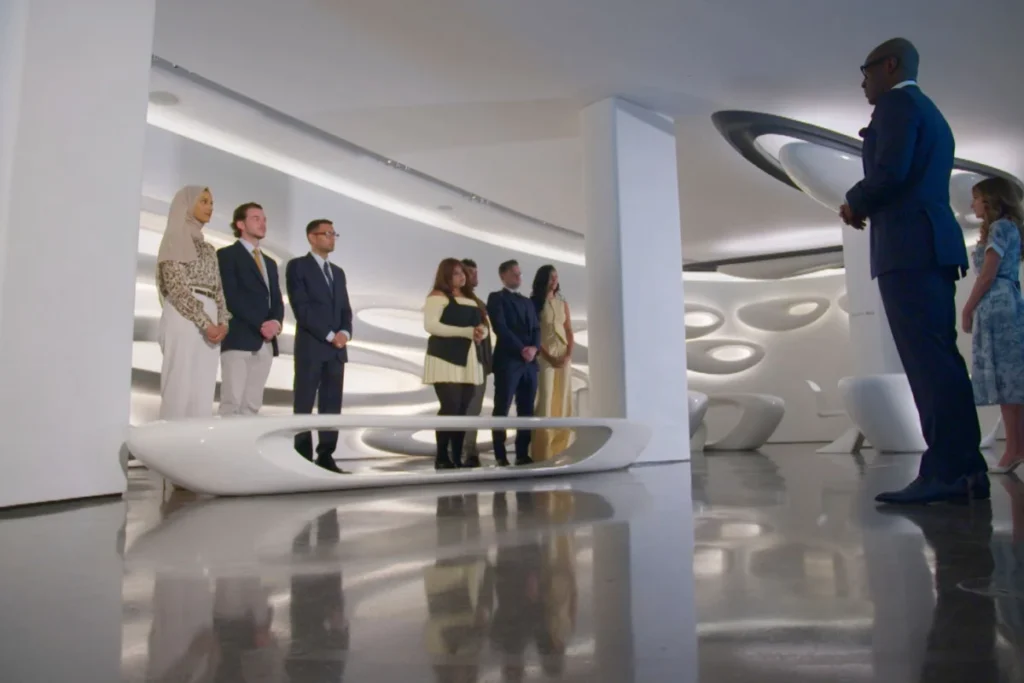

The latest instalment of the acclaimed BBC business reality series, The Apprentice, concluded with a dramatic double exit, narrowing the fiercely competitive field to its final five contenders. In an unprecedented turn of events, East London estate agent Kieran McCartney voluntarily departed the competition after failing to deliver on a bold promise made to Lord Sugar, while student wellbeing adviser Rothna Akhtar, also from East London, was fired following her team’s lacklustre performance in the week’s challenging task. These departures mark a pivotal moment in the series, intensifying the race for the coveted £250,000 investment and a business partnership with the renowned entrepreneur.
The Apprentice: A High-Stakes Business Arena
The Apprentice, a staple of British television since its inception in 2005, continues to captivate audiences with its blend of business acumen, personality clashes, and high-pressure tasks. The show’s premise is straightforward yet compelling: a group of aspiring entrepreneurs competes over several weeks for a substantial investment from Lord Sugar, who is seeking a new business partner. Each week, candidates are divided into two teams and set a business challenge designed to test their skills in sales, marketing, negotiation, and leadership. Failure often results in a tense boardroom showdown where Lord Sugar, flanked by his trusted advisors Karren Brady and Tim Campbell, scrutinises their performance before making the ultimate decision to fire a candidate. The stakes are incredibly high, with the ultimate prize being not just financial backing but the invaluable mentorship and partnership of one of the UK’s most successful businessmen. The pressure cooker environment frequently exposes strengths and weaknesses, often leading to memorable triumphs and spectacular failures.
The Pet Industry Predicament: A Week of Canine Catastrophes and Feline Flops

This week’s task plunged the candidates into the booming pet industry, a sector worth billions in the UK alone, requiring them to design an innovative pet product and craft a compelling social media campaign to pitch to leading retailers. The objective was clear: create a desirable product, market it effectively, and secure orders. This challenge demanded creativity, strategic thinking, and strong salesmanship – qualities Lord Sugar values above all else. The task highlighted the multifaceted nature of modern business, where product development, digital marketing, and traditional sales pitches must converge seamlessly.
Teams were tasked with identifying a market gap, conceptualising a product, branding it, and then presenting their vision. The social media campaign aspect brought a contemporary twist, with former Made In Chelsea star Zara McDermott making a cameo appearance to offer her expertise in digital promotion. Her involvement underscored the critical role social media now plays in brand building and consumer engagement, even for nascent businesses. Candidates were expected to leverage these insights to create impactful campaigns that resonated with the target audience of pet owners. The task culminated in high-stakes pitches to major UK retailers, where the teams had one shot to impress and secure vital orders, the ultimate measure of their success or failure in the eyes of Lord Sugar.
Kieran McCartney’s Risky Wager and Unexpected Exit
Kieran McCartney, an East London estate agent known for his boisterous personality and confident demeanour, found himself in a precarious position after making a dramatic declaration to Lord Sugar in the preceding week’s boardroom. He had vowed to leave the competition if, as project manager, he failed to lead his team to victory in the subsequent task. This high-risk, high-reward strategy, though demonstrating audacious confidence, ultimately backfired. As his team’s performance in the pet product task fell short, Lord Sugar, a man renowned for holding individuals accountable for their promises, was left with little choice but to accept McCartney’s self-imposed terms.
McCartney’s decision to walk marked a rare occurrence in The Apprentice‘s history, highlighting the immense pressure and the personal stakes involved for the candidates. Post-exit, McCartney reflected on his experience, stating, "I think I am quite loud and out there and I am quite an easy person to blame if it all goes wrong because I put my ideas out, whereas some people don’t get noticed as much." This candid admission offers insight into his perceived role within the group dynamics and the potential pitfalls of being a dominant voice. He further revealed, "I could have stayed if I fought for my spot," suggesting a moment of self-doubt or perhaps a realisation that his earlier promise had boxed him into an corner. Despite the premature departure, McCartney recalled his time on the show with fondness, particularly highlighting his partnership with fellow candidate Lawrence Rosenberg, describing their moments together as "hilarious" and "great fun." His initial business aspiration was to create his own estate agency business, leveraging his industry experience.

Rothna Akhtar’s Disappointment at the Eleventh Hour
Meanwhile, Rothna Akhtar, a student wellbeing adviser also hailing from East London, faced a more traditional exit, being fired by Lord Sugar for her team’s failure to secure any sales during the critical pitching stage of the pet product task. Despite her entrepreneurial spirit and a clear business vision – to expand her bakery business – her performance in the week’s challenge proved insufficient to convince Lord Sugar of her potential as a business partner. The inability to sell products directly impacts the bottom line, a cardinal sin in Lord Sugar’s boardroom, where commercial viability is paramount.
Akhtar expressed profound disappointment at her firing, particularly given her proximity to the final stages of the competition. "It was disappointing in that immediate moment, but it wasn’t a complete shock because I was standing against Dan (Miller), who I knew had a really good business," she commented, acknowledging the strength of her fellow candidate. The final five is a critical juncture, often preceding the intense interview stage, making her exit especially "gut-wrenching." She added, "I was in shock because I was so close to the final five and I just felt this wave of disappointment. But slight relief because it’s an intense process." This sentiment underscores the arduous nature of the competition, where the psychological toll can be as demanding as the business challenges themselves. Despite the setback, Akhtar reflected positively on her time, recalling a significant personal victory in week five when she successfully led her team as project manager. "I didn’t think I could do it, but I was very proud of myself and I think that will forever be a solid memory that I’ll hold for the rest of my life," she shared, highlighting the personal growth derived from the experience.
The Road to the Final Five: A Chronology of Intensifying Competition
The journey to the final five has been a rigorous one, beginning with a larger cohort of hopefuls, each bringing their unique business ideas and personalities to the table. Each week, candidates have been tested across diverse industries, from corporate events and advertising campaigns to product design and international sales. The show’s format progressively raises the stakes, with tasks becoming more complex and the margin for error shrinking.

Early tasks often serve to identify the stronger leaders and more effective salespeople, while later challenges demand a more refined strategic approach and the ability to work under immense pressure. Lord Sugar’s firing decisions are often based not just on the performance in a single task, but on a cumulative assessment of a candidate’s overall potential, their business plan, and their ability to integrate into his investment portfolio. The departure of candidates like McCartney and Akhtar at this advanced stage underscores the escalating demands of the competition and Lord Sugar’s increasingly discerning eye. The series has systematically weeded out those lacking in key areas, leaving only the most resilient and business-savvy individuals to contend for the ultimate prize.
Implications for the Remaining Candidates and the Path Ahead
With the competition now whittled down to just five candidates, the intensity is set to reach unprecedented levels. This stage of The Apprentice is traditionally known for its heightened scrutiny, as Lord Sugar begins to seriously consider who among the remaining few possesses the ideal combination of entrepreneurial flair, resilience, and a viable business proposition to become his next partner. The remaining candidates will undoubtedly feel the increased pressure, knowing that every decision, every pitch, and every boardroom interaction could be their last.
The next crucial stage of the competition typically involves the notorious interview week, where external business experts rigorously scrutinise each candidate’s business plan and personal character. This phase is often considered one of the most brutal, designed to expose any weaknesses or inconsistencies in their proposals. Following the interviews, Lord Sugar will select his final two, who will then face off in a grand finale, presenting their refined business plans to a packed audience before Lord Sugar makes his final, life-changing decision. The prize – £250,000 of investment and a 50/50 partnership with Lord Sugar – represents a transformative opportunity for any aspiring entrepreneur, offering not just capital but access to unparalleled business expertise and a vast network. The series continues to prove that while the journey is fraught with challenges and disappointment for many, the ultimate reward can be a springboard to significant commercial success.
The Apprentice returns on BBC One next Thursday at 9pm, promising more boardroom drama and high-stakes business challenges as the final five battle it out for Lord Sugar’s coveted investment.