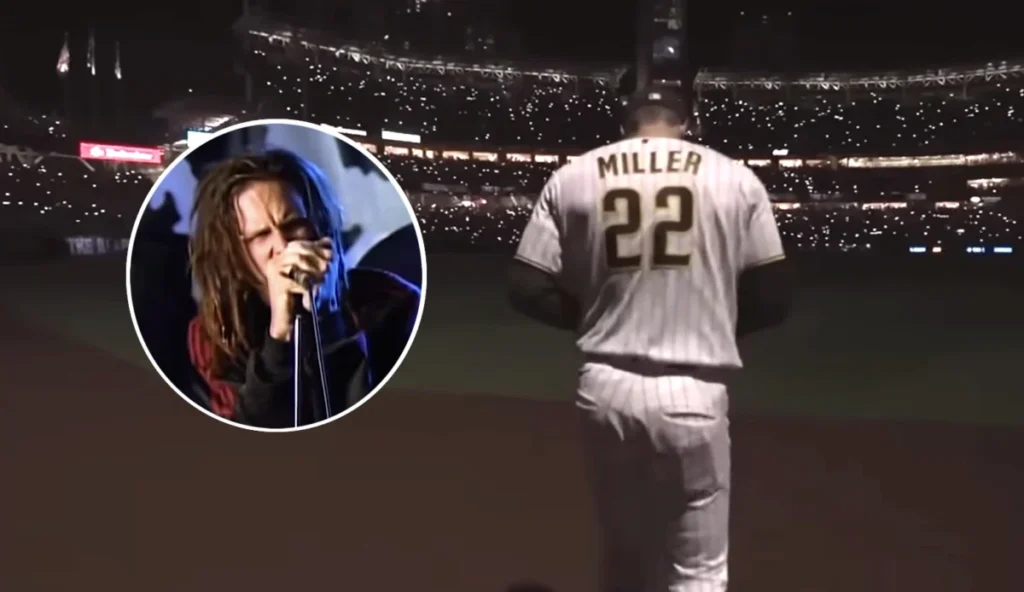

San Diego Padres’ new closer, Mason Miller, made an indelible first impression for the 2026 Major League Baseball season, not only by securing his first save but also by unveiling an electrifying and decidedly heavy metal entrance anthem: the 1994 Korn classic, “Blind.” The highly anticipated moment unfolded on Saturday night during the Padres’ home opener against the Detroit Tigers, cementing Miller’s arrival in the high-leverage role with a theatricality that immediately resonated with fans and established a potent new tradition at Petco Park.
The Theatrical Debut: A Night at Petco Park
As the ninth inning commenced with the Padres clinging to a precarious 3-0 lead, a palpable tension descended upon Petco Park. The stadium lights, a common dramatic flourish for a closer’s entrance, dimmed into near-darkness, amplifying the anticipation. Then, a thunderous, guttural sound erupted through the loudspeakers – the iconic "Are You Ready?" scream from Korn frontman Jonathan Davis, signaling the start of "Blind." The raw, aggressive energy of the nu-metal pioneers’ debut single, with its syncopated riffs and driving rhythm, filled the stadium, instantly transforming the atmosphere from anxious suspense to a surge of adrenaline.
Miller, striding purposefully from the bullpen to the mound, was enveloped by the cacophony, his focus seemingly sharpened by the intense soundscape. The choice of "Blind" is a bold declaration, eschewing more traditional rock anthems for a track synonymous with the angst and power of 90s alternative metal. It’s a sonic assault designed not just to pump up the home crowd, but perhaps to send a subtle, intimidating message to the opposing batters stepping into the box. For a sport often steeped in tradition, Miller’s entrance represents a modern, aggressive embrace of a player’s individual persona, utilizing music as a potent psychological tool.
Mason Miller’s Ascent to the Closer Role
Miller’s promotion to the closer role for the 2026 season marks a significant transition in his burgeoning career. Last year, he served primarily as a setup man, honing his craft in high-pressure situations leading up to the ninth inning. His performance in that capacity evidently convinced the Padres’ front office and coaching staff that he possessed the composure, velocity, and command necessary to shoulder the ultimate responsibility of closing out games. The closer position is arguably one of the most mentally demanding in baseball, requiring an almost unflappable demeanor under intense scrutiny, with every pitch having immediate, game-altering consequences.
Prior to the season, when queried about his impending entrance music, Miller maintained a strategic air of mystery. His only comment, "The song’s not for me, it’s for everybody else. I hope everybody else enjoys it," proved to be an effective teaser, building anticipation for what would be revealed. This calculated coy statement suggested a deliberate choice, one intended to make a statement beyond his pitching prowess alone. His performance on Saturday, shutting down the Tigers efficiently to secure his first save, demonstrated that the theatrics were matched by substance. The adrenaline generated by "Blind" seemed to fuel his execution, allowing him to navigate the ninth inning with authority and preserve the Padres’ hard-fought victory.
The Legacy of Entrance Music in Major League Baseball
The phenomenon of the closer’s entrance music is a relatively modern, yet deeply ingrained, aspect of Major League Baseball lore, evolving significantly over the past few decades. What began as a simple walk-up song has transformed into a critical element of game-day spectacle, designed to energize the home crowd, rally the team, and often, to psychologically impact opposing hitters.
The San Diego Padres, in particular, are no strangers to iconic closer entrances. The most revered example in franchise history belongs to Hall of Famer Trevor Hoffman, who for years famously emerged from the bullpen to the ominous, bell-tolling intro of AC/DC’s "Hells Bells." The ritual of the stadium lights dimming, the sound of the bell reverberating through Qualcomm Stadium (and later Petco Park), and Hoffman’s subsequent jog to the mound became known as the "Hoffman Zone," a clear signal to both fans and opponents that the game was effectively over. Hoffman’s unparalleled success – he retired with 601 saves, second all-time – was inextricably linked to this dramatic entrance, creating an aura of invincibility.
Beyond San Diego, perhaps the most globally recognized closer entrance belongs to the legendary Mariano Rivera of the New York Yankees. For nearly two decades, when Rivera took the mound at Yankee Stadium, Metallica’s "Enter Sandman" blared, becoming synonymous with his almost superhuman dominance. The track’s heavy, foreboding riff perfectly complemented Rivera’s stoic, unhittable cutter, instilling a sense of dread in opposing lineups. Rivera’s unanimous induction into the Hall of Fame underscored not just his statistical brilliance (MLB record 652 saves) but also the psychological impact of his presence, amplified by his iconic anthem.
Other notable examples abound:
- Francisco Rodriguez (K-Rod): Used the electronic dance track "Narco" by Blasterjaxx & Timmy Trumpet during his later career, especially with the New York Mets, creating a vibrant, high-energy atmosphere.
- Eric Gagne: The former Los Angeles Dodgers closer famously used Guns N’ Roses’ "Welcome to the Jungle" during his dominant run, particularly his historic 2003 season.
- Billy Wagner: The hard-throwing lefty often used Led Zeppelin’s "Whole Lotta Love," a powerful classic rock anthem that suited his aggressive pitching style.
These musical choices transcend mere entertainment; they become part of a player’s identity, a signal of impending doom for the opposition, and a rallying cry for the home faithful. They create an immersive experience, intertwining sound, spectacle, and sport in a unique American tradition.
Korn’s "Blind" and Nu-Metal’s Enduring Impact
Korn’s "Blind," released in 1994, is not merely a song; it is a foundational pillar of the nu-metal genre and a track that redefined heavy music for a generation. Hailing from Bakersfield, California, Korn burst onto the scene with a sound that was a jarring fusion of metal, hip-hop, and industrial elements, characterized by detuned seven-string guitars, slap bass lines, and Jonathan Davis’s distinctive, often tormented, vocal delivery ranging from guttural growls to melancholic cleans.
"Blind" served as the opening track and first single from their self-titled debut album, a raw and uncompromising statement that immediately set them apart. The song’s intro, with Davis’s chilling "Are You Ready?" followed by the explosive guitar riff from Brian "Head" Welch and James "Munky" Shaffer, is instantly recognizable and perfectly encapsulates the band’s raw, aggressive energy. Lyrically, it delved into themes of alienation and frustration, resonating deeply with a youth culture seeking an outlet for their disaffection.
The choice of "Blind" for Mason Miller’s entrance is a bold embrace of a genre that, while incredibly popular in the late 90s and early 2000s, is often seen as niche compared to classic rock staples. It speaks to a modern sensibility, connecting with a demographic that grew up with this heavier, more complex sound. The juxtaposition of baseball, a sport with deep historical roots, and the visceral power of nu-metal creates a compelling dynamic. It suggests a closer who is not only physically formidable but also possesses a psychological edge, using the music as an extension of his intense competitive spirit. The enduring power of "Blind" lies in its ability to still evoke that raw, unbridled energy decades after its release, making it an ideal choice for a high-stakes athletic moment.
Fan and Team Reactions and Broader Implications
The immediate reaction to Miller’s entrance music was overwhelmingly positive, particularly across social media platforms. Fans expressed excitement and approval for the aggressive, unconventional choice, drawing comparisons to the legendary entrances of Hoffman and Rivera while simultaneously acknowledging Miller’s distinct identity. The energy within Petco Park was palpable, a testament to how effectively a well-chosen anthem can electrify a crowd and create a memorable moment. This positive reception is crucial for a new closer, helping to quickly build rapport with the fanbase and establish a powerful presence.
Within the Padres dugout, a strong closer’s entrance can serve as a significant morale booster. It signals confidence, aggression, and an unwavering belief in the ability to close out a game. For opposing batters, particularly those of the Detroit Tigers on Saturday night, facing not only Miller’s formidable pitching arsenal but also the psychological weight of "Blind" can be an added layer of intimidation. The loud, aggressive music can disrupt focus, adding to the pressure of a late-game, high-leverage at-bat.
Looking ahead, Miller’s choice of "Blind" carries significant implications for his season and his burgeoning career with the Padres. A successful season, punctuated by dramatic saves soundtracked by Korn, could quickly cement his status as a fan favorite and a formidable force in the National League. This early, emphatic statement of identity through his entrance music helps to build a personal brand, making him more recognizable and engaging for fans.
Furthermore, the "Blind" entrance adds another layer to the Padres’ storied history of iconic closers. While Miller has immense shoes to fill in following Trevor Hoffman, establishing his own distinct identity from the outset is a smart strategic move. It sets him apart and allows him to forge his own legacy. The success of this inaugural outing, both musically and on the mound, suggests that Mason Miller is ready not just to close games, but to do so with a flair that is uniquely his own, promising a metal-infused, high-octane experience for Padres fans for seasons to come. The blend of raw power from the mound and the raw power of Korn’s classic creates a compelling narrative for the 2026 Padres bullpen.