
Acclaimed author Andy Weir, celebrated for his works The Martian and Project Hail Mary, has recently leveled sharp criticism against the contemporary Star Trek television series offerings on Paramount+. Weir’s remarks, delivered during an appearance on the Critical Drinker podcast, articulated a perceived divergence between current iterations of the beloved sci-fi franchise and its foundational principles, further revealing that his own pitch for a Star Trek show was rejected by Paramount. These candid observations surface at a pivotal moment for the franchise, coinciding with a significant pause in active Star Trek production and ongoing discussions surrounding the contractual future of its lead executive producer, Alex Kurtzman.
The Author’s Critique: A Photon Torpedo Launched at Modern Trek
Andy Weir’s foray into the Star Trek discourse began when podcast host Matthew Marsden lauded Weir’s recent box office hit, Project Hail Mary, for its refreshing take on science fiction, suggesting it filled a void for audiences who grew up with Star Trek but now feel a "lack of" such compelling sci-fi narratives. Weir seized upon this sentiment, recalling an analyst’s comment: "All modern science fiction TV shows and movies have been heavily influenced by the original Star Trek — except for the current batch of Star Trek shows." This provocative statement, met with Marsden’s enthusiastic agreement and shared laughter, set the tone for Weir’s subsequent critique.
Weir elaborated on his perspective, rooted in his Gen X upbringing. He described his formative sci-fi experiences as "original series Star Trek reruns and Lost in Space reruns," noting a scarcity of new space-faring adventures until the advent of Star Trek: The Next Generation. This historical context underscores his appreciation for Trek‘s golden eras and frames his disappointment with more recent entries.
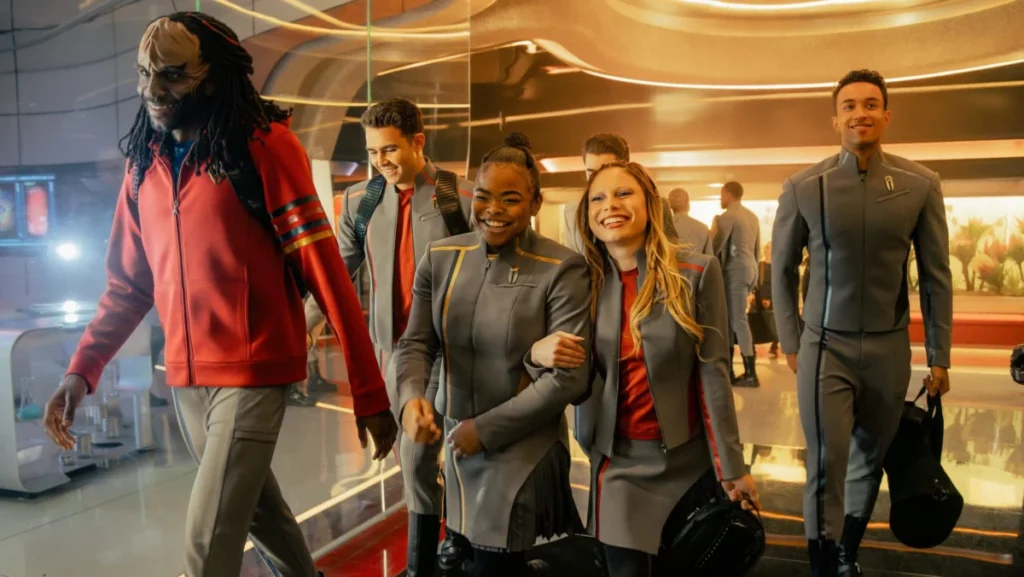
Later in the podcast, the discussion naturally gravitated towards Star Trek: Starfleet Academy, a series that Paramount+ recently confirmed would conclude after its already-shot second season. Marsden’s quip, "I think we can probably safely never talk about it again," was met with Weir’s cheerful and emphatic agreement: "It’s gone baby! It’s all gone." This particular exchange highlighted a shared sentiment of relief regarding the show’s premature end, reflecting broader fan dissatisfaction.
Marsden pushed the envelope further, suggesting that Paramount should "de-canonize everything Star Trek from Enterprise onward." While Weir found this stance "a little more severe," he proceeded to offer his own consumer-driven assessment. He expressed enjoyment for Strange New Worlds ("pretty good") and Lower Decks ("entertaining and fun"), and even admitted he "didn’t hate Enterprise," albeit finding it "kind of weird." However, his verdict for "all the others" was unequivocal: "they can go."
The most striking revelation came when Weir disclosed his personal involvement: "I pitched a Star Trek show to Paramount and I was in Zoom with the showrunners with all the shows and spent a lot of time talking to [executive producer Alex Kurtzman]." Despite acknowledging Kurtzman as "a really nice guy," Weir minced no words regarding the quality of the shows under his purview: "But at the same time, those shows are shit. He is a nice guy. But they didn’t accept my pitch so, you know, fuck ’em." This blunt assessment from a highly successful genre author, coupled with the personal sting of a rejected pitch, injects a layer of raw authenticity into his critique, signaling a deep-seated frustration beyond mere fan grumbling. The Hollywood Reporter has reached out to Paramount for comment on Weir’s statements.
Context of Criticism: A Franchise in Flux and a Streaming Strategy Under Scrutiny
Andy Weir’s comments arrive during a period of significant introspection and recalibration for the Star Trek franchise, particularly concerning its presence on Paramount+. The streaming service, which launched as CBS All Access in 2014 and rebranded in 2021, has heavily relied on Star Trek as a tentpole intellectual property to attract and retain subscribers. Under the stewardship of Alex Kurtzman, who signed a lucrative five-year overall deal with CBS Studios in 2018 to expand the Star Trek universe, Paramount+ embarked on an ambitious strategy to flood the streaming landscape with multiple new series.
The modern Trek era began in 2017 with Star Trek: Discovery, followed by Star Trek: Picard (2020), the animated Star Trek: Lower Decks (2020), Star Trek: Prodigy (2021), and Star Trek: Strange New Worlds (2022). Each series aimed to capture different segments of the audience and explore varied narrative styles within the vast Trek canon. While some, like Strange New Worlds, have generally garnered critical praise and positive fan reception for returning to a more episodic, optimistic exploration style reminiscent of the original series, others, such as Discovery and Picard, have often faced divisive reactions. Fans have frequently debated their adherence to established lore, character development, and thematic consistency, with common criticisms centering on darker tones, serialized storytelling, and a perceived departure from Gene Roddenberry’s utopian vision.
The cancellation of Star Trek: Starfleet Academy, even before its first season has aired, is particularly telling. While the original article states it will end after its "already-shot second season," this implies a significant investment of resources into a project that Paramount+ ultimately deemed not viable for a longer run. This decision, along with the current production hiatus, suggests a strategic re-evaluation of the franchise’s direction and financial sustainability on the platform.
Supporting Data and Industry Landscape: Weighing Creative Vision Against Commercial Realities
Andy Weir’s voice carries considerable weight in the science fiction community, not just as a fan but as a highly successful author whose works have transcended literary boundaries into mainstream pop culture. His debut novel, The Martian, became a global phenomenon, adapted into a critically acclaimed and commercially successful film directed by Ridley Scott and starring Matt Damon, grossing over $630 million worldwide. His subsequent novel, Project Hail Mary, has also achieved bestseller status and is currently being adapted into a major motion picture starring Ryan Gosling. This track record establishes Weir as someone with a keen understanding of what resonates with broad audiences within the sci-fi genre, lending credibility to his critiques of Star Trek‘s current trajectory.
From a broader industry perspective, Paramount+ operates within the highly competitive and capital-intensive streaming wars. Major franchises like Star Trek are crucial for subscriber acquisition and retention. However, the cost of producing high-quality science fiction television is substantial, often running into millions of dollars per episode. For instance, early seasons of Star Trek: Discovery were reported to cost upwards of $8-8.5 million per episode. The pressure to deliver content that not only attracts but also sustains a loyal subscriber base is immense. While specific viewership figures for individual Star Trek shows on Paramount+ are not publicly disclosed by the platform, the cumulative effect of these shows is intended to drive overall subscription growth.
Public sentiment, as reflected on critical aggregators like Rotten Tomatoes and IMDb, also plays a role. While critics’ scores for shows like Strange New Worlds are generally high (often in the 90%+ range), audience scores for some other modern Trek series can be significantly lower or more polarized, indicating a disconnect between critical reception and fan satisfaction. This data, while not directly tied to Weir’s comments, forms the backdrop against which his criticisms resonate with a vocal segment of the fanbase.
Timeline of Recent Star Trek Developments: A Period of Transition
The recent history of Star Trek on television can be summarized by several key dates and events:
- September 2017: Star Trek: Discovery premieres, marking the return of Star Trek to television after a 12-year hiatus (since Enterprise ended in 2005) and the launch of the modern streaming era for the franchise.
- June 2018: Alex Kurtzman signs a significant five-year overall deal with CBS Studios (now Paramount Global Content Group) to oversee and expand the Star Trek universe across multiple platforms. This deal cemented his role as the primary architect of the franchise’s future.
- 2020-2022: Paramount+ (and its predecessor CBS All Access) launches a rapid succession of new Star Trek series: Picard, Lower Decks, Prodigy, and Strange New Worlds. This period reflects an aggressive strategy to build out the Trek content library.
- Late 2023 / Early 2024: Reports emerge, followed by confirmation, that Star Trek: Starfleet Academy will conclude after its second, already-filmed season, effectively cancelling the show’s longer-term prospects. This decision signifies a potential shift in production strategy.
- Present: For the first time in many years, there are no new Star Trek projects currently in active production. While there are still two more years of Strange New Worlds and one more season of Starfleet Academy left to air, the pipeline for future content has effectively paused.
- Through End of 2026: Alex Kurtzman’s current deal with CBS Studios is set to expire. Paramount+ is reportedly in ongoing talks with Kurtzman and his production company, Secret Hideout, regarding a potential renewal or extension. The timing of this negotiation, amidst franchise criticism and a production slowdown, adds considerable weight to the discussions.
Official Responses and Executive Futures: Navigating the Storm
In response to the news of Star Trek: Starfleet Academy‘s cancellation, Alex Kurtzman, alongside executive producers Noga Landau and Gaia Violo, released an open letter. This letter addressed some of the underlying criticisms and articulated their vision for the franchise, emphasizing Gene Roddenberry’s original intent.
The letter stated, "Whether you’re working on Star Trek or part of the marvel that is Star Trek fandom — its very heart, soul, and conscience — the joy comes from adventuring across boundaries of time, space, and the humanly possible in service to [Gene] Roddenberry’s transformative vision of the future. That incomparable vision was fueled by an inexhaustible optimism. Star Trek places its bet on the best in human nature. It dares to imagine a society of ‘infinite diversity in infinite combinations,’ free of war, hate, poverty, disease, and repression, and dedicated to the spirit of scientific inquiry and respect for all life, whether carbon or silicon-based, green-skinned or blue."
It continued, "But make no mistake: Gene Roddenberry wasn’t some starry-eyed dreamer. He was a decorated Army bomber pilot in the Pacific Theater. He had seen first-hand the grim consequences of the worst of human nature. And his vision of the future wasn’t just a promise of hope. It was also a warning. In a fraught, frightening time of intolerance and violence, Star Trek said: Look! We made it! But just barely. First, we had to put all those ancient scourges behind us. It said that what makes us glorious as a species, and gives us hope for the future and the galaxy is inextricably linked to what makes us dangerous to each other, to this one world we presently inhabit, and to ourselves. That dual message — of hope and of warning — isn’t just a pretty dream but a call to action, to think about who we are in a different way."
This carefully crafted response aims to reaffirm the creative team’s commitment to Roddenberry’s core philosophical tenets, framing their storytelling choices within a legacy of optimism tempered by realism and social commentary. It indirectly addresses criticisms about darker tones by positing Roddenberry’s vision as both a promise and a warning. However, it does not directly engage with the specific criticisms regarding narrative execution or perceived departures from Trek‘s traditional aesthetic, which are often at the heart of fan dissatisfaction and now, Weir’s critique.
The timing of these discussions is particularly critical for Alex Kurtzman. His overarching deal, which made him the central figure for Star Trek content, is nearing its expiration. The ongoing talks about renewing or extending this deal will undoubtedly be influenced by the current state of the franchise, including fan sentiment, critical reception, viewership performance, and the financial health of Paramount+. Should his deal not be extended, it would signal a significant strategic shift for Star Trek and potentially open the door for a new creative vision for the franchise.
Broader Implications for the Franchise and Fandom: Charting a New Course
Andy Weir’s outspoken criticism, alongside the "Spacedock" production pause and Kurtzman’s contract negotiations, underscores a pivotal moment for the Star Trek franchise. The implications are multifaceted, affecting creative direction, business strategy, and the very nature of its passionate fanbase.
From a creative standpoint, the pause in production could be a calculated move by Paramount+ to reassess its Star Trek strategy. It might signal a shift towards fewer, higher-quality productions, or a move to realign the franchise more closely with the elements that fans and prominent voices like Weir praise, such as the optimistic, episodic exploration of Strange New Worlds. The era of rapid content saturation might be giving way to a more curated approach, prioritizing impact over volume.
For Paramount+, the business implications are clear: continued investment in Star Trek must yield demonstrable returns in terms of subscriber growth and retention. If the current slate of shows is not universally resonating, or if the cost-benefit analysis is unfavorable, a strategic pivot is inevitable. This could involve exploring new creative leadership, adjusting budgets, or even re-evaluating which aspects of the Trek universe are best suited for modern streaming audiences.
Within the Star Trek fandom, Weir’s comments will undoubtedly fuel ongoing debates. The franchise has always been characterized by a diverse and opinionated fanbase, often divided between purists who cling to original canon and those who embrace new interpretations. High-profile criticism from a celebrated author like Weir provides additional ammunition for those who feel the current direction has strayed too far from the franchise’s core identity. It highlights the delicate balance creators must strike between honoring a cherished legacy and innovating for new generations.
Ultimately, the confluence of these events — a bestselling author’s pointed critique, a production hiatus, and the uncertain future of executive leadership — signals a period of significant transition for Star Trek. The coming months will likely reveal whether Paramount+ intends to recalibrate its course, potentially charting a new trajectory for one of science fiction’s most enduring and beloved sagas, in response to both internal assessment and external voices, including those from its most successful contemporary practitioners.