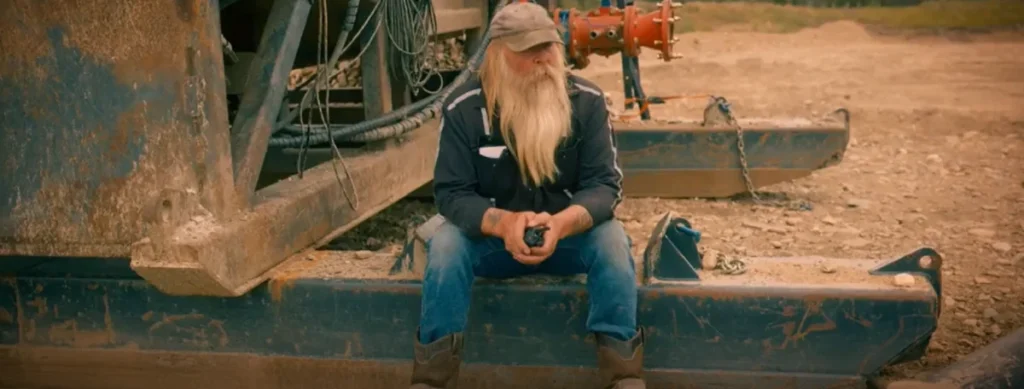

The relentless pursuit of gold continues to define the high-stakes world of Discovery Channel’s Gold Rush, with the current season reaching a critical juncture. As the clock winds down, prospectors are employing increasingly ambitious strategies, facing unforeseen challenges, and pushing their operations to the brink in a bid to meet ambitious targets. This season has seen Parker Schnabel battling to catch up to his 10,000-ounce goal, while Tony Beets continues his dominance, already surpassing his own substantial objective and eyeing even greater acquisitions. Meanwhile, Tony’s son Kevin grapples with the pressures of leadership and persistent operational hurdles.
Parker Schnabel: The Golden Goose Stakes and a Race Against Time
Parker Schnabel, a figure synonymous with innovation and sheer grit in the gold mining industry, finds himself in a familiar position: needing a significant surge to achieve his season-long objective. With his 10,000-ounce goal appearing increasingly out of reach in recent weeks, Schnabel has deployed a new, high-tech weapon in his arsenal: the "Golden Goose," a million-dollar wash plant acquired to boost extraction rates and efficiency at his Dominion Creek operation. This strategic investment comes at a pivotal moment, as Sluicifer, another of Schnabel’s formidable machines, has been sidelined for the season. The Golden Goose is expected to be instrumental in processing the remaining ore from the Golden Mile, a rich deposit that Schnabel plans to divide into two large stockpiles for processing by both the Golden Goose and Big Red.
The introduction of the Golden Goose was not without its initial complications. The crew worked diligently to establish a reliable water supply for the new plant, constructing a new intake pond and installing a pumping system. While the water pump successfully came online, the initial startup of the Golden Goose was met with an unsettling sound, later identified as a minor blockage caused by rock and dirt. Despite these early hiccups, Schnabel and his team remain optimistic. In a weekly gold weigh-in, the Golden Goose, affectionately nicknamed "GG the supermodel" by the crew, did not process enough material to yield gold in this particular report. However, Big Red contributed a solid 140.07 ounces, and the Bridge Cut operation added another 127.40 ounces. Roxanne, working at Ken & Stuart’s, also demonstrated strong performance, sluicing 153.20 ounces throughout the week. These contributions brought Schnabel’s total for the week to a substantial 140.07 ounces, and his cumulative haul for the season to an impressive $1.5 million. Schnabel expressed his renewed confidence, stating, "I do think we have a real shot of making this happen," referring to his season-long goal. This sentiment underscores the high stakes and the unyielding determination that characterizes Schnabel’s approach to gold mining.
Tony Beets: The King of the Klondike’s Ambitious Expansion and Unexpected Setback
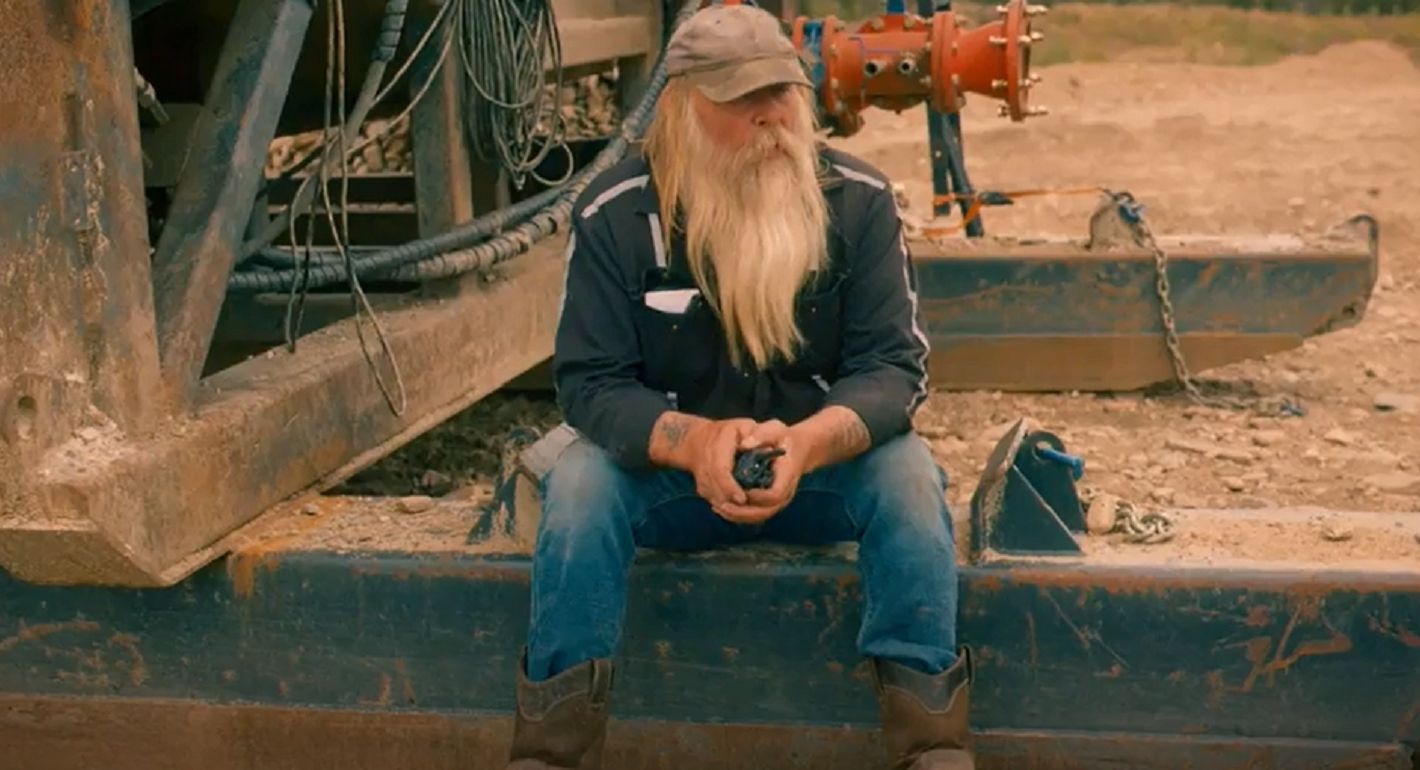
Tony Beets, affectionately known as the "King of the Klondike," continues to demonstrate unparalleled success in his gold mining endeavors. Having already surpassed his ambitious 6,500-ounce goal, Beets has amassed an astonishing $23 million in gold. Even with more than a month remaining in the season, Beets shows no signs of slowing down, actively pursuing new avenues for future prosperity. His latest venture involves the acquisition of the Wounded Moose claim, a vast tract boasting 213 claims, for a staggering $4 million. Beets views this acquisition as a strategic move to secure the future of his mining empire for at least two to three generations. Located approximately four miles east and one mile south of his Indian River operations, the Wounded Moose is conveniently situated near land leased by his eldest son, Kevin. This turnkey operation comes equipped with excavators and an existing camp, with preliminary assessments suggesting a potential yield of up to $200 million. Despite the ground being untested, Beets recognized the immediate opportunity and acted decisively. His philosophy, as he often articulates, is that "Without risk there is no gain either. If you don’t do something stupid, well you’re never gonna f*ckin win now are you, right?"
Beets’ initial panning at the Wounded Moose site yielded exceptionally promising results, which he described as "hitting the jackpot." He envisioned this as a significant opportunity for his son Mike, who would co-manage the claim with a 50/50 partnership, mirroring the management structure for Kevin. The immediate plan involved relocating wash plant "Harold" to the new site. However, just as operations were set to commence, Beets’ wife, Minnie, received devastating news: the Wounded Moose claim lacked a valid water license. Despite the Beets family operating under the assumption that the license was valid through 2027, it was discovered that the necessary paperwork had not been officially transferred to Tony. This critical oversight has thrown a significant roadblock in front of Mike’s burgeoning dream and forced a major pivot in the Beets’ operational strategy.
Despite this significant setback, the Beets family maintained a positive outlook during their weekly weigh-in. Operations at Paradise Hill, specifically the Indian River’s Corner Cut, continued to yield substantial results. The "Sluice-a-Lot" plant processed 218.74 ounces, "Find-a-Lot" recorded 237.58 ounces, and the Paradise Hill site itself generated an impressive 258.98 ounces. This week’s haul totaled a remarkable 715.3 ounces, valued at approximately $2.5 million, pushing their season total to nearly $26 million from 7,333 ounces of gold. This remarkable performance, even with the Wounded Moose imbroglio, solidifies Tony Beets’ position as a dominant force in the Yukon gold fields.
Kevin Beets: Navigating Leadership Challenges and Striving for the 2,000-Ounce Goal

Kevin Beets, Tony’s eldest son, is facing the considerable pressures that come with managing his own mining operation. He has secured $2.5 million in gold thus far, but this amount falls significantly short of his ambitious 2,000-ounce target for the season. To bridge this gap, Kevin is implementing a last-ditch effort to maximize production. His efforts are compounded by ongoing personnel issues, most notably with operator Tayvin Peterson. Peterson had been repeatedly cautioned about operating heavy machinery too quickly, risking damage to equipment. Kevin’s directive for Peterson to slow down was met with resistance, as Peterson, having been fired from Parker Schnabel’s operation six weeks prior, expressed concerns about facing further disciplinary action.
In an attempt to address the situation and provide a learning opportunity, Kevin and his partner Faith Teng reassigned Tayvin from operating the loader to a rock truck. Faith candidly informed Tayvin that this demotion was a consequence of his past mistakes and that he needed to learn from them. Tayvin, however, vocalized his discontent over the walkie-talkie, even speaking disparagingly about Faith. Unbeknownst to him, Faith overheard his remarks. When confronted by Faith, Tayvin anxiously asked if he was being fired. In a surprising move, Faith offered him one final chance, emphasizing that any further missteps would result in his termination. Kevin, acutely aware of the limited resources and the imperative to maintain crew cohesion, recognized the critical need to avoid further disruptions or the loss of any team members.
The weigh-in for Kevin and Faith’s operation yielded 222.85 ounces of gold, valued at nearly $800,000. Faith described the result as "Not great," and with this latest addition, they are still under 1,000 ounces for the season. Kevin expressed his growing concern, questioning whether his initial goal of 2,000 ounces was perhaps too ambitious. The coming weeks will reveal whether his operation can achieve the significant turnaround required to meet his challenging target.
Broader Implications and the Road Ahead
The unfolding events on Gold Rush highlight the inherent volatility and demanding nature of the gold mining industry. Parker Schnabel’s reliance on new technology like the Golden Goose underscores a continuous drive for innovation, a necessary component for survival and success in a highly competitive field. Tony Beets’ bold acquisition of the Wounded Moose, despite the water license complication, demonstrates a long-term vision and a willingness to undertake significant financial risks for future gains. His ability to absorb such setbacks while still maintaining record-breaking production speaks volumes about his operational expertise and resilience. Kevin Beets’ struggles offer a compelling narrative of a young leader learning the intricacies of management, facing the harsh realities of workforce dynamics, and grappling with the immense pressure to perform.

The ongoing challenges with water licenses, as experienced by the Beets family, are a stark reminder of the complex regulatory landscape that miners must navigate. Environmental permits and resource access are critical factors that can significantly impact operational viability, often introducing unforeseen delays and costs. The pursuit of ambitious production goals, such as Schnabel’s 10,000 ounces and Kevin’s 2,000 ounces, showcases the extreme dedication and unwavering optimism required in this profession. As the season progresses, viewers will undoubtedly be captivated by the miners’ continued efforts to overcome obstacles, adapt to changing circumstances, and ultimately, strike it rich. The final weeks of Gold Rush promise to deliver further drama, as each mining operation races against time to achieve its season-defining objectives.
Gold Rush airs Fridays at 8/7c on the Discovery Channel.