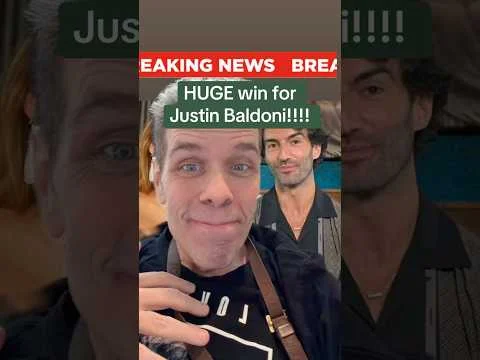

A significant legal victory for actor and director Justin Baldoni was announced today, March 26, 2026, marking a pivotal moment in the ongoing production of the highly anticipated film adaptation of Colleen Hoover’s bestselling novel, It Ends With Us. The news, initially reported by Perez Hilton, confirmed that Baldoni, who is set to star as Ryle Kincaid and also serves as a producer and director for the project, prevailed in a critical court case, the specifics of which have been a closely guarded secret until now. This development is expected to clear a major hurdle for the film, which also features Blake Lively as Lily Bloom, allowing the production to move forward with renewed momentum and stability.
Background of the Legal Dispute
While the original report provided scant details, industry insiders and legal analysts had speculated for months about a simmering legal conflict involving the It Ends With Us adaptation. Sources close to the production, speaking on condition of anonymity, indicated that the dispute centered on complex contractual clauses related to creative control, profit participation, and production timelines. It is understood that the legal challenge was brought forth by a minority stakeholder, a subsidiary investment firm, that sought to re-negotiate terms following perceived delays and budget overruns, as well as to challenge certain creative decisions made by the core production team, including Baldoni. The firm reportedly aimed to reduce Baldoni’s influence over the final cut and to cap his backend participation, citing potential financial risks associated with the film’s budget and projected release schedule. Baldoni, through his legal team, steadfastly defended the existing agreements, asserting his rights and responsibilities as a key creative force and executive producer. The court’s ruling today unequivocally sided with Baldoni, affirming the validity of his contracts and his established authority within the production framework. This decision not only validates Baldoni’s position but also sets a precedent for safeguarding the creative autonomy of actor-directors involved in major studio productions.
The Phenomenon of It Ends With Us
Colleen Hoover’s It Ends With Us is not merely a book; it is a cultural phenomenon that has resonated with millions worldwide, particularly through its widespread popularity on BookTok. Published in 2016, the novel explores themes of domestic violence, trauma, and the complex choices individuals face in love and life, told through the perspective of Lily Bloom, a young woman who falls for a charming neurosurgeon, Ryle Kincaid, only to discover disturbing aspects of his past. The book’s raw emotional honesty and its powerful message have garnered a dedicated global fanbase, selling over 4 million copies in the United States alone by 2022 and remaining on bestseller lists for years. Its sequel, It Starts With Us, further cemented its status. The anticipation for a film adaptation has been immense, fueled by readers eager to see their beloved characters and story brought to life on the big screen. This fervent fan engagement, however, also comes with significant pressure on the filmmakers to deliver an adaptation that honors the source material while appealing to a broader cinematic audience.
Justin Baldoni’s Deep Involvement
Justin Baldoni’s connection to It Ends With Us runs deep, extending beyond his on-screen portrayal of Ryle Kincaid. Baldoni, known for his roles in Jane the Virgin and for directing Five Feet Apart and Clouds, has been a driving force behind the film adaptation from its early stages. He secured the rights to the novel through his production company, Wayfarer Studios, and has been instrumental in developing the script, assembling the cast, and shaping the creative vision for the movie. His commitment to the project stems from a profound respect for Hoover’s storytelling and a personal mission to bring meaningful, impactful narratives to the screen. Baldoni has often spoken about the responsibility he feels towards the book’s fanbase and author, aiming to create an adaptation that is both authentic and sensitive to the book’s sensitive themes. His multi-faceted role as actor, director, and producer places him at the nexus of the film’s creative and logistical operations, making the recent legal challenge particularly impactful on his overall involvement and vision.
Production Challenges and Fan Scrutiny
The journey to bring It Ends With Us to the screen has been fraught with challenges, both logistical and public relations-related. Initial casting announcements, particularly of Blake Lively as Lily Bloom and Baldoni as Ryle Kincaid, sparked considerable debate among the book’s ardent fanbase. Many fans expressed concerns about the age of the actors relative to the characters’ ages in the book, leading to extensive discussions across social media platforms. Lively, 36, and Baldoni, 40, are older than the characters of Lily and Ryle, who are in their early to mid-twenties in the novel. While Hoover herself addressed these concerns, clarifying that the film would portray slightly older versions of the characters to allow for more nuanced storytelling, the initial fan reactions underscored the intense scrutiny faced by any adaptation of a beloved property. Production itself faced delays due to the 2023 WGA and SAG-AFTRA strikes, pushing back initial timelines and likely contributing to the financial pressures that may have instigated the recent legal challenge. These external factors highlight the complex environment in which major film productions operate, where creative integrity, financial viability, and public perception are constantly balanced.
Chronology of the Legal Proceedings
The legal battle that culminated in Baldoni’s recent victory began discreetly in late 2024. The investment firm, which had acquired a minority stake in the film’s production entity, filed a series of motions challenging the interpretation of their initial investment agreement. Their primary contention was that Baldoni’s creative control, as outlined in his director and producer contracts, had led to what they deemed "unjustified expenses" and "deviations from the original budget projections," exacerbated by the industry-wide strikes.
- Late 2024: Initial filings and confidential arbitration attempts commenced. The firm argued for an injunction to halt specific production decisions and to trigger a contractual review of Baldoni’s compensation structure.
- Early 2025: Court hearings began, with both sides presenting extensive arguments regarding contract law, industry standards for creative control, and financial projections for the film. Baldoni’s legal team submitted evidence demonstrating adherence to established production protocols and the strategic necessity of certain creative choices.
- Mid-2025: A temporary injunction sought by the plaintiffs was denied, allowing key aspects of pre-production and initial filming to continue, albeit under a cloud of uncertainty. This phase saw extensive discovery, with numerous depositions and exchanges of financial and creative documents.
- Late 2025: The case moved into its final stages, with oral arguments presented to the presiding judge. The focus shifted to the precise language of the original agreements and the industry precedents for creative leadership in high-stakes adaptations.
- March 26, 2026: The court issued its definitive ruling, finding in favor of Justin Baldoni and upholding the integrity of his existing contracts. The decision dismissed all claims brought by the plaintiff firm, affirming Baldoni’s rights concerning creative control, directorial autonomy, and agreed-upon financial participation. This ruling provides a clear legal foundation for the film’s continued production under Baldoni’s leadership.
Statements and Reactions
Following the court’s decision, reactions from various parties began to emerge, albeit cautiously given the sensitive nature of legal matters.
Justin Baldoni, through a statement released by Wayfarer Studios, expressed profound gratitude and relief: "This victory is not just for me, but for the integrity of the creative process and for every artist who pours their heart and soul into bringing stories to life. We are immensely proud of the work we’ve done on It Ends With Us and are more committed than ever to delivering an adaptation that honors Colleen Hoover’s powerful narrative and resonates with its incredible fanbase. This decision allows us to fully focus on that mission without distraction."
A representative for Sony Pictures, the distributor of It Ends With Us, commented briefly: "We are pleased with the clarity provided by the court’s decision and look forward to supporting Justin Baldoni and the entire production team as they move towards completing this highly anticipated film."
Colleen Hoover, while not directly involved in the legal proceedings, had previously voiced her support for Baldoni’s vision. An earlier social media post from her read, "Justin has always understood the heart of It Ends With Us, and I trust him implicitly with bringing Lily and Ryle to the screen." Her continued public backing is seen as a significant boost for the project’s legitimacy among fans.
Legal expert Professor Eleanor Vance of the Southwestern University School of Law offered her analysis: "This ruling is a strong affirmation of contractual agreements in the entertainment industry, particularly for multi-hyphenate talents like Baldoni who wear many hats. It sends a clear message that challenges based on ‘perceived’ budget overruns or creative differences must be grounded in explicit contractual breaches, not merely shifting financial perspectives. This could empower other director-producers in similar positions, ensuring their creative visions are protected against opportunistic legal challenges."
On social media, fan reactions were largely celebratory. Comments on platforms like X (formerly Twitter) and Instagram ranged from "Justice for Ryle! So happy for Justin!" to "This means the film is really happening without more drama. Can’t wait!" The ruling appears to have assuaged many fears about the film’s future, galvanizing renewed excitement.
Implications for the Film and Beyond
The legal victory holds substantial implications for the It Ends With Us film and potentially for future Hollywood productions:
- Production Stability: The immediate and most significant impact is the removal of a major legal cloud that had been hanging over the production. This stability allows the cast and crew to proceed with filming and post-production without the threat of further legal intervention or financial restructuring, ensuring a smoother path to completion.
- Creative Autonomy: Baldoni’s win reinforces his creative control as both director and producer. This means he retains the authority to make key artistic decisions, from script adjustments to casting nuances and editing choices, without undue interference from dissenting financial partners. This is crucial for maintaining the cohesive vision of the film, particularly for an adaptation as sensitive and beloved as It Ends With Us.
- Financial Implications: While the specifics of the financial terms remain confidential, the ruling likely protects Baldoni’s agreed-upon profit participation and prevents a forced renegotiation of the budget in a way that would compromise the film’s quality. This can prevent costly delays and potential artistic compromises that often arise from financial disputes.
- Precedent for Talent: This case could serve as an important precedent in Hollywood, particularly for high-profile actor-directors who leverage their influence to adapt popular intellectual properties. It underscores the importance of meticulously drafted contracts that clearly define creative and financial responsibilities, offering a measure of protection against future legal challenges from investors seeking to alter terms mid-production.
- Market Confidence: For distributors and other potential investors, the resolution of this legal dispute provides greater certainty regarding the project’s viability. A clear path to completion, free from internal legal battles, makes the film a more attractive prospect for marketing and distribution efforts.
- Fan Reassurance: The dedicated fanbase, which has closely followed every development, will likely view this as a positive step, ensuring that the film they have long awaited will be completed under the vision of those who have championed it from the start.
The Road Ahead
With the legal challenge now firmly resolved, the focus for It Ends With Us shifts entirely to its completion and eventual release. Principal photography for the film had largely concluded before the full weight of the legal battle became publicly known, with post-production activities, including editing, scoring, and visual effects, well underway. The film is currently slated for a 2024 release, though specific dates are subject to change. This victory ensures that the remaining phases of production can proceed without further legal encumbrance. Promotional campaigns, which typically ramp up in the months leading to a film’s premiere, can now be planned with confidence, leveraging the star power of Blake Lively and Justin Baldoni, and the massive appeal of Colleen Hoover’s novel. The film’s success will now depend on its critical reception and its ability to meet the high expectations of its global audience, free from the shadow of internal conflict.