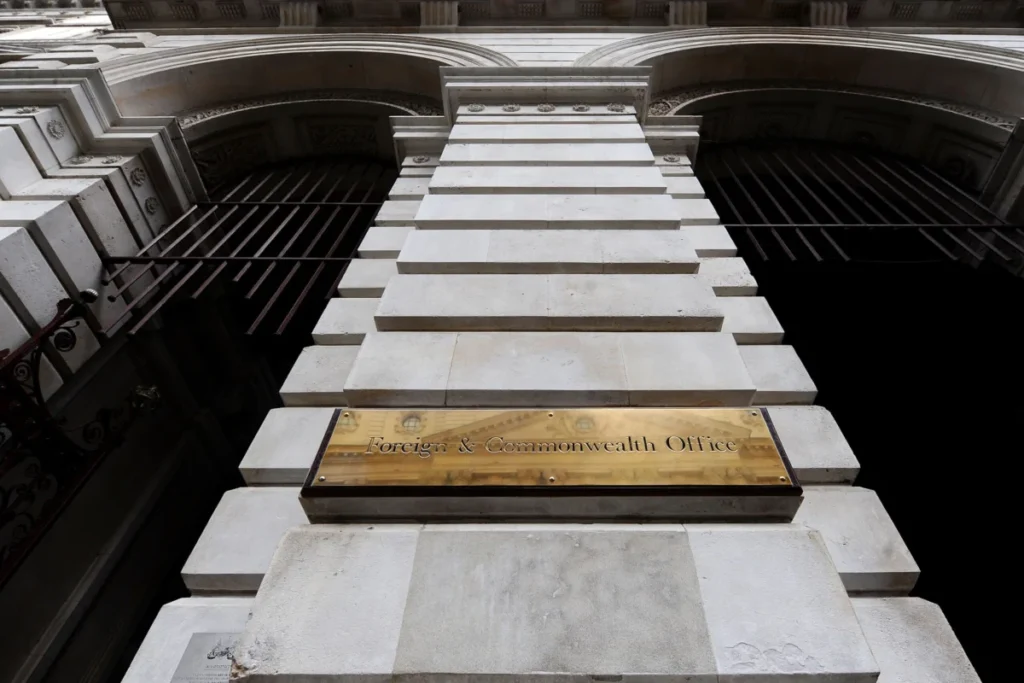

A cross-party group of Members of Parliament has issued a stark warning to the Government, advocating for a significant reallocation of funds towards the Foreign, Commonwealth & Development Office (FCDO) and the BBC World Service. The call, spearheaded by the Foreign Affairs Committee, argues that enhancing the capabilities of these institutions is an essential front in countering the growing global threat of disinformation and hybrid warfare, which they characterize as a "state of war against the West." The committee’s report specifically proposes diverting a portion of the planned defence uplift to strengthen the FCDO’s Hybrid Threats Directorate and ensure the long-term financial stability of the BBC World Service, emphasizing that accurate, impartial news is paramount to the UK’s national security and international interests.
The urgency of the committee’s recommendations underscores a evolving understanding of national security in the 21st century, where traditional military defence is increasingly intertwined with information integrity and diplomatic agility. As global adversaries, particularly Russia, intensify their efforts to destabilize democracies through sophisticated propaganda and cyber operations, the report asserts that the UK must adapt its defensive strategy. The current funding model for the BBC World Service, linked to the frozen licence fee, is deemed "ill advised" and has demonstrably weakened its global reach, creating voids that hostile state actors are eager to fill.
The Foreign Affairs Committee’s Urgent Call to Action
The Foreign Affairs Committee, a influential parliamentary body responsible for scrutinizing the FCDO’s policy and administration, has meticulously outlined its concerns and proposed remedies. At the core of its recommendations is a strategic pivot in defence spending. Instead of exclusively focusing on conventional military hardware and personnel, the committee posits that a portion of the substantial defence uplift—a commitment by the UK to spend 5% of its economic output on defence by 2035, comprising 3.5% on core defence and 1.5% on security and resilience measures—should be redirected. This reallocation is intended to bolster the FCDO’s Hybrid Threats Directorate, which is tasked with identifying, analyzing, and countering various forms of non-military aggression, including disinformation campaigns, cyberattacks, and economic coercion. The committee believes that enhancing staffing and resources within this directorate is not merely an administrative upgrade but a critical investment in the nation’s frontline defence against insidious, non-kinetic threats.
Furthermore, the committee has strongly advocated for a renewed, robust, and long-term funding model for the BBC World Service. Its report highlights that the provision of "accurate, impartial news" by the World Service is not a cultural luxury but a fundamental component of the UK’s national security framework and its ability to project influence abroad. The current funding arrangement, which sees the World Service increasingly reliant on the domestic licence fee that has been frozen for two years, has led to a noticeable contraction of its global footprint. This shrinkage, the committee warns, directly undermines the UK’s soft power capabilities and leaves dangerous informational vacuums that are readily exploited by state-backed propaganda outlets. The MPs argue that the additional funding already promised for the next three years is likely to be negated by inflation, effectively rendering it "flat" and insufficient to address the escalating challenges.
The Evolving Landscape of Hybrid Threats and Disinformation
The committee’s alarm bells are ringing against a backdrop of a rapidly intensifying global information war. Hybrid threats, a multifaceted form of aggression combining conventional and unconventional methods, have become a hallmark of contemporary international relations. These tactics often involve a blend of cyberattacks, economic pressure, influence operations, and, critically, disinformation campaigns designed to sow discord, erode trust in democratic institutions, and manipulate public opinion.

Russia’s Aggressive Posture: Emily Thornberry, the Labour MP for Islington South and Finsbury and chairwoman of the Foreign Affairs Committee, articulated this threat starkly, stating that organized disinformation constitutes "the new warfare" and that "open liberal democracies are sitting ducks." She specifically pointed to "Russia’s hybrid attacks in particular amount to a state of war against the West." This assertion is grounded in numerous documented instances of Russian interference, ranging from alleged meddling in electoral processes in Western nations to sophisticated propaganda narratives surrounding conflicts like the annexation of Crimea in 2014 and the ongoing full-scale invasion of Ukraine since 2022. Russia’s state-backed media, such as RT (formerly Russia Today) and Sputnik, are key instruments in disseminating narratives that often contradict verified facts, promote conspiracy theories, and aim to delegitimize Western governments and alliances. For example, during the Salisbury nerve agent attack in 2018, Russian state media disseminated multiple, often contradictory, narratives attempting to deflect blame and confuse the international community, showcasing a classic disinformation playbook.
Beyond Russia: While Russia is frequently cited, other state actors also employ similar tactics. China, for instance, has been increasingly active in shaping global narratives, particularly concerning its human rights record, its territorial claims in the South China Sea, and its economic initiatives like the Belt and Road. Its state media outlets and sophisticated digital influence campaigns aim to project a positive image of China while suppressing critical voices. Iran and other regional powers also engage in information warfare to advance their geopolitical interests.
Vulnerability of Democracies: The inherent openness of liberal democracies, with their emphasis on free speech and diverse media landscapes, paradoxically makes them vulnerable to these covert influence operations. Social media platforms, while facilitating communication, also provide fertile ground for the rapid spread of misinformation and disinformation, often amplified by automated bots and coordinated networks. The erosion of trust in traditional media, coupled with the fragmentation of information consumption, further exacerbates this vulnerability, making citizens susceptible to narratives tailored to their existing biases.
The BBC World Service: A Strategic Asset in Peril
For decades, the BBC World Service has stood as a beacon of journalistic integrity and a cornerstone of the UK’s soft power. Established in 1932 as the Empire Service, it evolved into a globally recognized source of impartial news and information, particularly during the Cold War when it served as a vital counterpoint to state propaganda behind the Iron Curtain. Its reputation for accuracy and objectivity has earned it immense trust among audiences worldwide, often reaching regions where independent media is suppressed or non-existent.
A History of Influence: During critical global events, from the fall of the Berlin Wall to conflicts in the Middle East and Africa, the World Service has provided millions with access to factual reporting, offering diverse perspectives and fostering informed public discourse. This has not only enhanced the UK’s reputation but also subtly advanced its diplomatic objectives by promoting democratic values and open dialogue. Its broadcasts in multiple languages, from Arabic to Swahili, Persian to Mandarin, have allowed the UK to engage directly with diverse populations, fostering understanding and goodwill.
The Impact of Funding Cuts: However, this crucial asset has been under increasing financial strain. Historically, the BBC World Service was funded directly by the Foreign Office, recognizing its diplomatic and strategic importance. In 2014, a decision was made to shift its funding entirely to the domestic licence fee, a move that the Foreign Affairs Committee now deems "ill advised." This shift has coincided with a period of austerity and, critically, a freeze on the licence fee, leading to significant budget cuts.

The consequences have been profound. The report explicitly warns of a "reduction in its global footprint" and "cutbacks in language service." For example, the committee cited the alarming instance where the frequency previously occupied by the BBC Arabic station in Lebanon was subsequently filled by Sputnik, the Russian state-backed broadcaster. This is not an isolated incident; various language services have faced significant reductions or outright closures over recent years, diminishing the World Service’s reach in key strategic regions. For instance, services in languages like Macedonian, Albanian, and Serbian were reduced or ceased, while others like Russian and Chinese have seen their budgets constrained, even as the need for accurate information in those regions intensified. These cuts leave critical gaps in the global information ecosystem, creating opportunities for state actors with hostile agendas to proliferate their narratives unoppacontested.
Soft Power Erosion: The concept of "soft power"—the ability to influence others through attraction rather than coercion—is central to the argument for a well-funded BBC World Service. The UK has historically excelled in soft power, largely due to institutions like the BBC, the British Council, and its vibrant cultural sector. A diminished World Service directly translates to an erosion of this influence. If the BBC World Service "does not receive the funding it needs, it will continue to contract with a diminishing influence," the report argues. "Its loss would significantly diminish the UK’s soft power and undermine our ability to counter information warfare." This is not just about projecting a positive image; it is about ensuring that British values of democracy, rule of law, and free expression remain resonant and credible on the global stage.
Funding Debates and Strategic Reallocation
The committee’s proposal to draw funds from the planned 5% defence and national security uplift sparks a crucial debate about the very definition of defence in the modern era. The UK’s commitment to increase its defence spending to 5% of its economic output by 2035 was a response to persistent calls from NATO allies, notably former US President Donald Trump, for members to shoulder a greater share of the collective security burden. This commitment represents a significant financial undertaking, earmarking substantial resources for traditional military capabilities.
A Modern Interpretation of Defence: The Foreign Affairs Committee’s stance challenges the conventional view that defence spending should solely focus on tanks, fighter jets, and naval vessels. Instead, it advocates for a more holistic understanding of national security, one that recognizes information warfare as a legitimate and potent threat demanding defensive investment. Emily Thornberry articulated this clearly: "After all, if Russia is already conducting information warfare against the West, the UK must be ready to defend itself." This implies that bolstering the FCDO’s capabilities in countering hybrid threats and ensuring the robust operation of the BBC World Service are not diversions from defence but rather integral components of a comprehensive national defence strategy.
Political Implications: This proposed reallocation is likely to generate considerable discussion within government circles. While there is broad consensus on the importance of countering disinformation, diverting funds from a highly visible and politically sensitive defence budget may face resistance. The Ministry of Defence, for instance, has its own pressing priorities and would likely argue for the necessity of every allocated pound to maintain conventional deterrence and operational readiness. However, the committee’s argument is that these are not competing priorities but complementary ones; an effective military can be undermined by a successful disinformation campaign that erodes public support or sows internal division.
The report’s assertion that additional funding already promised for the BBC World Service is likely to be "flat" when inflation is accounted for highlights a broader issue of under-resourcing crucial non-military security assets. Governments often prioritize tangible defence assets, while less visible but equally vital diplomatic and cultural tools struggle for adequate funding. This report serves as a powerful corrective, urging the government to acknowledge that a resilient nation requires strong information defences as much as strong military ones.

Broader Impact and Implications for UK Global Influence
The implications of the Foreign Affairs Committee’s recommendations extend far beyond immediate budgetary concerns. They touch upon the fundamental nature of the UK’s role in the world, its commitment to democratic values, and its ability to navigate an increasingly complex geopolitical landscape.
Strengthening Democratic Resilience: Investing in the FCDO’s Hybrid Threats Directorate and the BBC World Service is an investment in democratic resilience, both at home and abroad. By actively countering disinformation, the UK can help protect its own population from hostile influence and support partner nations in strengthening their information environments. This is particularly crucial in regions where nascent democracies are vulnerable to foreign manipulation.
Reasserting Global Leadership: A robust FCDO, equipped to respond effectively to hybrid threats, and a flourishing BBC World Service, projecting impartial news globally, are vital tools for the UK to reassert its leadership on the international stage. In a world grappling with declining trust and increasing polarization, a commitment to factual information and diplomatic engagement can differentiate the UK and amplify its voice. Without these tools, the UK risks ceding influence to revisionist powers and weakening its alliances.
A Long-Term Strategic Imperative: The committee’s call for long-term funding for the BBC World Service signals a recognition that countering disinformation is not a short-term project but an enduring strategic imperative. The nature of information warfare evolves constantly, requiring sustained investment in expertise, technology, and reach. Ad-hoc, short-term funding cycles hinder strategic planning and diminish effectiveness. A predictable, robust funding model would allow the World Service to innovate, adapt to new platforms, and expand its crucial work.
In conclusion, the Foreign Affairs Committee’s report represents a critical intervention in the ongoing debate about national security in the digital age. By urging the Government to strategically reallocate defence funds to bolster the Foreign Office’s counter-disinformation capabilities and ensure the long-term viability of the BBC World Service, MPs are advocating for a modern, comprehensive approach to national defence. Their message is clear: in an era where information can be as potent a weapon as any missile, investing in truth, diplomacy, and credible communication is not merely an option but an urgent necessity for the UK’s security and global standing. The decisions made in response to this report will significantly shape the UK’s capacity to defend itself against the invisible frontlines of hybrid warfare and maintain its influence in a world increasingly awash with contested narratives.