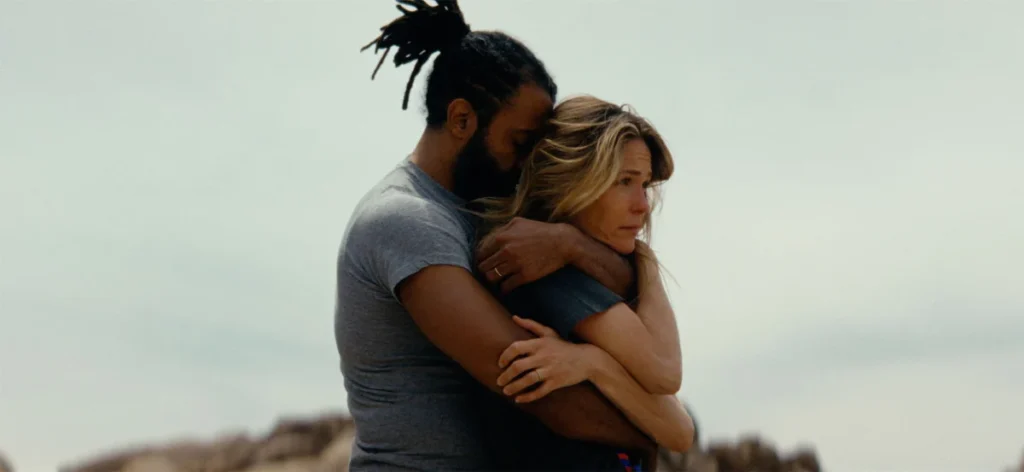

Greenwich Entertainment has unveiled the first official trailer for the indie drama Magic Hour, an emotional thriller set against the stark beauty of a desert landscape. The film, which premiered at the 2025 SXSW Film Festival, has since garnered attention at numerous other festivals including Nantucket, Nashville, Newport Beach, and Woodstock. It is slated for a limited theatrical release beginning May 15, 2026. Produced by the Duplass Brothers, Magic Hour stars Daveed Diggs and Katie Aselton as a couple attempting to navigate a significant and challenging new chapter in their relationship. The supporting cast includes veteran actors Brad Garrett and Susan Sullivan. Early critical reception has lauded the film as "a fresh look at what it takes to make love work, with an ambitious twist to spare."
A Cinematic Escape to the Desert
The narrative of Magic Hour centers on Charlie (Daveed Diggs) and Erin (Katie Aselton), who retreat to a secluded desert location as a means to confront and work through a pivotal, yet difficult, phase in their relationship. The trailer offers a glimpse into their journey, highlighting moments of emotional intensity, vulnerability, and perhaps even humor, as they grapple with the complexities of their bond. The evocative setting of the desert is not merely a backdrop but appears to be an integral element in the film’s exploration of introspection and the challenges of interpersonal connection.
Daveed Diggs, known for his dynamic performances in film, television, and music, brings his considerable talent to the role of Charlie. His recent work includes acclaimed performances in projects that often delve into nuanced character studies. Katie Aselton, an accomplished actress and director, not only stars as Erin but also helmed the film, drawing on her experience directing previous projects such as The Freebie, Black Rock, and Mack & Rita. The screenplay, co-written by Aselton and the prolific Mark Duplass, suggests a collaborative creative process that likely infused the film with a distinct voice and emotional authenticity. Mark Duplass, a prominent figure in the independent film scene, is recognized for his ability to craft intimate and character-driven stories, often exploring the intricacies of human relationships. His involvement as a producer for Magic Hour signals a commitment to storytelling that resonates with audiences seeking depth and sincerity.

Festival Circuit and Critical Acclaim
Magic Hour‘s journey began on the festival circuit, a common and often crucial pathway for independent films to gain visibility and critical traction. Its premiere at the 2025 SXSW Film Festival, a renowned event for independent cinema, music, and interactive media, provided an initial platform for the film to be seen by industry professionals, critics, and cinephiles. Following its SXSW debut, Magic Hour continued to screen at a variety of prestigious film festivals throughout 2025.
The Nantucket Film Festival, known for its focus on screenwriting and narrative depth, offered another opportunity for the film to connect with audiences. Similarly, the Nashville Film Festival, which champions diverse cinematic voices, and the Newport Beach Film Festival, celebrated for its curated selection of international and independent films, provided further exposure. The Woodstock Film Festival, with its history of supporting independent and socially conscious filmmaking, also featured Magic Hour, underscoring its resonance with festival programming that values artistic integrity and compelling storytelling.
The consistent selection of Magic Hour across these diverse festivals speaks to its perceived quality and broad appeal within the independent film community. The positive early reviews, such as the description of it as "a fresh look at what it takes to make love work, with an ambitious twist to spare," indicate that the film is resonating with critics who are looking for innovative approaches to relationship dramas. This sustained attention from festivals and early praise from reviewers often translates into anticipation for its wider release.
Production and Creative Team
The production of Magic Hour is a testament to the collaborative spirit often found in independent filmmaking. The Duplass Brothers, known for their distinctive brand of mumblecore and character-focused dramas, have lent their production expertise to the project, a move that often signifies a shared vision for authentic and resonant storytelling. Mark Duplass’s co-writing credit on the screenplay further solidifies this creative synergy.

Katie Aselton’s directorial vision is central to the film. Her previous directorial efforts, including The Freebie (2010), which explored the complexities of a platonic relationship, and Black Rock (2012), a survival thriller, demonstrate a range of directorial capabilities. Her recent work on Mack & Rita (2022), a comedy starring Diane Keaton, shows her versatility in genre and tone. In Magic Hour, Aselton navigates the delicate terrain of a relationship drama, a genre that demands sensitivity and a deep understanding of human emotion.
The cinematography by Sarah Whelden is also likely to be a significant factor in the film’s aesthetic and emotional impact. The desert setting, with its vast expanses and stark beauty, offers a unique visual palette. Whelden’s work will be crucial in capturing the mood and atmosphere of the film, potentially using the landscape to reflect the internal states of the characters. The film’s production team also includes producer Emily A. Neumann, who has contributed to the development and realization of Aselton’s cinematic vision.
Release Strategy and Distribution
Greenwich Entertainment, the distributor behind Magic Hour, has established itself as a key player in the release of independent and art-house films. Their decision to distribute Magic Hour suggests confidence in its commercial and critical potential. The film’s limited theatrical release, commencing on May 15, 2026, is a strategic approach common for independent dramas. This model allows distributors to focus resources on key markets and build word-of-mouth momentum before a potential wider rollout or release on streaming platforms.
The choice of a May release date places Magic Hour within a period that can offer a strong audience for adult-oriented dramas, often appealing to moviegoers seeking more contemplative fare after the blockbuster season of the spring. The success of similar independent films often hinges on strong critical reviews, positive audience reception, and effective marketing that highlights the film’s unique artistic merits and compelling performances. The festival circuit buzz and the early positive notices will undoubtedly play a significant role in driving initial interest for the film’s theatrical run.

Analysis of Implications and Context
The emergence of Magic Hour within the current cinematic landscape is noteworthy. In an era often dominated by large-scale franchises and tentpole releases, independent films that focus on intimate human stories and complex relationships offer a vital counterpoint. The Duplass Brothers’ involvement, coupled with Aselton’s directorial talent and the performances of Diggs and Aselton, positions Magic Hour as a film likely to appeal to audiences seeking thoughtful and emotionally resonant cinema.
The film’s exploration of a "challenging new phase" in a relationship taps into universal themes that resonate deeply with many viewers. The success of such narratives often lies in their ability to portray relatable struggles with authenticity and nuance, offering audiences moments of recognition and catharsis. The trailer’s suggestion of an "ambitious twist" hints at a narrative that may subvert conventional expectations, further adding to the film’s intrigue.
Furthermore, the growing trend of actors transitioning into directorial roles, as seen with Katie Aselton, is a positive development for independent cinema. It brings fresh perspectives and often a deep understanding of the craft from an actor’s standpoint, which can translate into compelling performances and cohesive storytelling. The collaboration between Aselton and Mark Duplass on the screenplay also points to a creative partnership that is likely to have resulted in a script that is both personal and universally appealing.
The success of films like Magic Hour is crucial for the health of the independent film ecosystem. They provide platforms for emerging talent, support diverse storytelling, and offer audiences a wider range of cinematic experiences. As Magic Hour makes its way to theaters, its performance will be watched closely as an indicator of audience appetite for character-driven dramas and the continued viability of the independent film release model. The film’s journey from festival darling to theatrical release represents a significant achievement and a promising addition to the 2026 cinematic calendar.