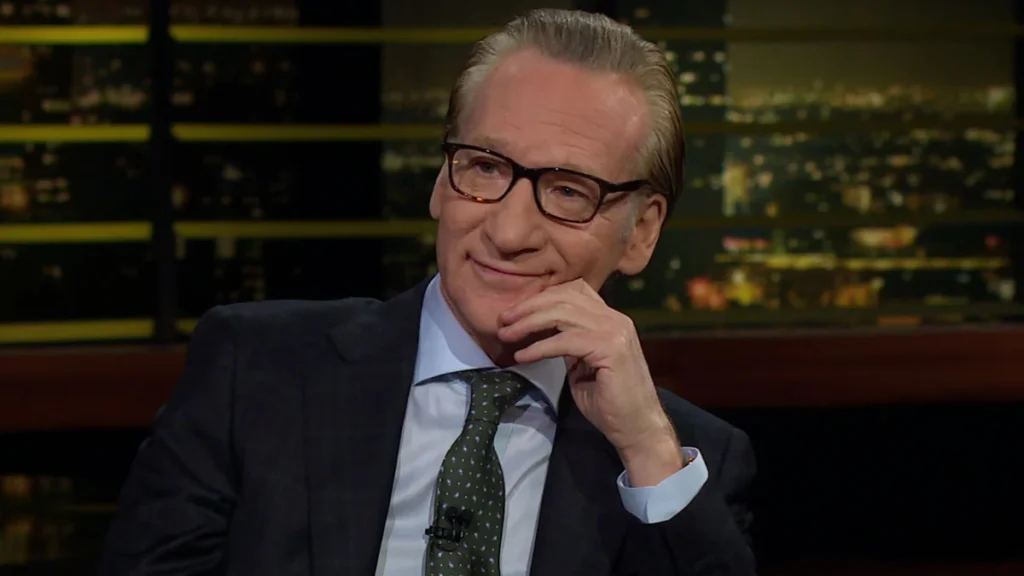

Bill Maher has officially been named the 2026 recipient of the Mark Twain Prize for American Humor, an accolade that solidifies his position among the pantheon of America’s most influential comedic minds. The prestigious honor is scheduled to be presented during a high-profile ceremony at the John F. Kennedy Center for the Performing Arts on June 28th, 2026. This timing is particularly notable as it will occur shortly before the iconic Washington D.C. venue is slated to close its doors for an extensive two-year period of renovations, marking the event as one of the last major public ceremonies before the temporary hiatus.
The announcement of Maher’s selection, while ultimately confirmed, was preceded by an unusual series of political interventions, adding a layer of intrigue to what is typically a straightforward cultural recognition. Reports indicated that former President Donald Trump initially approved the decision to name Maher as the recipient. However, following a leak of this news last week, the former president reportedly reversed his course, only to seemingly change his mind yet again, leading to the current official confirmation. This peculiar back-and-forth underscores the often-unpredictable intersection of entertainment, politics, and public perception, especially given Maher’s long-standing, complex relationship with Trump.
The Mark Twain Prize: A Beacon of American Satire
Established in 1998 by the John F. Kennedy Center for the Performing Arts, the Mark Twain Prize for American Humor is designed to recognize individuals who have had an impact on American society similar to that of Samuel Clemens, better known as Mark Twain. Twain, a towering figure in American literature and social commentary, was celebrated for his unparalleled wit, keen observational skills, and his unflinching use of satire to critique societal norms and political hypocrisy. The prize, therefore, seeks to honor those who embody this spirit, leveraging humor not just for entertainment, but as a potent tool for cultural and political discourse.
The criteria for selection typically emphasize a body of work that demonstrates a profound influence on the landscape of American humor, often through groundbreaking performances, innovative comedic styles, or significant contributions to the art form. Recipients are lauded for their ability to make audiences laugh while simultaneously provoking thought, challenging conventions, and reflecting the complexities of the American experience. Over its nearly three-decade history, the prize has become one of the most distinguished honors in the world of comedy, celebrating a diverse array of talents from stand-up comedians and actors to writers and television hosts.
Previous recipients form an illustrious list, showcasing the breadth and depth of American comedic talent. These include, but are not limited to, Richard Pryor (1998), Jonathan Winters (1999), Carl Reiner (2000), Whoopi Goldberg (2001), Bob Newhart (2002), Lily Tomlin (2003), Lorne Michaels (2004), Steve Martin (2005), George Carlin (2008), Tina Fey (2010), Ellen DeGeneres (2012), Carol Burnett (2013), Eddie Murphy (2015), Bill Murray (2016), David Letterman (2017), Julia Louis-Dreyfus (2018), Dave Chappelle (2019), Jon Stewart (2022), Adam Sandler (2023), Kevin Hart (2024), and Conan O’Brien (2025). Maher’s inclusion in this esteemed company places him firmly within a tradition of comedic giants who have shaped and reflected American culture.
Bill Maher’s Enduring Influence on American Discourse
Bill Maher’s career spans over four decades, marked by a consistent presence in stand-up comedy, television, and political commentary. Born in 1956, Maher began his career in the 1980s, performing stand-up in clubs across the country. His sharp wit, skeptical worldview, and willingness to tackle controversial subjects quickly set him apart. He cultivated a style characterized by a blend of observational humor, political satire, and often provocative social commentary.
His rise to national prominence began in 1993 with the debut of "Politically Incorrect," a late-night talk show that first aired on Comedy Central before moving to ABC. The show was revolutionary for its time, featuring a rotating panel of guests from diverse backgrounds – including politicians, journalists, celebrities, and academics – engaging in unscripted, often heated, discussions about current events. "Politically Incorrect" broke new ground by bringing serious political debate into the late-night comedy sphere, challenging the polite conventions of mainstream television. Maher’s role as host was pivotal, guiding discussions with his signature blend of cynicism, intellectual curiosity, and an unapologetic libertarian viewpoint. The show’s cancellation in 2002, following controversial remarks Maher made in the aftermath of the September 11th attacks, underscored his reputation as a comedian unafraid to challenge prevailing narratives, even at personal cost.
Not long after, Maher found a new home at HBO with "Real Time with Bill Maher," which premiered in 2003 and has since become a cornerstone of Friday night television. "Real Time" continued the format of "Politically Incorrect" but with a more focused, in-depth approach, benefiting from HBO’s lack of broadcast content restrictions. The show features Maher’s opening monologue, a panel discussion with three guests, a one-on-one interview, and his popular "New Rules" segment, where he delivers satirical edicts on various social and political absurdities. Over its more than two decades on air, "Real Time" has earned numerous awards and nominations, including multiple Emmys, cementing Maher’s status as a leading voice in political satire. His consistent ability to attract top-tier guests from across the political spectrum, coupled with his own evolving (and sometimes contradictory) viewpoints, has ensured the show’s relevance and continued cultural impact.
Maher’s influence extends beyond television. He has released numerous acclaimed stand-up specials on HBO, published several best-selling books, and actively uses his platform to advocate for issues he cares about, from cannabis legalization to atheism and environmentalism. His humor, often characterized as "politically incorrect" long before the term became a widespread cultural flashpoint, has consistently aimed to puncture hypocrisy and stimulate critical thinking, aligning deeply with the spirit of Mark Twain.
The Unprecedented Trump Interventions: A Political Sideshow
The peculiar saga involving Donald Trump’s repeated approvals and reversals regarding Maher’s prize adds an unprecedented layer of political theater to a cultural award typically insulated from such direct interference. The initial report of Trump’s approval, followed by a swift retraction after news leaked, and then a subsequent re-approval, highlights the complex and often personal nature of the relationship between the two figures.
For years, Maher has been one of Trump’s most vocal and incisive critics. Their antagonistic relationship dates back to Trump’s public questioning of President Barack Obama’s birthplace, a position Maher consistently ridiculed. The animosity escalated dramatically in 2013 when Trump sued Maher for $5 million after the comedian jokingly offered to donate the same amount to charity if Trump could prove he wasn’t "the offspring of an orangutan." Maher’s joke was a sardonic response to Trump’s own challenge regarding Obama’s birth certificate. The lawsuit, though ultimately dismissed, became a widely publicized example of the deeply personal nature of their public feud.
Given this history of intense public sparring and legal battles, the revelation that Trump initially approved Maher for the Mark Twain Prize was, for many observers, startling. It suggested a potential softening of animosity or perhaps a recognition of Maher’s cultural significance despite their personal differences. The subsequent reversal, reportedly after the news became public, could be interpreted in several ways: a reaction to public pressure, a reconsideration of the political optics, or a characteristic display of Trump’s mercurial decision-making. The final re-approval then completes a dizzying cycle, leaving many to speculate on the underlying motivations.
The original article notes that Maher and Trump have developed a "more cordial relationship" during Trump’s second term, even culminating in Maher dining at Mar-a-Lago last year. This personal interaction, despite their public political differences, speaks to the complex dynamics at play. It suggests that while Maher remains a critic of certain political ideologies, his comedic approach has, at times, found common ground with individuals across the political spectrum, including those he has vehemently opposed. This willingness to engage, even with former adversaries, adds another dimension to his persona and arguably aligns with a Twain-esque capacity to observe and interact with all facets of society.
This entire episode raises important questions about the autonomy of cultural institutions like the Kennedy Center and the potential for political influence to seep into decisions regarding artistic recognition. While the Kennedy Center maintains its independence, the reported involvement of a former president in the selection process, however brief or contested, creates a precedent that warrants examination.
Official Statements and Maher’s Signature Wit
The official announcement included statements from key figures involved, providing insight into the rationale behind Maher’s selection and the comedian’s characteristic response.
Roma Daravi, Vice President of the Kennedy Center, articulated the institution’s perspective on Maher’s deservingness: "For nearly three decades, the Mark Twain Prize has celebrated some of the greatest minds in comedy. For even longer, Bill has been influencing American discourse – one politically incorrect joke at a time." Daravi’s statement succinctly captures the essence of Maher’s career: his longevity, his significant impact on public dialogue, and his unapologetic embrace of a "politically incorrect" style that often challenges established norms. This framing emphasizes Maher’s role not just as an entertainer, but as a critical voice in contemporary American society, a role that directly echoes Mark Twain’s legacy.
Bill Maher himself responded to the honor with a statement imbued with his signature wit and self-deprecating humor. "Thank you to the Mark Twain people: I just had the award explained to me, and apparently it’s like an Emmy, except I win," Maher quipped. This line, a classic Maher-ism, pokes fun at the often-overlooked nature of such awards while subtly acknowledging his own previous Emmy losses, demonstrating his ability to find humor in any situation, even his own accolades. He continued, "I’d just like to say that it is indeed humbling to get anything named for a man who’s been thrown out of as many school libraries as Mark Twain." This second part of his statement is particularly insightful, drawing a direct parallel between Twain’s historical controversiality and his own. Mark Twain’s works, particularly "The Adventures of Huckleberry Finn," have frequently been challenged and even banned in various educational institutions for their language and themes. By invoking this aspect of Twain’s legacy, Maher implicitly acknowledges his own history of controversy and his role as a provocateur, reinforcing the intellectual and sometimes contentious spirit that both he and Twain embody.
Broader Impact and Implications
Bill Maher’s selection for the Mark Twain Prize for American Humor in 2026 carries significant implications for his legacy, the landscape of political humor, and the future identity of the prize itself.
For Maher, this award solidifies his place as a pivotal figure in American satire. It is a testament to his enduring relevance, his unique ability to blend stand-up comedy with incisive political commentary, and his sustained influence on public discourse. The prize validates his decades-long commitment to challenging conventional wisdom and provoking thought, even when his views are unpopular or controversial. It places him among a revered group of comedians who have not only entertained but also served as cultural barometers and social critics.
The award also highlights the evolving role of political humor in America. In an increasingly polarized society, comedians like Maher often serve as important conduits for uncomfortable truths, offering critiques that mainstream media or politicians might shy away from. His selection suggests that the Kennedy Center recognizes the value of such challenging, often abrasive, humor in a healthy democracy, aligning with Twain’s own tradition of using satire to hold power accountable. The fact that the prize is awarded despite, or perhaps even because of, his polarizing nature speaks to a recognition of humor’s multifaceted power.
Furthermore, the unusual political machinations surrounding Maher’s approval by a former president add a complex layer to the prize’s history. While the Kennedy Center ultimately affirmed its decision, the incident may prompt broader discussions about the integrity of cultural awards in a highly politicized environment. It underscores the delicate balance required to maintain an award’s prestige and independence while navigating the realities of public life and political figures who seek to exert influence.
Finally, the timing of the ceremony, just before the Kennedy Center’s extensive renovations, adds a symbolic note. It marks a significant cultural event preceding a period of transformation for one of America’s premier performing arts institutions. Maher’s ceremony will be one of the last major public gatherings in the main hall before it temporarily closes, perhaps underscoring a moment of reflection on the state of American humor and discourse as the venue prepares for its next chapter.
In conclusion, Bill Maher’s designation as the 2026 Mark Twain Prize recipient is a fitting recognition of his profound and often provocative contributions to American humor. It celebrates a career defined by sharp wit, intellectual curiosity, and an unwavering commitment to political and social commentary. Despite the unusual political backdrop, the award firmly places Maher in the lineage of Mark Twain himself—a satirist who dared to speak uncomfortable truths and challenge the status quo, leaving an indelible mark on the fabric of American culture.